Why stairwells take longer to paint, and what to ask before you start
· 5 min read · By GK Painting & Remodeling
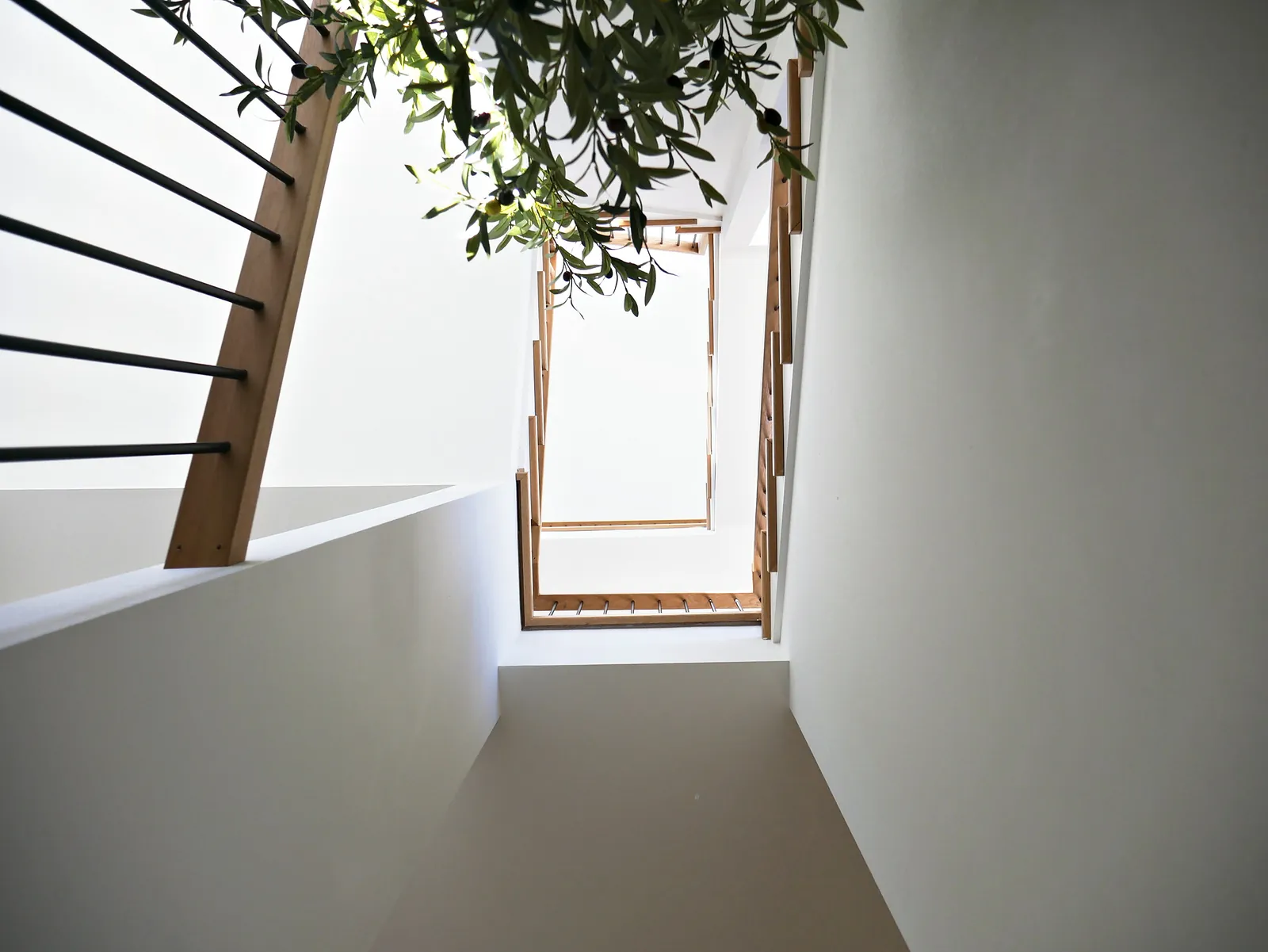
Painting a stairwell takes longer than painting a room of the same size, because of the height, the angled lines, and the fact that there's no flat floor to set a ladder on. The job is mostly access and prep: reaching the tall walls safely, cleaning off years of hand marks, and cutting a clean line along every stair.
Here's what makes a stairwell different, how to think about the ladder work, and what to decide about railings, scuffs and color. If you'd rather hand it off, our interior painting service covers the walls and trim of a stairwell along with the rest of the house.
What makes a stairwell harder than a room
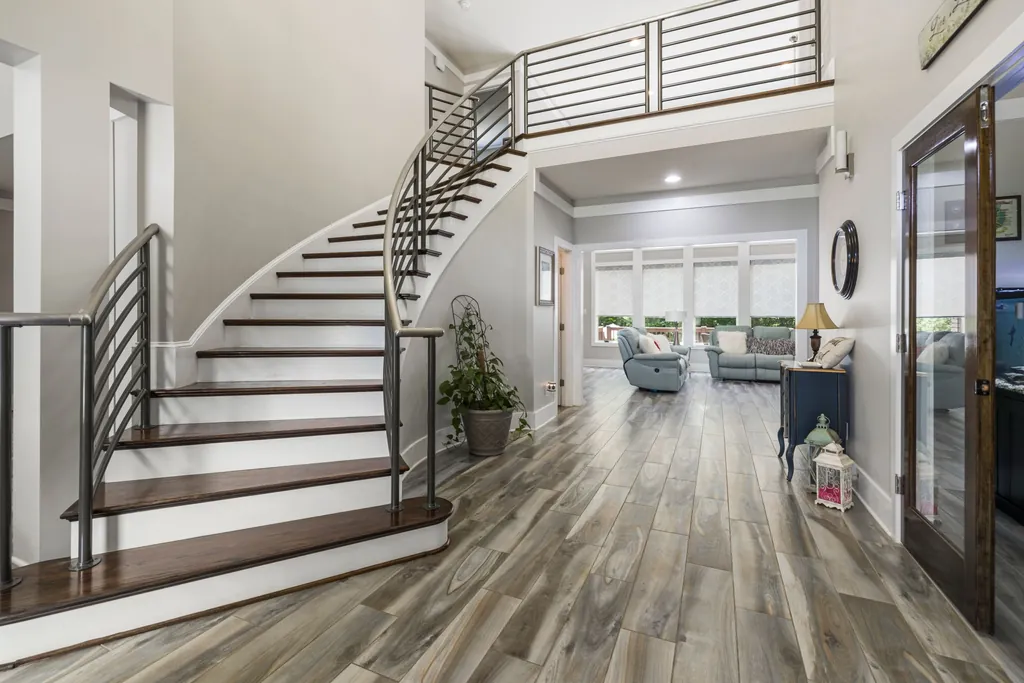
- Height. In a house with a two-story entry, one wall can run from the main floor to the second-floor ceiling, and every foot of it needs cutting in and rolling.
- No flat floor. A ladder needs a firm, level base, and a staircase is neither.
- Angles. The wall line follows the stairs, and the ceiling may slope or change height as it climbs.
- Traffic. Everyone in the house touches the walls and the rail as they go up and down, so scuffs, fingerprints and dents pile up. Our guide to washing scuffs off painted walls covers the cleanup between paint jobs.
- Light. Stairwells are often dim, or lit from a window or skylight at one end, so uneven coverage shows.
Because of all that, a stairwell is a space where seeing it helps. George visits if he needs to see the space before he quotes, so describe yours on the first call: how many floors it spans, where the landings are, and how tall the highest wall is.
Reaching the high spots safely
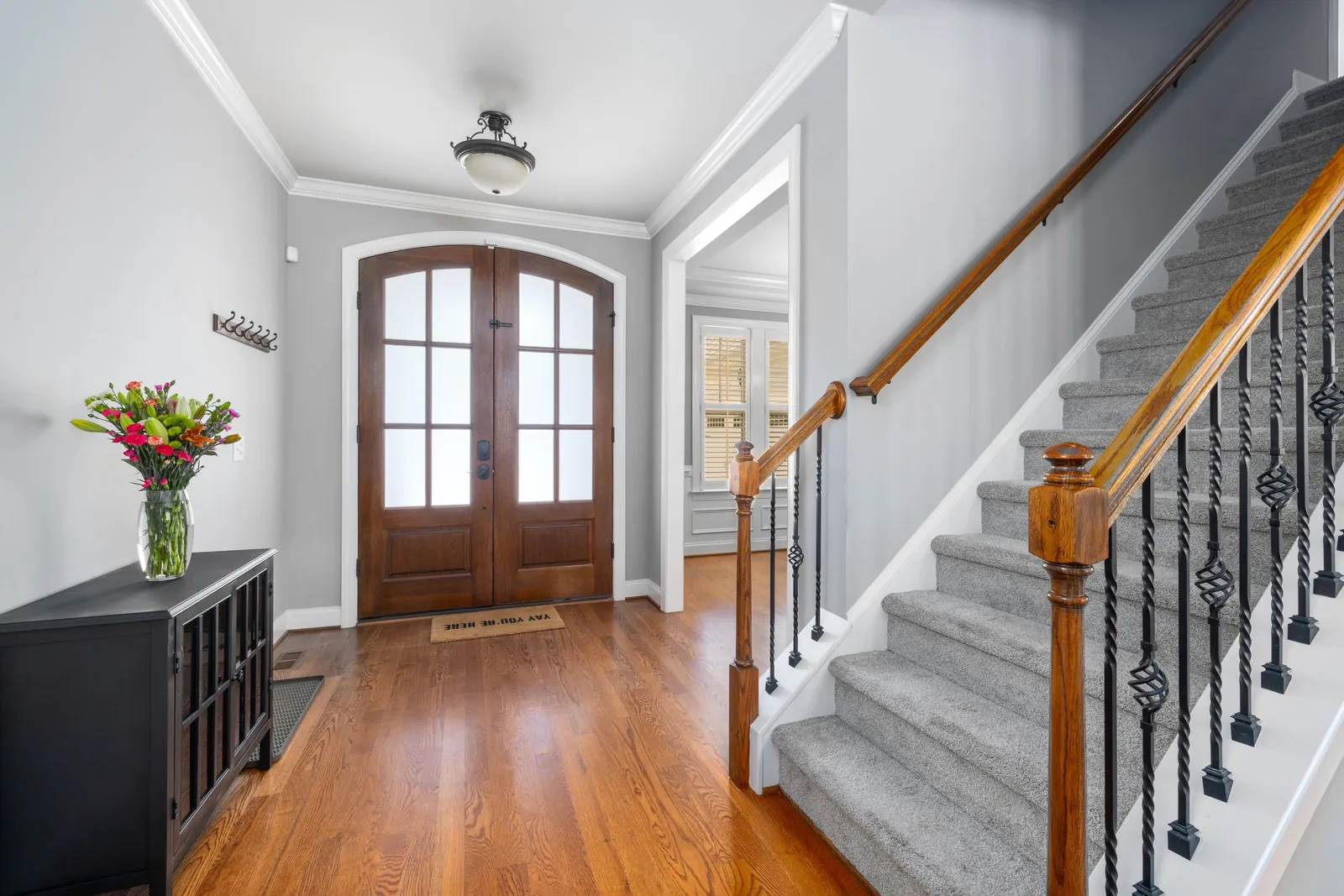
The riskiest part of this job is the ladder work. The University of Washington's ladder safety guide sets out the basics: put the base on a firm, solid, level surface; place a straight or extension ladder one foot away from the wall for every four feet of its height; when it's used to reach an upper level, extend it at least three feet beyond that surface; keep three points of contact; and don't stand higher than the third rung from the top.
Two more rules from the same guide matter most in a stairwell. Never put a ladder on a box or other object to gain height, and don't lean or overreach; reposition the ladder instead. In a stairwell, repositioning is constant, so the work is slow by design.
A stair tread isn't a firm, level base. Stairwell work calls for equipment made for the job, such as an adjustable-leg ladder or a platform that spans the steps, and that's often the real reason people hand this job to a painter instead of doing it on a Saturday.
Prep: hand marks, dents and old paint
Stairwell walls take more abuse than most. Backpacks, furniture moves and hands steadying themselves leave marks, and the wall beside a rail collects dents at shoulder height. Treads, landings and the floors below get covered before any paint comes out, and then the walls get the same prep as any room: cleaning, sanding, small hole repair and primer where it's needed.
Wash first. Hand oils and dust keep paint from bonding, and the wall beside a handrail is usually the dirtiest in the house. Then fill nail holes and dents, sand them flush, and prime the patches so they don't show through as dull spots. Larger damage, like a hole from a moved dresser, is drywall work, so mention it on the first call.
Older houses add a few things to think about, like plaster walls and layers of old oil-based trim paint. The EPA says homes built before 1978 are more likely to have lead-based paint, and its Renovation, Repair and Painting rule sets lead-safe work practices for the work. Mention your home's age when you call.
Cutting in along the stairs
The line everyone sees is where the wall meets the treads, the skirt board or the stringer. It's at an angle, and there's no flat floor to rest a hand on. A good angled brush and a steady hand matter more here than anywhere else in the house. Tape can help, but only on clean, dry surfaces, and it doesn't fix an uneven edge.
On tall walls, the other challenge is keeping a wet edge. If you roll in sections from the bottom to the top, the paint dries between passes and leaves lap marks. Working a full-height strip at a time keeps the edge wet. Our guide to how to cut in paint covers the brush technique.
Railings, spindles and skirt boards
The railing is the part of a stairwell that hands touch most, so it's where the finish matters most. Spindles take patience, because every one needs cutting around, and a long run of them adds up. Our guide to painting stair railings covers the technique, and the skirt board along the stairs is much like painting baseboards.
There's a timing issue too. Dunn-Edwards says latex coatings can take 14 to 30 days to cure fully, and that higher gloss coatings take longer to cure than low-sheen ones. A satin or semi-gloss railing feels dry in hours and stays delicate for weeks, and it's the thing everyone grabs. Ask how the work will be staged so you know when the rail can't be used.
Color and sheen for a stairwell
A stairwell is seen from several angles at once: up the stairs, down the stairs, from the landing. Light colors keep a dim stairwell open. Deeper colors can make a tall wall feel like a gallery, and they tend to hide scuffs better than white. Whatever you choose, test it high and low on the wall, because the light changes from top to bottom.
For the sheen, a satin or eggshell finish wipes clean better than flat paint, which shows every fingerprint. Semi-gloss suits the trim and rail. Our guide to paint finish for each room goes through the choices, and the guide to choosing paint colors for your home helps when a stairwell is part of a larger color plan.
Living with a stairwell job
A stairwell connects floors, so the smell of drying paint travels. The EPA says most paint emissions occur in the first few days after painting, and for remodeling it recommends keeping fans running and ventilating as much as possible until two or three days after the work is finished. In winter, that means planning for a window opened somewhere on each floor.
The stairs are also the way up. Ask on the estimate call how the work will be staged, where you can sleep and what route you'll use while the treads and walls are covered or wet. It's easier to plan that before the first day than during it.
Doing it yourself, or handing it off
A one-story stairwell with a good ladder setup is a realistic weekend project for some homeowners. A two-story stairwell with a landing, a railing and a skylight is a different job, and it's where hiring out pays for itself in safety as much as time. Our post on DIY painting versus hiring a pro weighs it out.
If you'd like a stairwell painted, ask for a free estimate. Interior painting is priced by the square footage of the space, with paint included, and our work page shows finished rooms.
Common questions
How long does it take to paint a stairwell?
Most rooms take one to two days, and a stairwell with tall walls, a railing and a lot of trim can take longer than a room of the same size. The exact time depends on the height, the number of surfaces and the prep, so George quotes it after hearing about the space or seeing it.
What paint finish is best for a stairwell?
Satin or eggshell wipes clean better than flat paint on the walls, and semi-gloss suits trim and railings. Higher gloss coatings take longer to fully cure, so expect a glossy railing to stay delicate for a few weeks.
Can I paint a stairwell myself?
You can, but the ladder work is the hard part. Ladder guidance from the University of Washington calls for a firm, level base, and a staircase doesn't offer one. For a stairwell more than one story tall, hiring it out is worth considering.
Should the walls and the railing be painted together?
Planning them together makes sense, because the railing and the walls meet and the cutting in goes more cleanly when it's one plan. Tell us about the railing when you call and we'll say what's possible.
Is it okay to be in the house while a stairwell is painted?
Many households stay. The EPA says most emissions occur in the first few days after painting and recommends strong ventilation until two or three days after the work is done. If someone in the house is pregnant, it suggests avoiding painting projects and limiting time in freshly painted rooms.
Sources
- Ladder Safety, University of Washington Environmental Health and Safety
- Dry Time versus Cure Time of Paint (technical bulletin), Dunn-Edwards
- Addressing Indoor Environmental Concerns During Remodeling, U.S. Environmental Protection Agency
- Reduce Lead Exposure in Your Home, U.S. Environmental Protection Agency
- Lead Renovation, Repair and Painting Program, U.S. Environmental Protection Agency
More on interior painting and every interior painting post.