Choosing a paint finish, room by room
· 5 min read · By GK Painting & Remodeling
Use flat paint on ceilings, matte or eggshell in bedrooms and living rooms, satin in kitchens, hallways and kids' rooms, satin or semi-gloss in bathrooms and laundry rooms, and semi-gloss or satin on trim and doors. The rule behind all of it is that the more a surface is touched, splashed or scrubbed, the more sheen it can take.
This is the room-by-room pick list. For what each sheen is and how it's made, see our explainer on paint sheens. Here we're deciding which one goes where, and the trade-offs that change the answer.
A room-by-room cheat sheet
| Room or surface | Good picks | Why |
|---|---|---|
| Ceilings | Flat | Hides surface flaws and doesn't pick up light |
| Bedrooms | Matte or eggshell | Low traffic, and a soft look hides wall imperfections |
| Living and dining rooms | Eggshell or satin | A little more wipeability for hands and furniture |
| Kitchens | Satin | Handles splashes and cleaning |
| Hallways, stairwells, kids' rooms | Eggshell or satin | Scuffs and frequent washing |
| Bathrooms and laundry rooms | Satin or semi-gloss | Moisture and wiping; add a fan |
| Trim and doors | Satin or semi-gloss | Tough, cleans easily and gives edges definition |
Treat the middle column as a starting point. Walls with patches or texture, strong window light and your own tolerance for fingerprints can all move you up or down a step. The sections below explain the reasoning.
Ceilings: flat, nearly always

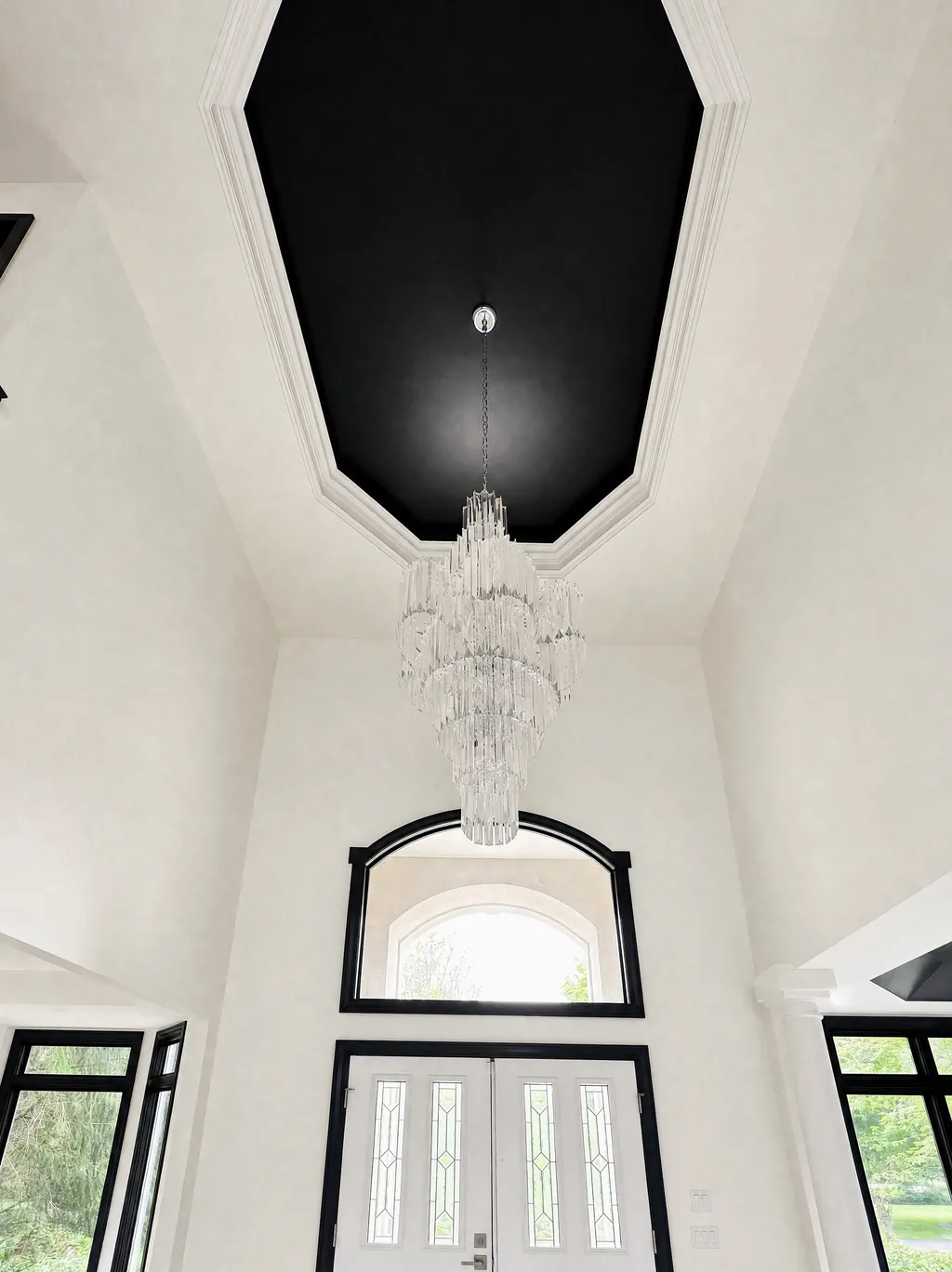
Dunn-Edwards recommends a dead flat paint for ceilings. A ceiling is lit by light skimming across it, which Dunn-Edwards calls critical light, and they advise against angular sheens on ceilings because critical lighting can magnify surface imperfections. A flat finish diffuses that light instead of bouncing it back at you.
Flat ceilings are also forgiving of the roller work. Rolling overhead is hard to do evenly, and flat paint shows less sheen unevenness. Our guide to the best ceiling paint goes further.
Bedrooms and living rooms: soft and forgiving
This Old House calls matte the best choice for bedrooms and other low-traffic areas, and describes flat and matte as the finishes that hide blemishes best. A bedroom wall also rarely gets scrubbed, so the main weakness of a low sheen, that it's harder to clean, matters less there.
Living and dining rooms get more use. Eggshell sits between matte and satin, and This Old House describes it as more cleanable and durable than matte, with satin ranked above it. The lower the sheen, the more forgiving the wall is about small flaws. Satin, This Old House notes, can reflect light around blemishes and make them stand out, so a wall with patches may want eggshell.
Kitchens, hallways and kids' rooms: where hands go
Benjamin Moore advises against flat paint in high-traffic areas, where repeated washing and rubbing can burnish it. Burnishing means the sheen increases where the surface is cleaned, leaving shiny patches. Its suggested alternatives are eggshell, satin, pearl or semi-gloss.
Dunn-Edwards explains why: flat paint gets its low sheen from a rough surface of tiny pigment particles, and washing or scrubbing can break those off and leave a smoother, glossier spot. Darker colors show it more. That's why a hallway that a family brushes past every day usually wears better in satin than in matte.
Kitchens add grease and steam. Satin is a sturdy middle path there, and using the exhaust fan when you cook helps whatever finish you pick. Our kitchen cabinet finish guide covers the cabinets, which have their own rules.
Bathrooms and laundry rooms: moisture decides
Bathrooms and laundry rooms stay damp. Benjamin Moore notes that mildew thrives in damp environments with little exposure to sunlight, and recommends a high-quality, mildew-resistant paint along with ceiling fans, exhaust fans or dehumidifiers in bathrooms, laundry rooms and kitchens. A higher sheen sheds splashes and wipes down, so satin or semi-gloss is a common choice.
The finish helps, but ventilation does more. The EPA says the key to mold control is moisture control, and advises running the bathroom fan or opening a window when showering. A semi-gloss wall in a bathroom with no fan can still fail, and a satin wall in a well-vented one has a much better chance. Our guide to painting a bathroom walks through the steps.
Trim, doors and built-ins
Trim and doors take bumps, shoes and cleaning, and they're meant to frame a room. This Old House suggests satin for trim and semi-gloss for trim and doors in high-traffic areas. Semi-gloss is easy to wipe, but it shows every flaw in the surface underneath, so the prep matters more.
One catch with glossier trim is blocking. Benjamin Moore says doors and windows painted with semi-gloss or gloss latex can stick to their jambs and sills if they're closed before the paint has cured, tearing the paint when they're pulled apart. Leave a door open until it feels fully hard, and see our posts on painting interior doors and painting baseboards.
When your walls are rough, drop a step
Higher sheens reflect light more directly. Dunn-Edwards says that increases the perception of shadows and highlights, which is a polite way of saying they show every dent, patch and roller mark. Old plaster, textured walls and recent repairs all argue for going one step flatter than the cheat sheet suggests.
The flip side is washability. If you've got an old wall with plenty of flaws and a toddler with markers, you're picking between the two problems. A scrubbable matte or eggshell is often the right compromise, and good prep narrows the choice. Small holes get filled and sanded before painting, which is part of how we prepare a room.
Open plans, basements and garages
Rooms that open into each other are one view, so use the same sheen on walls that flow together, even if the colors change. Dunn-Edwards says sheen changes how a color looks, and a wall that suddenly goes shinier at a doorway will read as a different shade rather than a different finish.
Basements and garages are a different kind of room. If a basement wall gets damp, that's a moisture problem a finish won't solve, and the EPA's advice to fix the water problem comes first. Once the wall is dry, satin cleans easily and handles the knocks and storage a basement collects, and it suits garage walls for the same reason. Our posts on basement painting ideas and painting garage walls go further.
As a rule of thumb, ask three questions of any room. How often are the walls touched or washed? How much light skims across them? How many flaws are hiding under the paint? The first pushes you toward more sheen, and the second and third push you back down.
Keep one sheen per surface, and test it
Don't mix sheens on the same wall. Dunn-Edwards notes that the same color in different sheens can look lighter or darker side by side, so a touch-up in the wrong sheen, or a patch with a different finish, shows. Test your color in the sheen you plan to use, as we describe in how to test paint colors.
Two weeks matters too. Both Benjamin Moore and Dunn-Edwards say to wait at least two weeks after painting before washing, and to use only mild detergent and soft cloths after that, not abrasive cleaners. That holds for every sheen.
We paint walls, ceilings, trim and doors for homes and businesses as part of our interior painting, and the finish is part of what we talk through on the estimate. Ask for a free estimate, whether it's one hallway in Fitchburg or a whole house.
Common questions
What paint finish is best for a bedroom?
Matte or eggshell. This Old House calls matte best for bedrooms and low-traffic areas, and both hide wall flaws well. If the room belongs to a child, eggshell or satin takes scrubbing better.
What sheen should I use on kitchen walls?
Satin is the usual choice because it handles splashes and cleaning. Benjamin Moore advises against flat paint in high-traffic areas, and recommends eggshell, satin, pearl or semi-gloss instead.
Should ceilings be flat or the same finish as the walls?
Flat, in nearly every case. Dunn-Edwards recommends a dead flat paint on ceilings and warns that critical light can magnify imperfections on angular sheens.
What finish should I use for a bathroom?
Satin or semi-gloss, in a mildew-resistant paint, and with the fan running. Moisture control matters more than the sheen, according to the EPA.
Can I use different sheens in the same room?
Yes, by surface: flat ceilings, a mid-sheen on walls and semi-gloss on trim is the classic setup. Just don't mix sheens on a single wall, because the same color can look lighter or darker in a different finish.
Sources
- Paint Finishes Guide, This Old House
- Paint Burnishing and Marring, Benjamin Moore
- Burnishing (technical bulletin), Dunn-Edwards
- How to Paint a Ceiling (technical bulletin), Dunn-Edwards
- A Brief Guide to Mold, Moisture and Your Home, U.S. Environmental Protection Agency
More on interior painting and every tips and tricks post.