How to paint a metal door so it doesn't rust, blister or stick
· 7 min read · By GK Painting & Remodeling
Painting a metal door comes down to three things: get the grease and rust off, put a primer made for metal on every bare spot, and paint only when the air, the door's surface and the sun on it are all within the label's limits. If your steel door still has a sound factory primer or finish, it needs cleaning and dulling more than stripping.
Below: how to tell steel from aluminum, rust and dents, our Three Temperatures check, dark colors behind storm doors, how to paint a storm door, and when the door can close. For the brush order on any front door, see how to paint a front door.
Painting a metal door starts with which metal
A magnet tells you most of what you need. Benjamin Moore's guide to painting metal says ferrous metals, steel and iron among them, are magnetic and susceptible to rust, while non-ferrous metals such as aluminum are usually lightweight. Galvanized steel, which is zinc-coated, should be treated as non-ferrous when you paint it.
A State of Illinois guide to doors describes one common entry door as a steel skin over a polyurethane foam core, usually sealed with a magnetic weatherstrip like a refrigerator's. Storm door frames, it says, are usually aluminum, steel, fiberglass or wood.
| Door | Magnet | What to watch | Primer family |
|---|---|---|---|
| Steel entry door | Sticks | Rust at bare spots, edges and the bottom | Primer made for ferrous metal |
| Galvanized steel | Sticks | Bare zinc where the finish wore through | Primer for galvanized or non-ferrous metal |
| Aluminum storm door | Doesn't stick | Corrosion and a slick factory finish | Primer made for non-ferrous metal |
| Fiberglass entry door | Doesn't stick | Its maker's finishing sheet | Whatever that sheet calls for |
The middle columns are our editorial guide, not a measurement; the primer families follow Benjamin Moore. If the magnet slides off your front door, our post on painting fiberglass doors compares what three door makers say.
Rust, dents and the factory primer
Get the rust off first
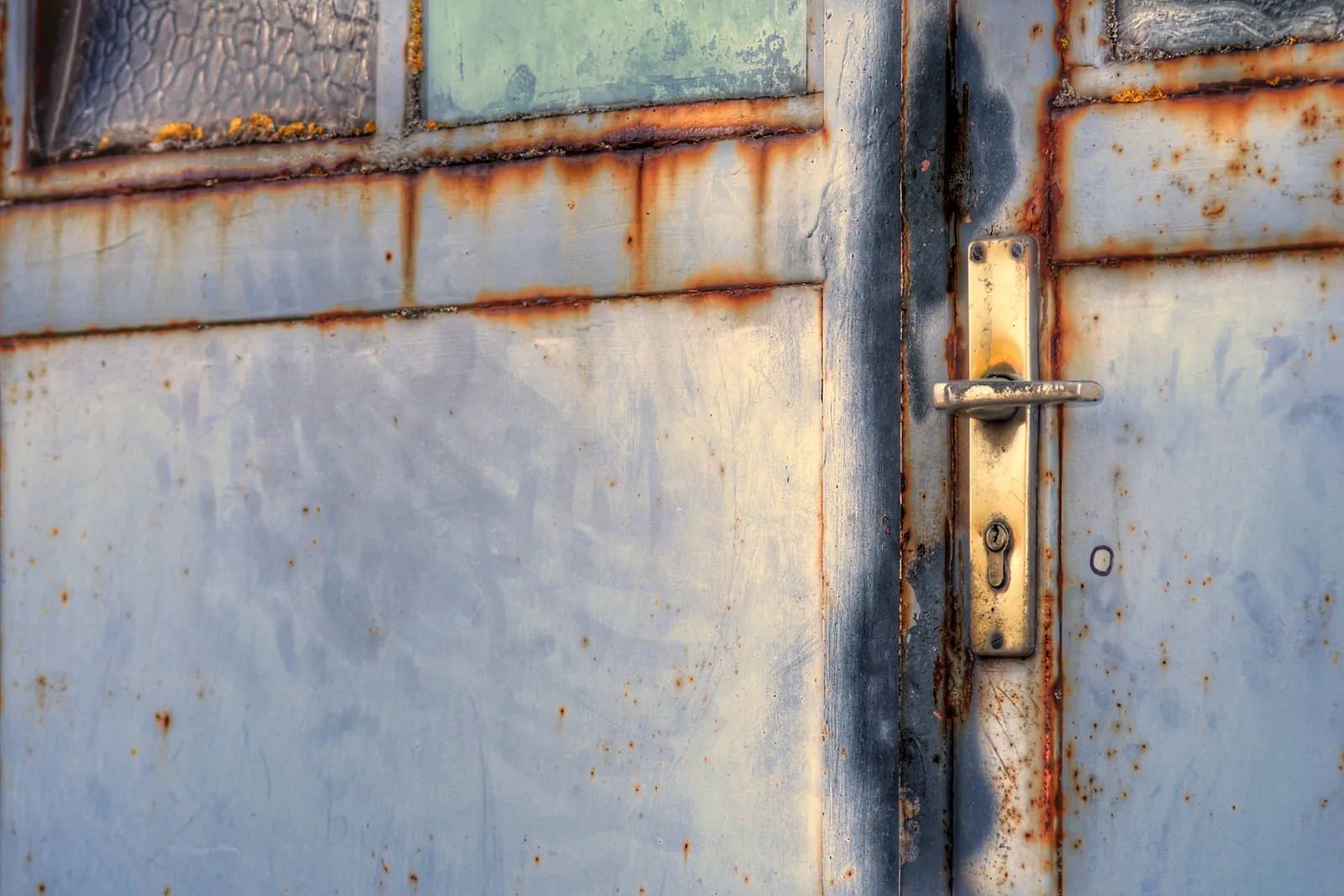
Primer can't fix rust it's painted over. Dunn-Edwards' data sheet for an acrylic rust-preventative metal primer says surfaces must be clean, dry and free of rust, grease and oil, and that on iron and steel the minimum prep, after the oil and grease are off, is hand-tool cleaning under the SSPC-SP2 standard: wire brush, scraper, sandpaper. Benjamin Moore's homeowner version is to clean oil off with detergent or denatured alcohol, remove rust with a wire brush, and wipe the dust with a damp cloth.
Then prime bare steel with a primer made for ferrous metal, not a general wall primer. Rust that has eaten through the skin, or a bottom edge that crumbles, is a door problem paint can't solve.
Dents
The same data sheet says to repair holes and surface imperfections with a suitable patching material, then sand smooth and dust clean before priming. A shallow ding fills and disappears under paint. A creased or torn skin is a repair or replacement question.
Factory primer and old paint
A sound factory primer or old finish is a base, not something to strip. For previously painted surfaces, the data sheet says to clean them, dull smooth or glossy coatings by abrading them, and paint a test area, letting it dry one week before checking adhesion. Where paint is peeling, clean back to a sound surface and treat it as new; our guide to fixing peeling paint covers the repair. Galvanized steel needs its own primer, which our post on painting a garage door explains.
The Three Temperatures check for painting exterior doors
Checking the forecast isn't enough when you're painting a metal door. We sort the weather question into three temperatures. It's our editorial framework, not a lab standard.
- Air: the label's range. The Dunn-Edwards acrylic metal primer lists 50 degrees Fahrenheit minimum and 90 maximum for the air, the surface and the material, with relative humidity no higher than 90 percent.
- Surface: the door's skin against the dew point. The same sheet says the surface must be at least 5 degrees above the dew point, so moisture can't condense under the coat.
- Sun: the heat the door picks up. Dunn-Edwards' bulletin on dark colors says sun can dry a new coat's surface faster than the film beneath, trapping solvent that expands into blisters.
So the air can pass on a cool fall morning while a shaded steel door is still wet with dew, and pass again on a sunny afternoon while a dark door in direct sun runs warmer than the air. For heat blisters, the bulletin says to repaint with the surface below 90 degrees, shaded before, during and after. Our guide to the Madison outdoor painting season covers the months that usually work.
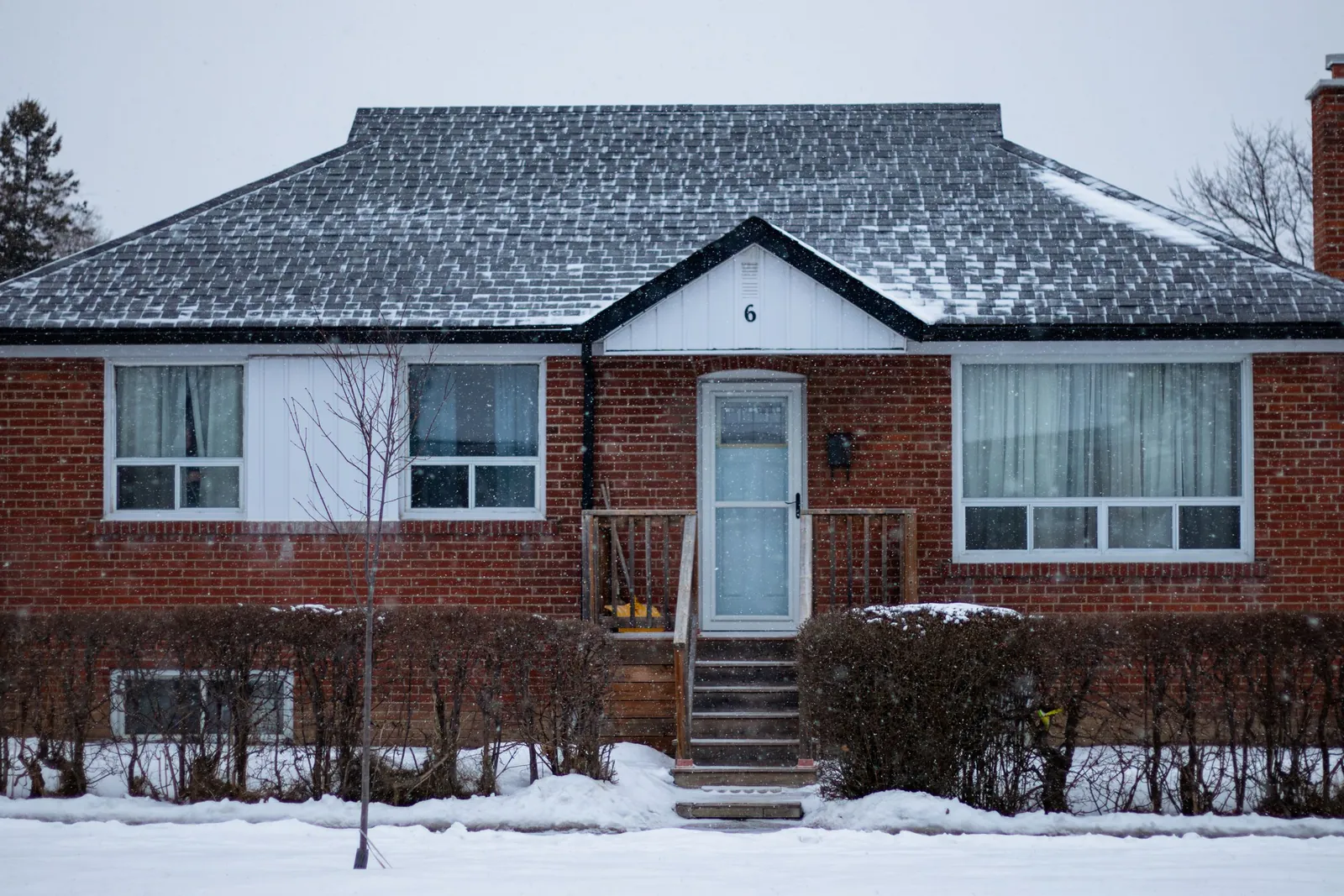
Dark colors and storm doors in direct sun
Color is the temperature you choose. Dunn-Edwards says darker colors absorb more heat and energy than lighter ones, which may speed up degradation of the binder and paint film. Its yardstick is Light Reflectance Value, or LRV: higher numbers, closer to 100, reflect more light and stay cooler in sunlight.
Dark paint also stays soft longer. The same bulletin says dark colors with a heavy load of colorant typically take longer to cure than light ones and can stay tacky longer. On a door that closes against weatherstripping every day, that's the difference between a clean seal and a door that sticks.
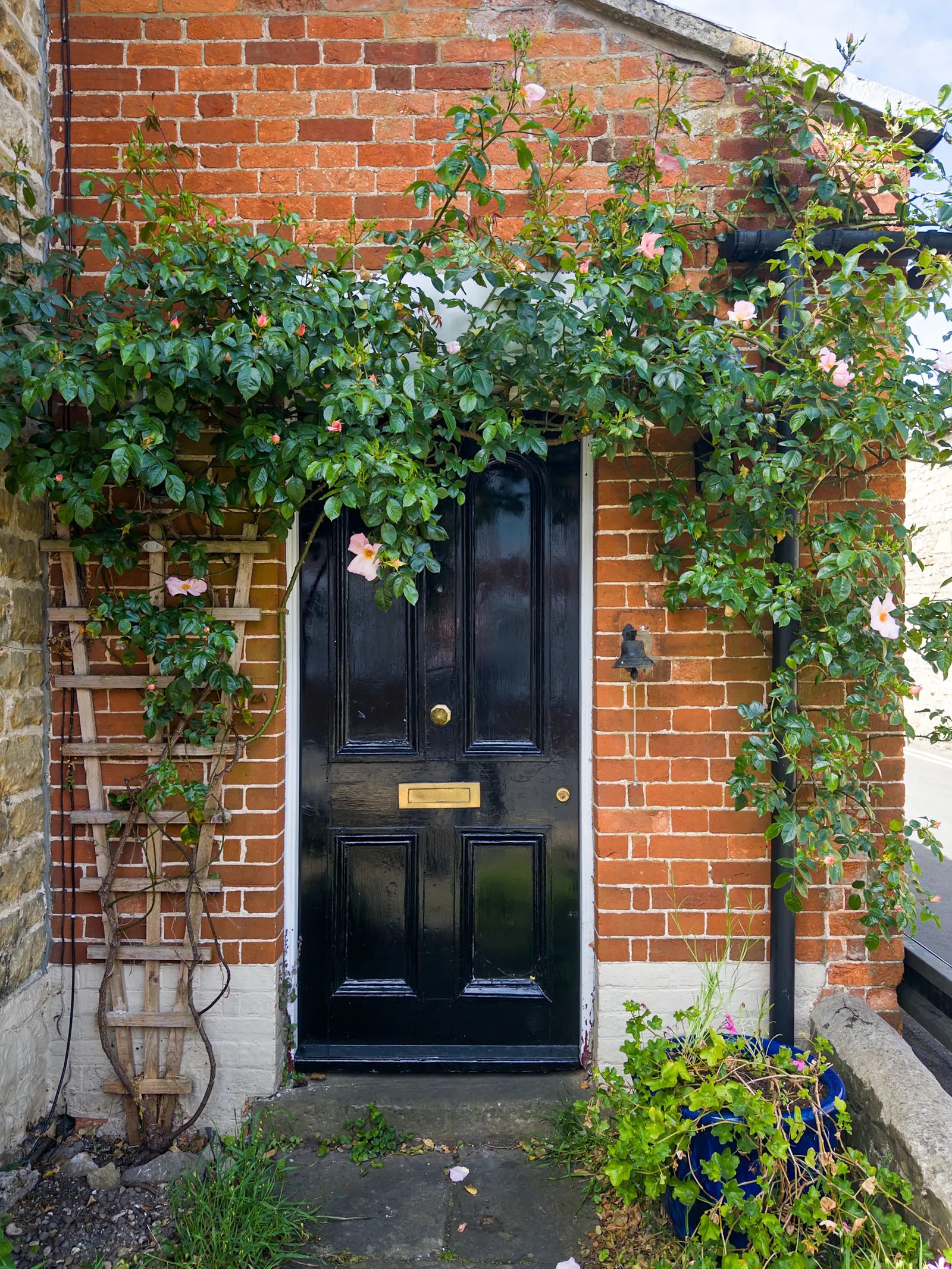
Glass storm doors trap heat
The Illinois guide is blunt: never add a glass storm door if the door gets more than a few hours of direct sun each day, because the glass will trap too much heat against the entry door and possibly damage it. Put a dark color behind that glass and you've stacked both heat sources. On a sunny entry, check your door maker's guidance or pick a mid-tone; our post on front door colors has ideas.
How to paint a storm door
Try the magnet on a storm door too, since frames come in aluminum, steel, fiberglass and wood. For the common metal ones:
- Lift out the glass and screen inserts if they come out, and remove the closer, handle and sweep.
- Clean off oil with detergent or denatured alcohol, rinse any residue and let the frame dry.
- Dull the glossy factory finish with a fine abrasive pad so the primer can grip.
- Prime bare aluminum with a primer made for non-ferrous metal, and any rusty steel with one made for ferrous metal.
- Brush thin coats, with synthetic bristles for waterborne paint, and let the finish cure before the closer and inserts go back.
The bristle advice is Benjamin Moore's, and the dulling step follows the Dunn-Edwards sheet. You can paint a storm door in place, but masking glass, hinges and the closer bracket is slower than taking pieces off. A wood storm door takes the same prep as other outdoor wood; see painting exterior trim.
Weatherstripping, hardware and when to close the door
Hardware comes off rather than getting painted around. Paint brushed around a lever plate builds ridges and fills screw slots, and the next lock change means cutting through it.
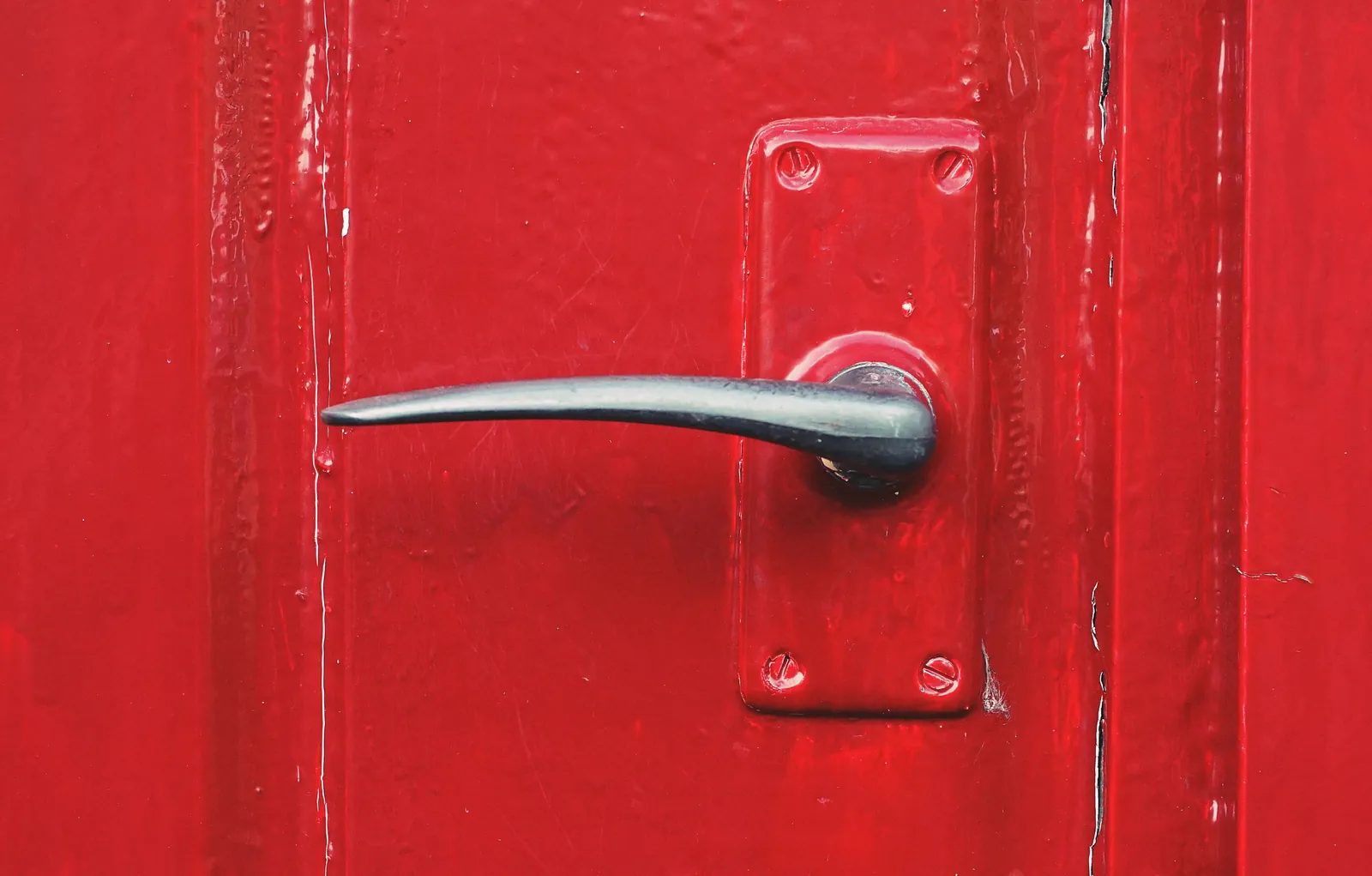
Keep paint off the weatherstrip. A painted magnetic strip, the kind the Illinois guide describes on steel doors, can glue the door to its frame while the paint is soft. Door makers disagree on whether to tape the weatherstrip or pull it out; our fiberglass and steel door post compares their instructions.
When can you close it?
Gently, once it's dry to the touch; for daily use, only once it cures. Benjamin Moore says to check the label or technical data sheet for drying time and to allow proper cure time before a freshly painted surface goes back into use. Dark colors take longest. Our post on paint dry time vs cure time explains the gap.
When to stop and call a professional
- Call 911 if anyone has serious trouble breathing while working with solvents or cleaners.
- Stop if the house was built before 1978 and the door or frame carries old paint you haven't tested. Don't dry sand or scrape it.
- Stop painting a metal door if rust has eaten through the skin, the bottom edge crumbles, or the door no longer latches.
- Call a pro for a creased dent, a door that sticks after painting, or glass that's loose in its frame.
EPA singles out doors: old or worn lead-based paint, especially on surfaces subject to constant friction like doors or window sills, can produce chips and dust that become a hazard when inhaled or swallowed. Ask any painter how they handle lead-safe work practices, and see painting older Madison homes.
How we handle metal doors at GK Painting
Exterior doors and entryways are part of our exterior work, along with garages, trim and decks; we don't paint whole-house siding. We look at the surface first and decide what it needs, which can mean cleaning, scraping, sanding, minor repairs and priming, and outdoor work is scheduled around dry weather.
We use premium paint from Sherwin-Williams and Behr, and Behr is the more economical of the two. If you'd rather use another brand, the quote is built around the paint you pick. The written quote is the price, no extra charge if the job takes longer than expected. And if a problem comes from the quality of our work, like a finish that peels or didn't bond, we'll come back and make it right.
George is on every job himself. We're based in Waunakee and work across Madison and Dane County. Read about our exterior painting service or ask for a free estimate.
Common questions
What kind of paint do you use on a metal door?
A paint made for the metal you have, over a matching primer. Benjamin Moore separates paints and primers for ferrous metals like steel from those for non-ferrous metals like aluminum, and treats galvanized steel as non-ferrous. On an entry door, choose an exterior finish and stay inside the label's temperature limits.
Do you need to prime a metal door before painting?
Prime any bare metal, and test before skipping primer anywhere else. A sound factory primer or old finish can be cleaned, dulled and painted, but Dunn-Edwards suggests a test patch left a week before checking adhesion. Bare steel needs a rust-inhibiting primer for ferrous metal; bare aluminum needs one for non-ferrous metal.
How do you paint a rusty metal door?
Clean off oil and grease, remove the rust with a wire brush, scraper or sandpaper, wipe off the dust and prime the bare spots with a primer made for ferrous metal. Then paint in thin coats. Rust that has eaten through the skin is a repair or replacement job, not a paint job.
Can you paint a metal door in cold weather?
Not below the label's minimum. One Dunn-Edwards metal primer lists 50 degrees Fahrenheit as the floor for air, surface and paint, and requires the surface to be at least 5 degrees above the dew point. A steel door can hold morning dew after the air warms, so check the surface too.
How do you paint an aluminum storm door?
Take out the glass and screen inserts and the hardware, clean off oil with detergent or denatured alcohol, and dull the factory finish lightly. Prime bare aluminum with a primer made for non-ferrous metal, brush on thin coats, and let the paint cure before the closer and inserts go back on.
Can you paint a steel door a dark color?
Yes, with care. Dunn-Edwards says dark colors absorb more heat, cure more slowly and can blister in direct sun. A State of Illinois guide warns that a glass storm door on an entry with more than a few hours of direct sun can trap heat and damage the door. Check your door maker's guidance first.
Sources
- Acrylic rust-preventative metal primer, product data sheet, Dunn-Edwards
- Dark Colors for Exterior Applications (technical bulletin), Dunn-Edwards
- How to Paint Metal in 6 Easy Steps, Benjamin Moore
- Doors (energy fact sheet), Keep Warm Illinois, State of Illinois
- Lead Renovation, Repair and Painting Program, U.S. Environmental Protection Agency
More on decks and exterior and every decks and exterior post.