Deck stain dry times: touch, feet, furniture and the wait before
· 7 min read · By GK Painting & Remodeling
How long does deck stain take to dry? In mild, dry weather, a waterborne deck stain is dry to the touch in 30 minutes to an hour, while an oil-based penetrating stain can take about a day. Most are ready for foot traffic after about 24 hours and for furniture after about 48. Cool nights, humidity, shade, dew and heavy coats stretch every number.
Below: dry times by stain type from the makers' own data sheets, a four-step check for when your deck is ready, what slows stain down in Wisconsin weather, and the wait most people forget, which is how long a washed deck has to dry before the stain goes on. For timing within the season, see the best time to stain a deck.
Deck stain drying time by stain type
How long does deck stain take to dry? The type decides most of it. Three data sheets from two stain makers show how far apart the types run. All three were measured at 77 degrees Fahrenheit and 50 percent relative humidity, so treat them as best-case numbers.
| Stage | Oil-based penetrating | Waterborne semi-transparent | Waterborne solid |
|---|---|---|---|
| Dry | About 24 hours | 30 minutes to the touch | 1 hour to the touch |
| Second coat | One coat only | After 4 hours | After 3 to 4 hours |
| Foot traffic | Light traffic after 24 hours | Normal traffic after 24 hours | Back in service after 48 hours |
| Furniture back | After 48 hours | Not listed | After 48 hours |
| Washing | After 7 days | Not listed | After 30 days |
The oil-based column is Rodda Paint's alkyd and oil semi-transparent stain; the waterborne columns are Benjamin Moore's semi-transparent and solid deck stains. Your can's label overrides all of them.
Why oil-based stain takes longer
It's doing a different job. The USDA's Wood Handbook says oil-based semitransparent stains flow into the pores of wood and don't form a film, and the Rodda sheet gives that about a day to dry. Benjamin Moore's sheets say its waterborne stains dry by evaporation and coalescence, and the handbook notes that waterborne semitransparent stains often form a film. That's why they feel dry so fast.
Solid stain dries like paint
Solid-color stains form a film, like paints, the handbook says. So the solid stain above recoats in hours but wants 48 hours before the deck goes back into service and 30 days before washing. Our post on paint dry time versus cure time explains that gap, and solid vs semi-transparent deck stain covers how each one wears.
When is a stained deck ready? The Touch, Tread, Table, Tough check
"Dry" gets used for four different moments, and mixing them up is how footprints and chair marks end up in fresh stain. We sort how long for deck stain to dry into four checkpoints. It's our editorial framework, built on the data sheets above, not a lab test.
- Touch: press a fingertip on a board out of the way. If it comes away clean and the surface isn't tacky, the stain is dry to the touch. That isn't permission to walk on it.
- Tread: socks or bare feet, light traffic only. Both semi-transparent data sheets above say 24 hours.
- Table: chairs, the grill and planters go back. Two of the three sheets say 48 hours.
- Tough: scrubbing, washing and anything that sits flat for weeks, like an outdoor rug. The oil-based sheet says 7 days before washing; the solid stain sheet says 30.
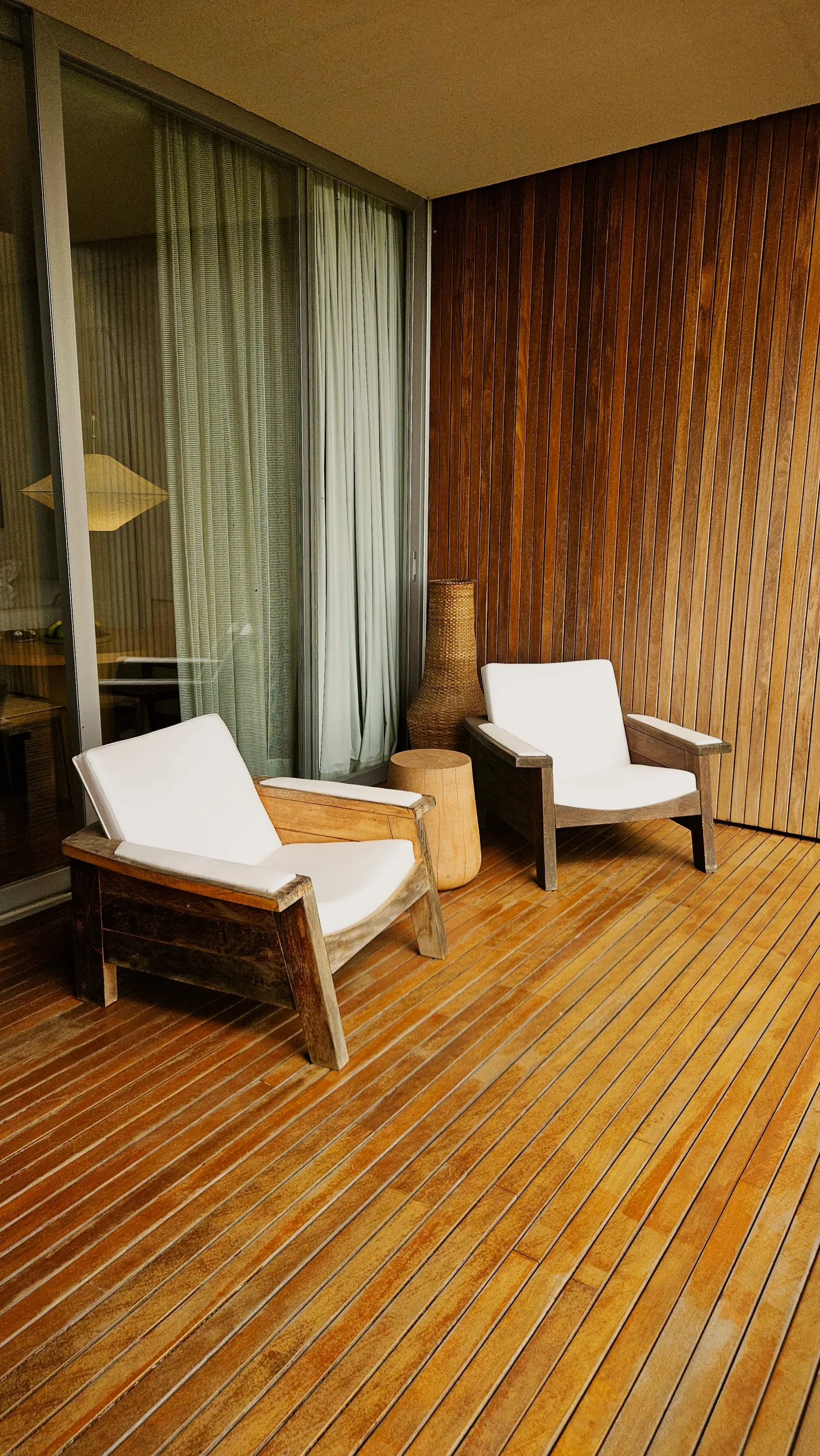
Count each checkpoint from the last coat, not the first, and add time after a cool or damp night. The rug rule is our own call: anything flat that traps moisture against the boards waits for Tough.
What makes deck stain take longer to dry
Every data sheet above carries the same warning in different words. Rodda's says cooler temperatures, higher humidity or excess film build will extend dry times, and Benjamin Moore's say high humidity and cool temperatures lengthen dry, recoat and service times. So the real answer to how long deck stain takes to dry depends on the night after you stain as much as the afternoon you stain.
Cool nights and dew
The Wood Handbook's rule for latex paint, which solid stain behaves like, is to apply it only when it's at least 50 degrees and expected to stay there for 24 hours. It calls the dew point a good estimate of the nighttime low, and it warns against painting late in the afternoon when heavy dew is expected, because water soaking into a coating that hasn't finished forming can cause wrinkling, fading and streaking.
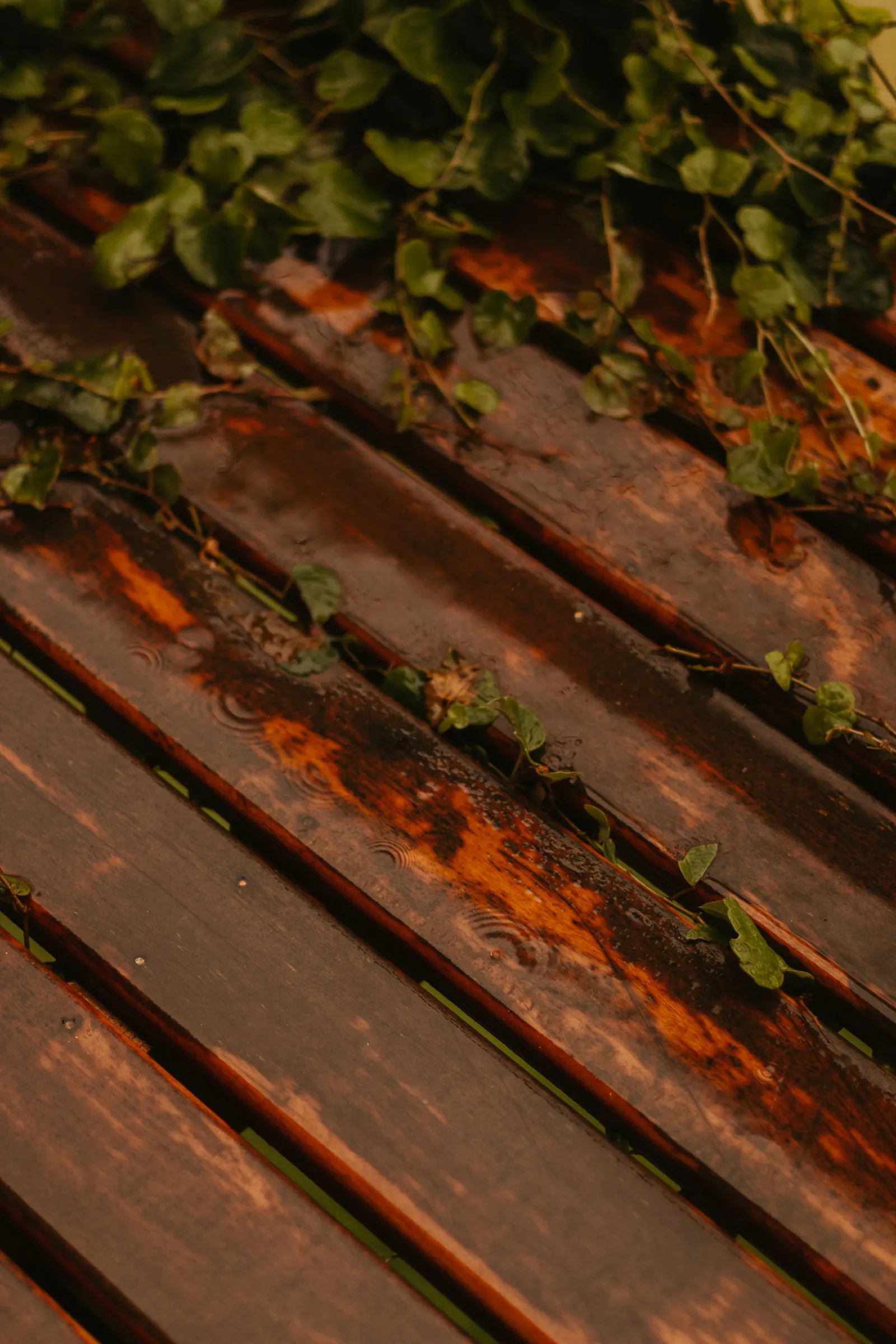
That's the Wisconsin problem in spring and fall: a mild afternoon followed by a cold, wet night. Check the overnight low and the dew point, not just the high. Our look at the Madison outdoor painting season puts numbers on those nights.
Humidity and shade
Rodda's data sheet says humidity shouldn't pass 85 percent while the stain goes on or while it cures. Shade cuts both ways. The handbook suggests working in the shade where you can, to slow drying and avoid lap marks, but a deck that never sees sun will run behind the label. Our post on painting in high humidity covers muggy summer days.
Thick coats
More stain isn't more protection. The handbook says a penetrating stain that still looks shiny an hour after it goes on hasn't soaked in, and the excess should be wiped off before it forms a thin film that can crack and peel within a year or two. Some paraffin-oil stains, it adds, can leave the surface oily for a few weeks when too much goes on.
How long to let a deck dry before staining
This is the wait people skip, and it's often longer than the stain's own. Rodda's deck guide says to let a cleaned deck dry at least two days in dry weather before staining, and to give a stripped deck 48 hours or until the wood reads 18 percent moisture or less.
The target varies by maker. The same guide calls less than 16 percent ideal for restaining, Rodda's stain data sheet asks for less than 14 percent, and Benjamin Moore's says new pressure treated lumber should be below 15 percent. A pin-style moisture meter settles it. Without one, use the splash test: sprinkle water on several spots, and the deck is ready only if it soaks in quickly everywhere.
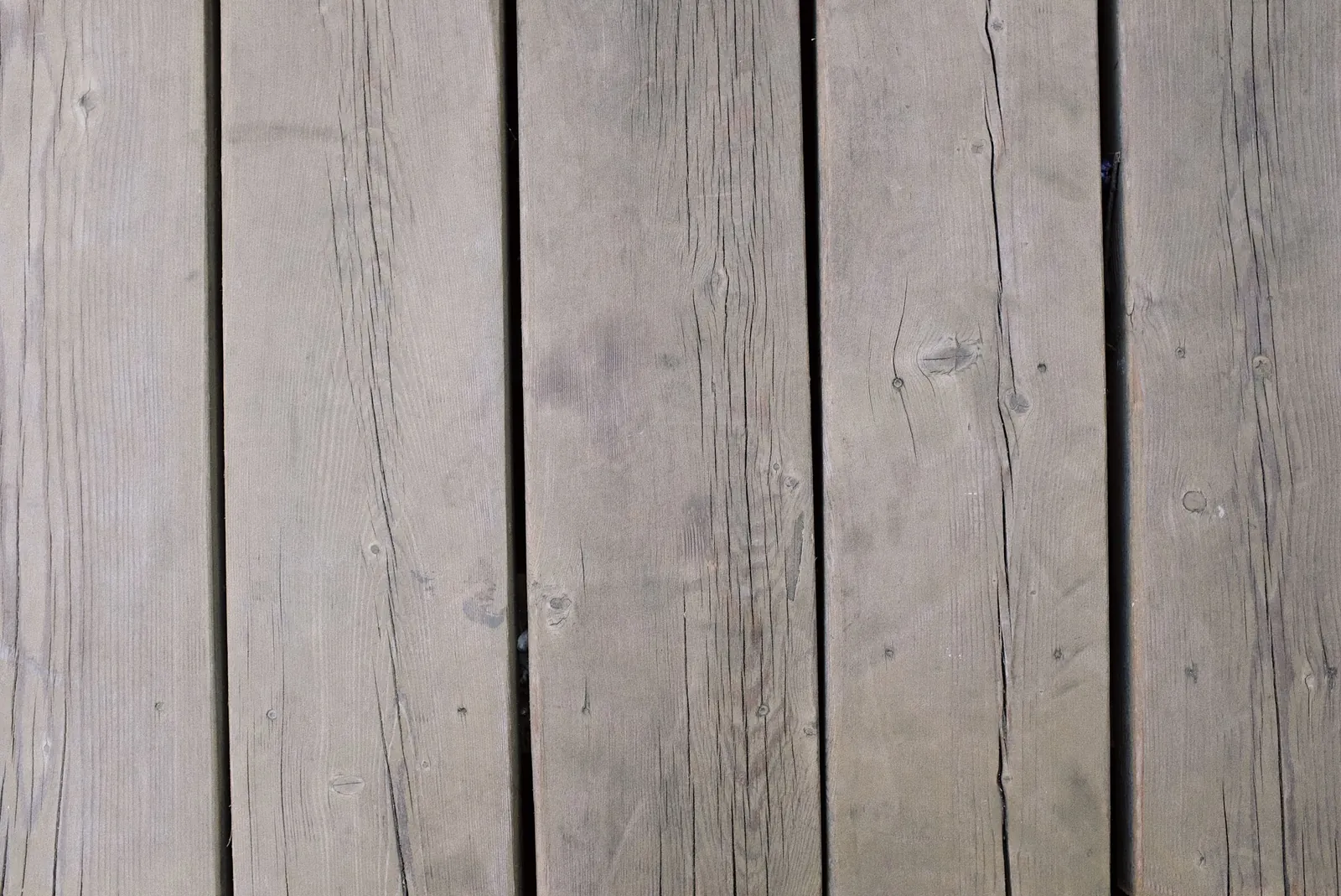
Test the boards in shade and by the downspout, not just the sunny middle. Our guides to preparing a deck for staining and staining pressure treated wood cover the washing step and the wait on new lumber.
Still sticky after a day? Three usual reasons
- Too much stain. Penetrating stain that sat on the surface instead of soaking in stays tacky or shiny. Next time, wipe the excess within the first hour.
- Slow weather. A cool, humid stretch simply runs the clock slower. Give it time before adding anything on top.
- An old film underneath. The handbook puts it plainly: nothing will penetrate areas having a film. Stain over old paint or solid stain just sits there.
If the old finish is the problem, it has to come off before the next coat. Our step by step guide to staining a deck covers when that applies and how to brush stain on so it soaks in.
Planning a stain day around the forecast
Work backward from the checkpoints. Rodda's deck guide says not to stain if rain is forecast within 24 hours, or if humidity is expected to pass 85 percent in the six hours after you finish. Benjamin Moore's sheets set a floor of 40 degrees for the air and the boards. So a good stain day is really two dry days before it if you washed, the day itself, and a dry night after.
How often you'll repeat all this depends on how long the stain holds up, which our post on how long deck stain lasts covers, and a yearly deck maintenance routine stretches that time.
How we handle deck staining at GK Painting
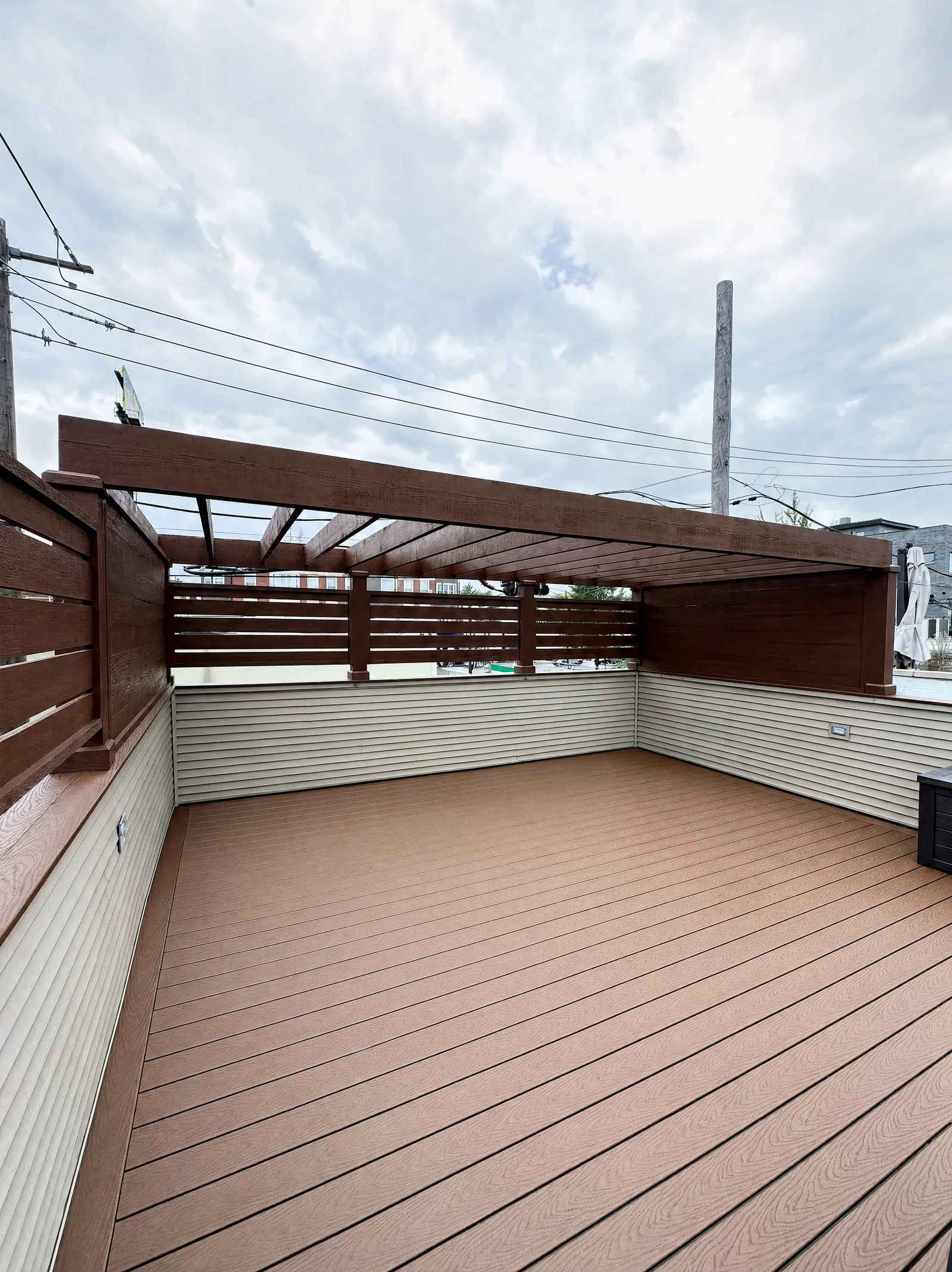
Deck staining and refinishing is part of our exterior work. We look at the condition of the wood first and tell you whether paint or stain will hold up on it, and outdoor schedules can shift with Wisconsin weather. Smaller exterior projects usually take one to three days, and deck refinishing usually takes several, depending on the size and condition of the deck, drying time and weather.
The written quote is the price, no extra charge if the job takes longer than expected. If a problem comes from the quality of our work, like a finish that peels or didn't bond, we come back and make it right. We're based in Waunakee and work across Madison and Dane County. See the cedar pergola stained dark brown, read about our exterior painting, or ask for a free estimate.
Common questions
How long after staining a deck can you walk on it?
About 24 hours for most semi-transparent stains. Rodda's oil-based stain allows light foot traffic after 24 hours, and Benjamin Moore's waterborne semi-transparent stain allows normal foot traffic after 24 hours. Both figures assume 77 degrees and 50 percent humidity, so add time after a cool or damp night.
How long should exterior stain dry before rain?
At least a full day. Rodda's deck guide says not to stain if rain is forecast within 24 hours, and the Wood Handbook warns that water soaking into a coating that hasn't finished forming can cause wrinkling, fading and streaking. Check the overnight forecast too, since heavy dew is water on the boards as well.
How long should deck stain dry between coats?
As long as your label says, since it varies by stain. Benjamin Moore's waterborne semi-transparent deck stain lists 4 hours before a second coat and its solid stain 3 to 4 hours, while Rodda's oil-based semi-transparent stain is a one-coat product. Cool or humid weather stretches every recoat time.
How long to let a deck dry before staining after washing?
At least two days of dry weather, and longer if the wood still tests wet. Rodda's deck guide gives that two-day minimum after cleaning, and 48 hours or a reading of 18 percent moisture or less after stripping. A moisture meter or the splash test tells you when the boards are ready.
When can I put furniture back on a stained deck?
After about 48 hours. Rodda's oil-based semi-transparent stain and Benjamin Moore's solid deck stain both list 48 hours before furniture goes back. Lift chairs into place instead of dragging them during the first week, and wait longer after a cool or humid stretch of weather.
Why is my deck stain still sticky?
Usually too much stain or slow drying weather. The Wood Handbook says penetrating stain that still looks shiny an hour after it goes on hasn't soaked in, and the excess should be wiped off before it forms a film. Cool, humid days and stain over an old film keep it tacky longer.
Sources
- Wood Handbook: Wood as an Engineering Material (Chapter 16, Finishing Wood), USDA Forest Service, Forest Products Laboratory
- Exterior alkyd and oil semi-transparent stain, technical data sheet, Rodda Paint
- Guide to cleaning, stripping and preparing a deck for stain, Rodda Paint
- Waterborne exterior semi-transparent stain, technical data sheet, Benjamin Moore
- Waterborne exterior solid stain, technical data sheet, Benjamin Moore
More on decks and exterior and every decks and exterior post.