Can you paint veneer cabinets? Yes, if you respect how thin the wood is
· 7 min read · By GK Painting & Remodeling
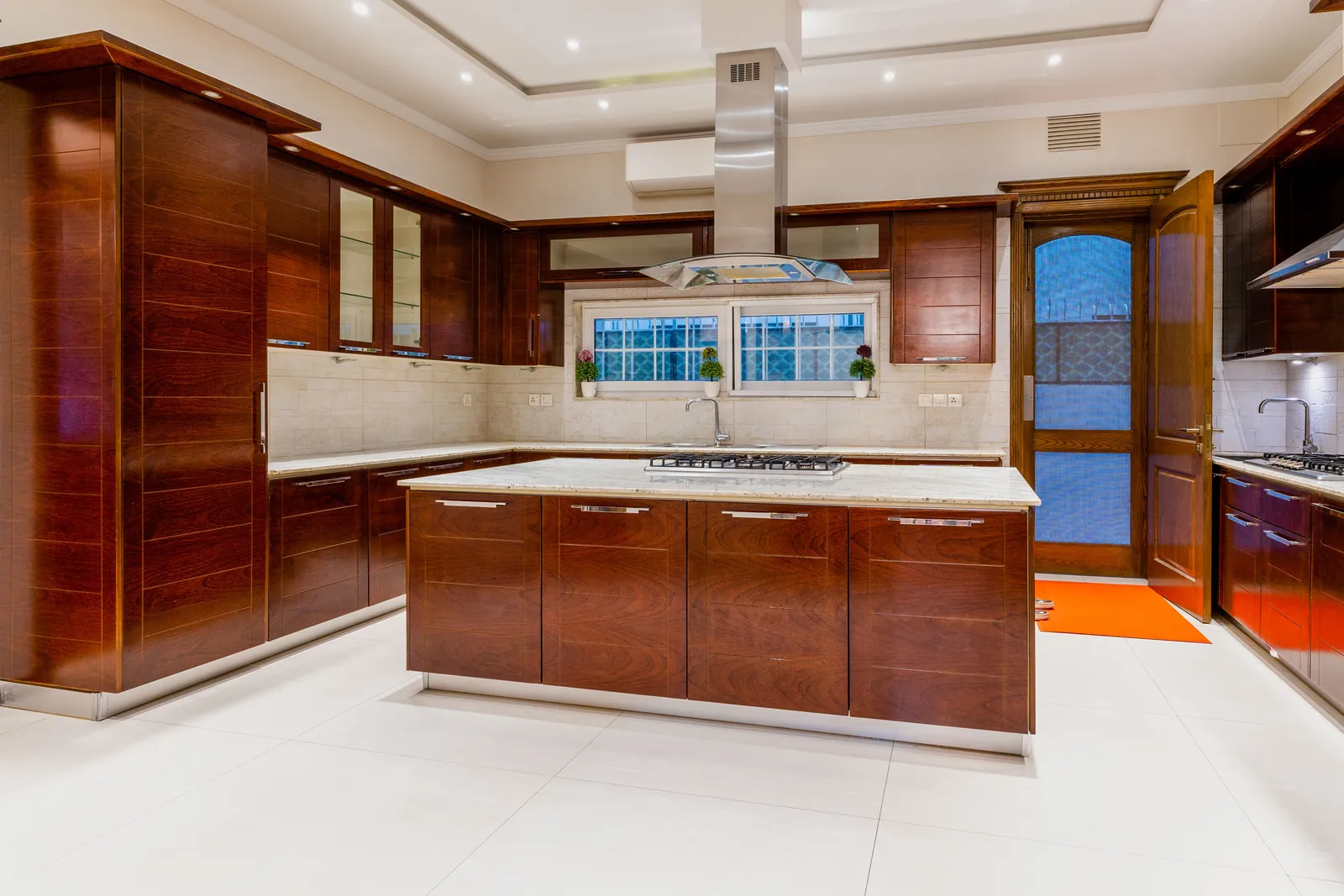
Yes, you can paint veneer cabinets. Wood veneer is a thin sheet of real wood glued over a core of plywood, particleboard or MDF, so it takes primer and paint the way solid wood does. Painting veneer cabinets goes wrong in two places: sanding too hard through a layer thinner than a credit card, and painting over edges or cores that water has already damaged.
Below: how to tell veneer from laminate, how far to sand, what to do about lifting edges and swollen board, and which primer fits your doors. If they turn out to be plastic, read our guide to painting laminate cabinets instead.
What is wood veneer on cabinets?
Wood veneer is a thin sheet of real wood, sliced or peeled from a log and glued onto a panel. On cabinets, that panel is usually plywood, particleboard or MDF, and the veneer is the only wood you see.
The USDA's Wood Handbook says hardwood plywood is normally used for furniture and cabinet panels, and that its center layers can be veneer, lumber, particleboard, MDF or hardboard. A substantial portion is sold completely finished, which matters when you choose a primer.
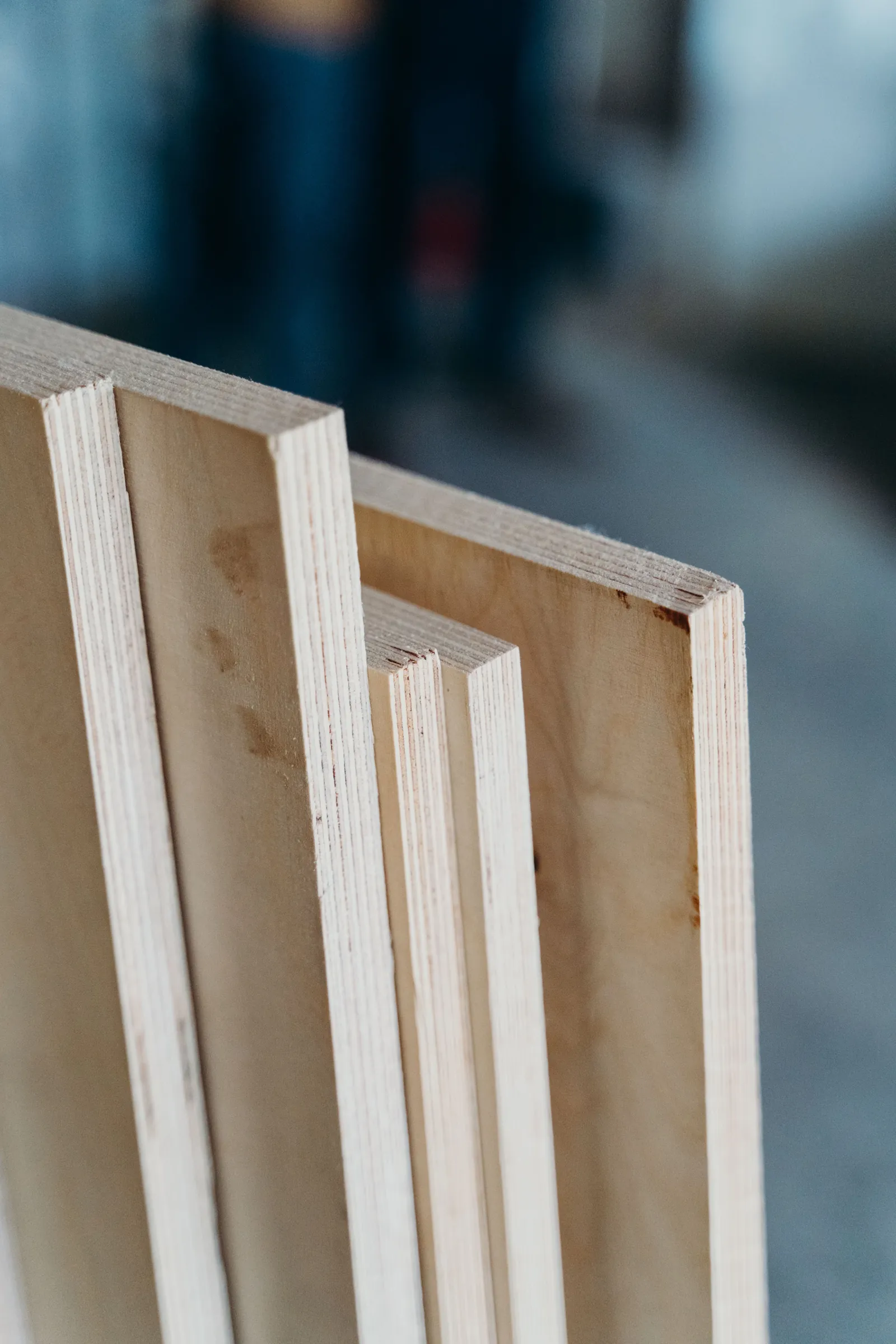
How thin is the face? Purdue Extension's guide to hardwood face veneer says thickness generally ranges from 1/36 to 1/50 of an inch, with maple and cherry commonly cut at 1/42 inch and oak at 1/36. Veneer has gotten thinner over the years as equipment improved, it adds.
Veneer isn't only on flat doors
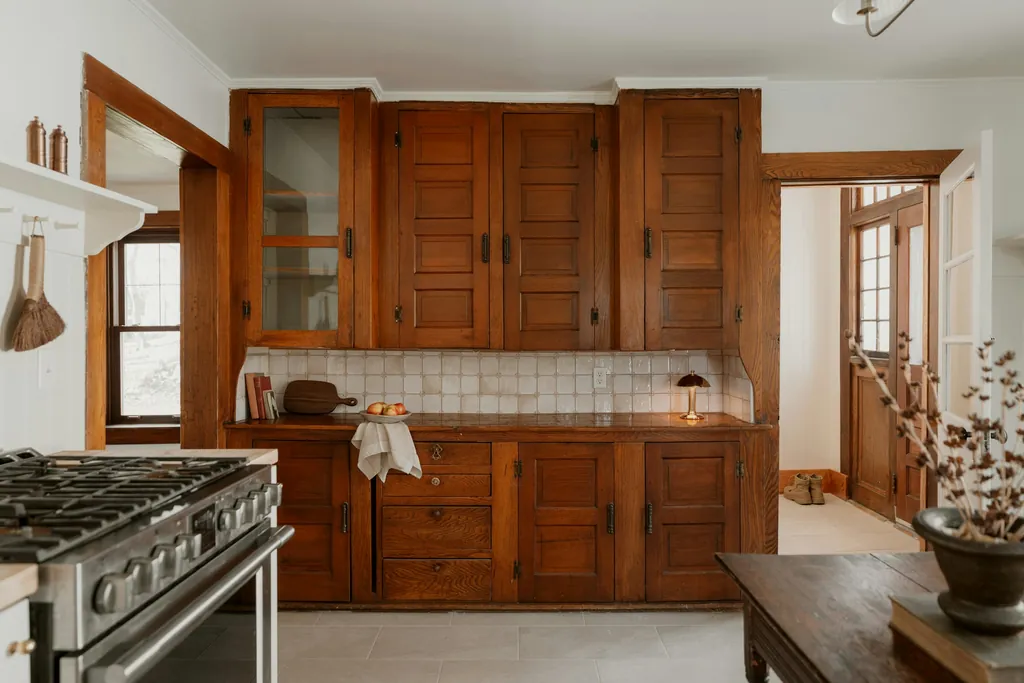
A raised-panel door doesn't prove solid wood. Purdue describes cabinet doors made by machining a profile into particleboard, then forming one continuous sheet of veneer over the flat faces and the shaped edges. If your kitchen was refaced at some point, the boxes may wear veneer too, since refacing generally puts a veneer over the faces of the cabinet boxes.
Can you paint veneer cabinets? First, rule out laminate
From across the room, veneer, plastic laminate and vinyl thermofoil can look alike. The Wood Handbook explains why: decorative laminate is brown resin-soaked paper topped with a sheet that has the color or design printed on it, under clear resin layers. The grain is a picture.
| Check | Wood veneer | Plastic laminate | Thermofoil |
|---|---|---|---|
| The grain | Real grain that changes from door to door | A printed design that can repeat | A printed vinyl film |
| A chip or raw edge | Thin wood over particleboard, MDF or plywood | A hard layer over brown core sheets | A soft skin over MDF |
| Door edges | Wood edging, or veneer formed over the shaped edge | A separate strip or a hard corner | Rounded, with no seams |
| The plan | Scuff, then prime for the finish on it | Its own bonding process | Paint only while the film is tight |
The table is our editorial guide, not a measurement; the veneer and laminate details come from the Wood Handbook and Purdue. Laminate and thermofoil each have their own prep, covered in our laminate cabinet guide.
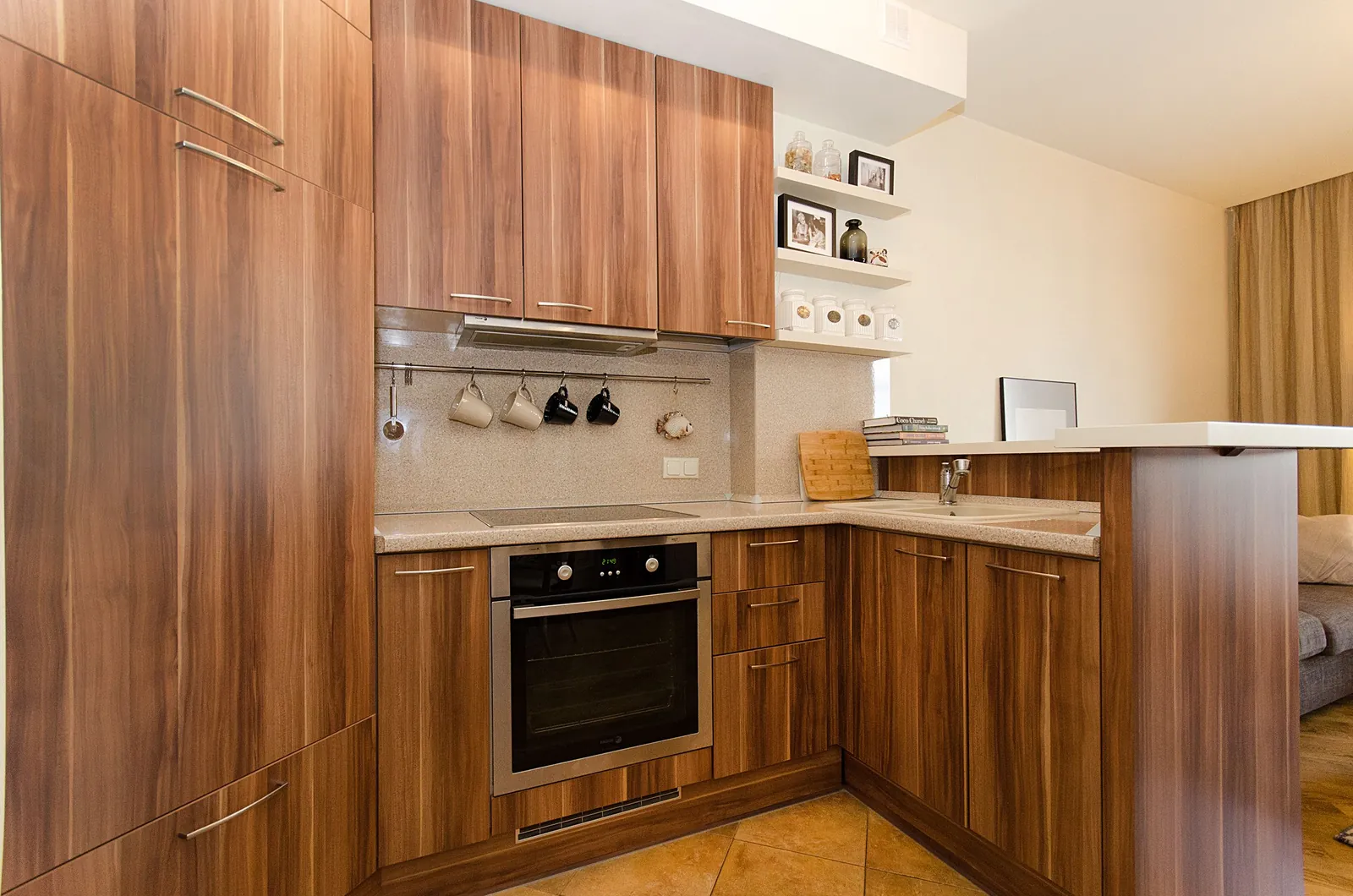
One more tell: look inside a hinge cup hole or under the sink, where the core shows through.
The Skin, Core, Coat check before painting veneer cabinets
Most advice on painting veneer cabinets starts with the sander. Start with three questions instead, in this order. It's our editorial framework, not a lab standard.
- Skin: is the surface real wood veneer, or plastic? Plastic goes to a different process.
- Core: is what's under the veneer flat, dry and holding on? Paint can't fix a core or glue a skin back down.
- Coat: what finish is on the veneer now? That decides how you sand and which primer goes first.
| What you find | What it means | Next step |
|---|---|---|
| Real grain, tight edges, clear factory finish | Slick surface over thin wood | Clean, scuff by hand, bonding primer |
| Real grain, stained finish, going light | Wood color can bleed | Stain-blocking primer, test one door |
| Edge lifting or bubbling | The glue has let go | Repair before any paint |
| Swollen or crumbly board near the sink | Water reached the core | Repair or replace the part |
| Printed pattern, plastic edge | Laminate or thermofoil | Follow the laminate process |
The last two columns are our editorial guide built on the sources below, not a measurement.
Why veneer paints like wood but can't be sanded like it
Paint doesn't know the wood is thin. Veneer has the grain, pores and natural color of the species it was cut from, so it behaves like that wood under primer.
Plan for the species' worst habits
The Wood Handbook's rule for glued wood products, laminated veneer among them, carries over: base the finish on the worst examples of the species, and if you're painting, start with a stain-blocking primer on the assumption that extractives may bleed. Oak and cherry veneer can push color through a light paint just as the solid woods do; see painting cherry cabinets and painting oak cabinets.
Scuff it, don't sand it
Thickness is the catch when painting veneer cabinets. With 1/36 to 1/50 of an inch of wood to work with, there's no room to sand out dents or level an old finish. Once you cut through, there's no wood left to blend, and the spot has to be patched and primed or the door replaced.
Primer makers ask for less than people expect. A Dunn-Edwards primer data sheet says glossy surfaces should be dulled to give a roughened surface for good adhesion. Dull the shine by hand with a fine sanding sponge or abrasive pad, go easy at edges and corners, and stop once the surface looks evenly matte. To skip sanding altogether, our post on painting cabinets without sanding covers deglossers and the bandage adhesion test.
Peeling veneer edges and water-swollen cores
Lifting and peeling edges
Veneer stays flat only as long as its glue holds. The Wood Handbook says even interior products occasionally get wet, that swelling forces during wetting can be very high, and that repeated wetting and drying is hard on many wood adhesives. It adds that glued wood products moved into dry conditions, especially northern states in winter, can split or delaminate at their joints.
Check the doors by the sink, the dishwasher and the range first. A loose edge has to be reglued and clamped, or the piece replaced, before anyone paints it. Paint over it only hides the problem until the edge lifts again.
Swollen particleboard under the veneer
The core matters more than the face. The handbook says plywood undergoes minimal irreversible thickness swelling if wetted, unlike most panels made from particles. Veneer over a particleboard core that soaked up a leak usually stays puffed, cracked or wavy. Our post on painting MDF cabinets covers both boards in depth, and our guide on whether to paint or replace kitchen cabinets helps when several boxes are damaged.
Primer for veneer cabinets, by the finish on them now
Primer choice follows the Coat question. The Wood Handbook explains why primer is its own coat: it's designed to be sticky and flexible, while topcoats are made hard.
| Finish on the veneer now | Prep | Primer type to start with |
|---|---|---|
| Clear factory finish, still sound | Degrease, dull the shine by hand | Bonding primer for glossy surfaces |
| Stained finish, going to a light color | Degrease, dull the shine | Stain-blocking primer; oil-based if a test bleeds |
| Painted before | Test the old paint's grip first | Bonding primer over sound paint |
| Bare, unfinished veneer | Light sanding, then dust off | Stain-blocking primer |
It's our editorial starting point; the labels have the last word. Even a multi-surface primer that Dunn-Edwards says has strong tannin resistance comes with two caveats: test it for adhesion over previously painted surfaces, and use a solvent-based stain blocker for water stains. Our post on the best primer for cabinets compares the four primer types, and repainting painted cabinets covers doors painted before.
When to stop and call a professional
- Call 911 if anyone has serious trouble breathing while you're using a solvent-based primer.
- Stop sanding the moment a different color or texture shows through. You may be through the veneer.
- Stop if your home was built before 1978 and the cabinets carry old paint you haven't tested.
- Call a pro when edges are lifting on several doors, board is swollen near the sink, or you can't tell veneer from laminate.
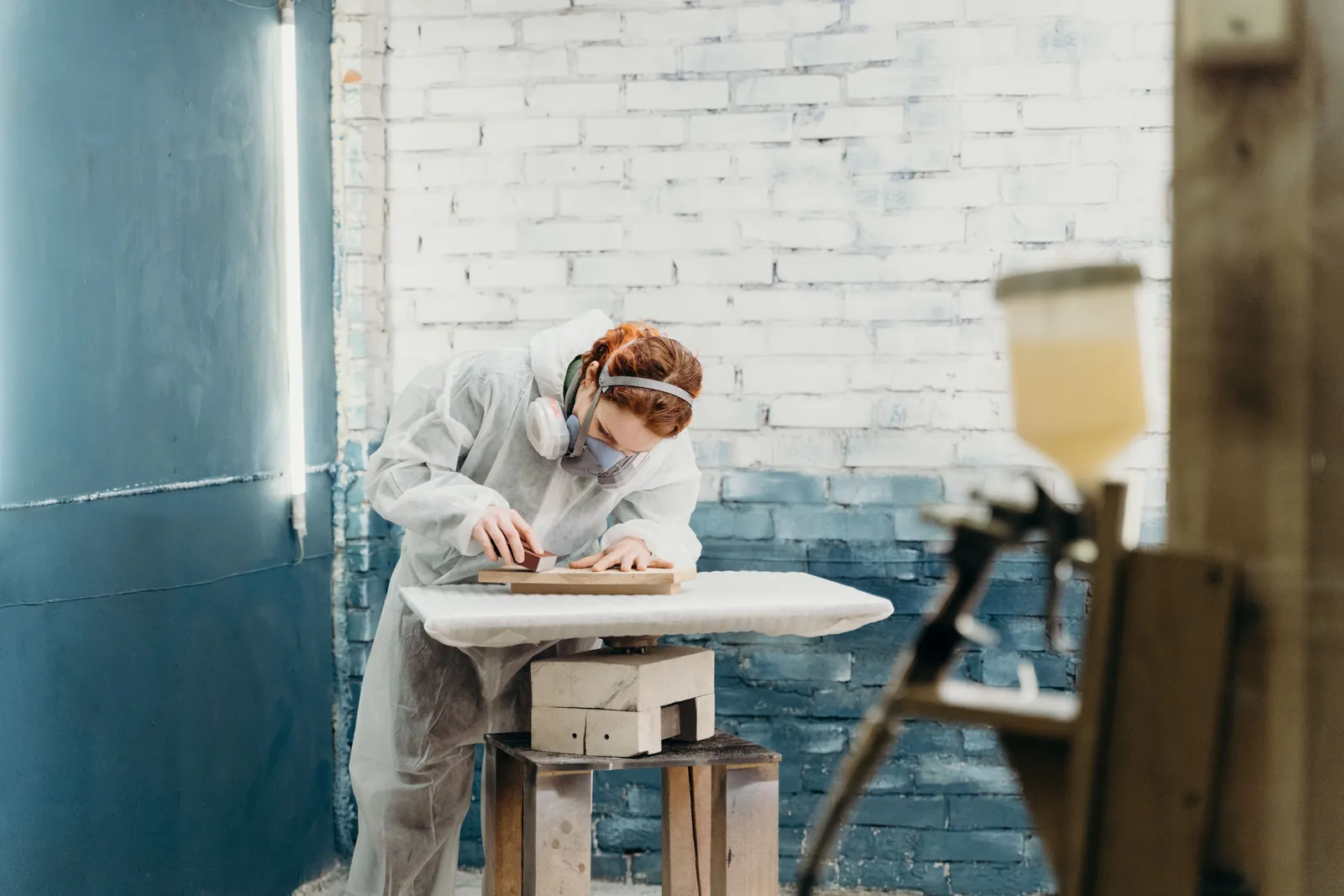
EPA says about three quarters of U.S. homes built before 1978 still contain some lead-based paint, and that painting work in a pre-1978 home with lead-based paint can easily create dangerous lead dust. If your cabinets were painted decades ago, test before you sand, and see painting older Madison homes.
How we handle veneer cabinets at GK Painting
We refinish stained, painted, laminate and unfinished cabinets. If edges are lifting or a core has swollen, George will tell you plainly if refinishing isn't the right call.
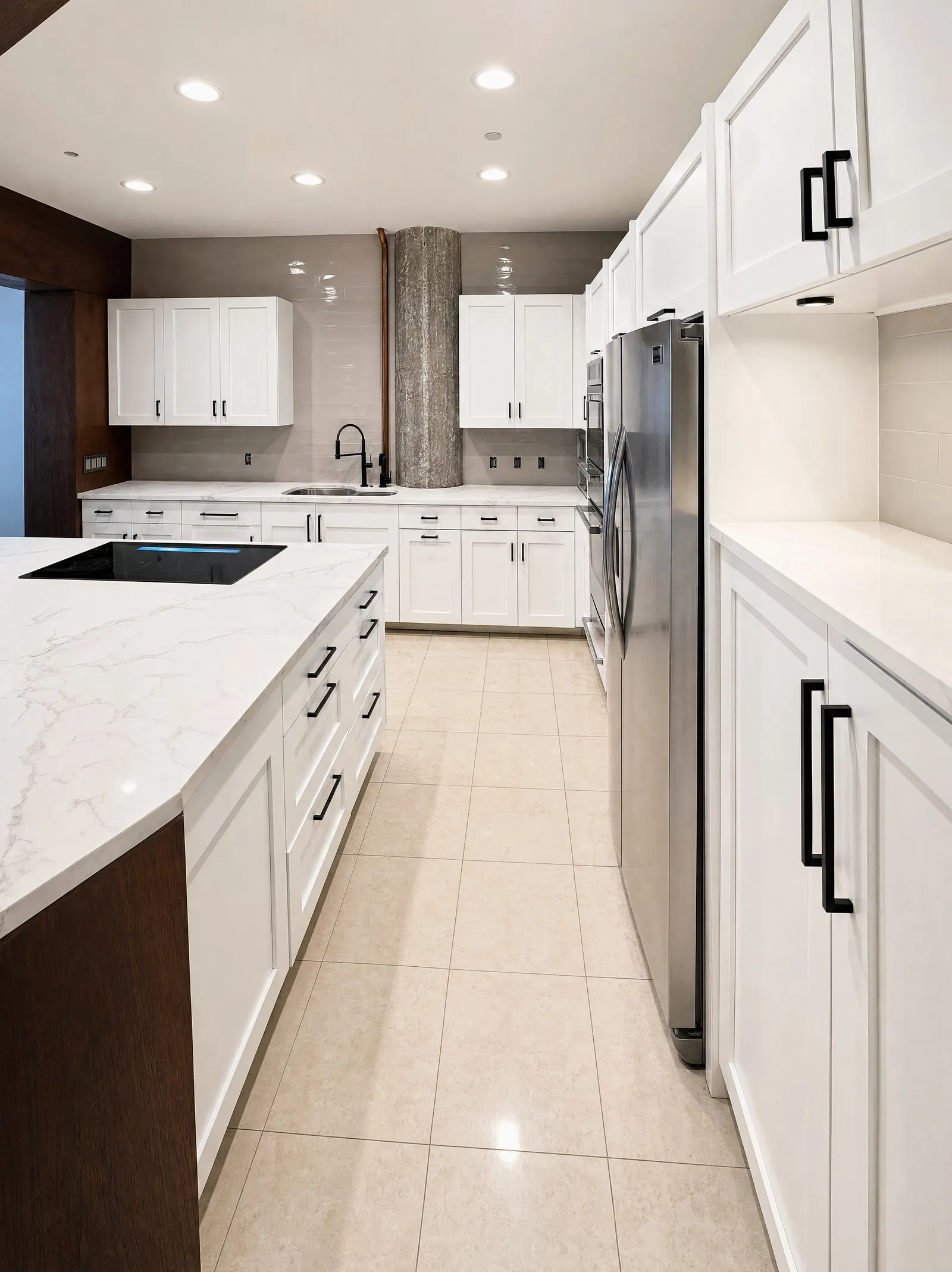
Doors and drawer fronts come off, get labeled, and are cleaned, degreased, sanded, primed and sprayed; the frames are finished in your kitchen. Most kitchens take one to two weeks, priced per cabinet with paint included. The written quote is the price, no extra charge if the job takes longer than expected. If a problem comes from the quality of our work, like a finish that peels or didn't bond, we'll come back and make it right.
We're based in Waunakee and work across Madison and Dane County. Read about our cabinet refinishing service, see how durable painted cabinets are, or ask for a free estimate.
Common questions
Can you paint veneer cabinets?
Yes. Wood veneer is real wood glued over a core of plywood, particleboard or MDF, so it takes primer and paint like solid wood. Clean and degrease it, dull the shine by hand rather than sanding hard, and fix any lifting edges or swollen board first, because paint can't repair either one.
Can you sand veneer cabinets before painting?
Lightly, and by hand. Purdue Extension puts face veneer at roughly 1/36 to 1/50 of an inch thick, so there's no room for heavy sanding. Scuff the finish just enough to dull the shine, stay gentle at edges and corners, and stop if a different color shows through, since that means the wood is gone.
What primer should I use on veneer cabinets?
Match the primer to the finish on the veneer now. A sound clear factory finish calls for a bonding primer made for glossy surfaces. A stained finish going light calls for a stain-blocking primer, since veneer bleeds color like the solid wood it came from. Test one door before you prime the rest.
How can I tell if my cabinets are veneer or laminate?
Look at the grain and at a chipped or raw edge. Veneer is real wood, so its grain changes from door to door, and an edge shows wood over a particleboard, MDF or plywood core. Laminate carries a printed design over brown resin layers, and its pattern can repeat across doors.
Can you paint over peeling veneer?
Not until it's fixed. Paint can't hold a loose veneer edge down, and the Wood Handbook explains that repeated wetting and drying is hard on the glue behind it. Reglue and clamp lifting edges, or replace the piece, and check the board underneath for swelling before any primer goes on.
Will oak veneer grain show through paint?
Yes, unless it's filled. Oak veneer has the same large, open pores as solid oak, and the Wood Handbook says pores like oak's leave low spots in a finish that need filler for a smooth surface. Primer and paint alone follow the grain, so the texture still shows under the color.
Sources
- Wood Handbook: Wood as an Engineering Material (FPL-GTR-282), chapters 10, 11, 16 and 19, USDA Forest Service, Forest Products Laboratory
- Manufacturing Fine Hardwood Face Veneers (FNR-240), Purdue University Cooperative Extension Service
- Interior/exterior multi-surface primer, product data sheet, Dunn-Edwards
- Lead Renovation, Repair and Painting Program, U.S. Environmental Protection Agency
More on cabinet refinishing and every cabinets post.