The best paint for kitchen cabinets is a type, not a brand
· 7 min read · By GK Painting & Remodeling
The best paint for kitchen cabinets is a cabinet-grade enamel, not wall paint. For most kitchens that means a waterborne alkyd or a hard-curing acrylic enamel made for cabinets, doors and trim, in satin or semi-gloss. The type on the label matters more than the brand, and the primer under it and the cure after it matter as much as the paint.
Below: what each type does well, how long each takes to cure, and six lines to read on any can. For the shine itself, see our post on the best paint finish for kitchen cabinets.
What makes a paint right for kitchen cabinets
A cabinet paint is an enamel that levels out smooth, cures hard, resists sticking and stands up to cleaning, because cabinet doors get handled, closed and wiped far more than walls do.
Wall paint is built for surfaces nobody touches much. Four jobs separate a cabinet paint from it:
- It levels, so brush and roller marks flow out before the paint sets.
- It cures hard enough to handle hands, dishes and cleaning.
- It resists blocking, the sticking that happens when two freshly painted surfaces press together.
- It holds up to the mild soap and water you'll use to keep it clean.
Blocking is the one people learn about the hard way. Dunn-Edwards describes it as two freshly painted surfaces sticking together when pressed, like a door sticking to its jamb, and says that when one breaks free it can take paint off the other. One cause it names is a low-quality, water-based semi-gloss or gloss that isn't designed to resist blocking. Our post on how durable painted cabinets are covers sticking doors in depth.
Cabinet paint types compared
| Type | Cleans up with | Full cure | Watch for |
|---|---|---|---|
| Waterborne alkyd | Soap and water | About 5 days (Benjamin Moore) | Thinner than latex, so it takes practice |
| Acrylic enamel | Soap and water | 14 to 30 days (Dunn-Edwards) | Gentle use while it cures |
| Oil-based alkyd | Paint thinner | 5 to 10 days, then keeps hardening | Higher VOCs and fumes |
| Two-part coating | Per its label | Per its data sheet | Read the safety data sheet first |
Cure figures are the makers' own; the last column is our editorial guide, not a measurement.
Waterborne alkyd: oil-like flow, water cleanup
Waterborne alkyds sit between the two old paint families. Benjamin Moore says its waterborne alkyds deliver the flow and leveling of oil-based paint with soap and water cleanup, and fully cure in approximately five days, against about three to four weeks for latex acrylics.
It also warns of a learning curve for latex users, because waterborne alkyds are less viscous, and suggests testing a small area of a door first. Our post on latex vs oil-based paint explains the families.
Acrylic enamel: water-based and slow to stick
Acrylic enamels are water-based paints made for doors, trim and cabinets. On blocking, Dunn-Edwards says acrylic latex paints generally resist it better than vinyl acrylic paints or alkyd and oil-based coatings, and it recommends a top-quality acrylic semi-gloss or gloss. It adds that alkyds can develop superior block resistance as the film hardens, so the gap closes with time.
The trade is patience. Dunn-Edwards puts the full cure of latex coatings at 14 to 30 days, and says cross-linking binders keep reacting for days or weeks to build hardness. Dry by afternoon can still mean soft for weeks.
Oil-based alkyd: hard and glossy, with real costs
Benjamin Moore says conventional alkyds cure by oxidation in about five days to a hard, glossy finish that latex can't match, and that brushed alkyd on a cabinet can look sprayed. Dunn-Edwards gives an initial cure of 7 to 10 days and says oil keeps hardening after that. Makers don't agree to the day; treat both as a pattern.
The costs: Benjamin Moore says conventional alkyds use petroleum-based solvents, carry higher VOC levels and need paint thinner for cleanup. See low-VOC paint for fumes, and if you're going white, read painting kitchen cabinets white before choosing oil.
Two-part coatings: read the safety sheet first
Some cabinet finishes come in two parts, a coating and a hardener mixed right before use. Before buying one, read its safety data sheet for isocyanates. NIOSH says isocyanates are used in coatings such as paints and varnishes, that they can sensitize people so a later exposure brings on severe asthma attacks, and that ventilation and respirators may be needed to control exposure.
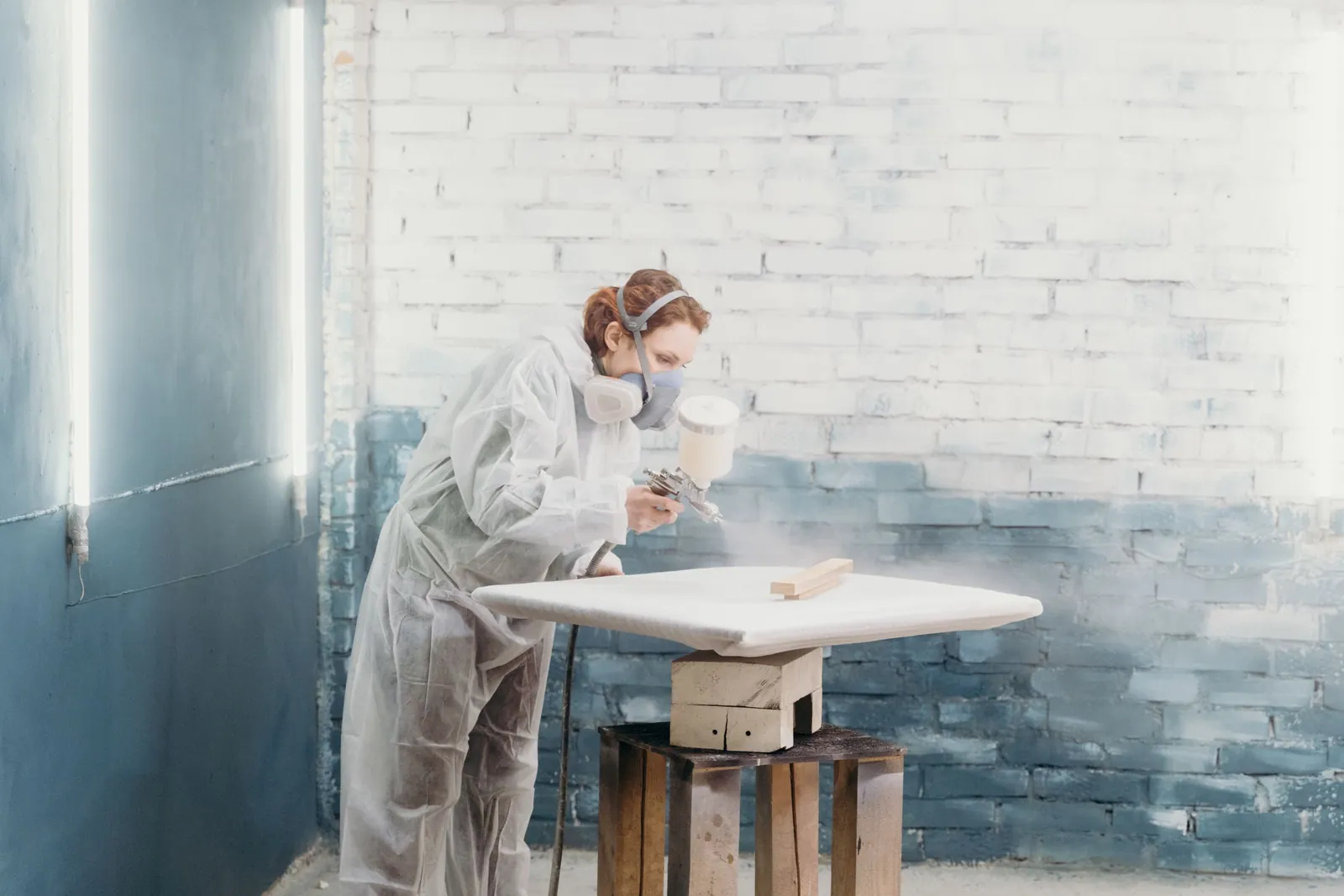
That guidance is written for people who spray for a living. For most homes, a one-part cabinet enamel is the practical choice. Chalk-style and one-step paints make big promises too; run them through the label test below.
The Label Test: six lines to read before you buy
A brand name doesn't tell you what's in the can. The label and the product's technical data sheet do. Read these six lines on any cabinet paint:
- What it's made for: cabinets, doors and trim, not walls and ceilings.
- The resin: waterborne alkyd, acrylic or oil-based. It decides cleanup, leveling and cure.
- Recoat time and cure time: two different numbers, hours versus days or weeks.
- Block resistance: when a label says it outright, good news for doors that close on frames.
- The primer it calls for: see which primer fits which cabinet surface.
- Temperature and airflow: the room has to stay in the label's range while the paint dries.
A paint made for walls, with one dry time, no cure time and nothing about blocking, isn't a cabinet paint, whatever it costs.
Does the paint brand matter?
Less than the type. A brand can sell several kinds of paint, so a logo alone doesn't tell you whether a can is a cabinet enamel or a wall paint. Compare the type, the data sheet and the primer, then let whoever applies it pick the one they use well.
We use premium paint from Sherwin-Williams and Behr, and Behr is the more economical of the two. If you'd rather use a brand you already like, just tell us and we'll use it. Your written quote is built around the paint you pick.
Cure time, Wisconsin winters and getting your kitchen back
Dry and cured aren't the same thing. Dunn-Edwards says latex coatings are usually dry to the touch in one to two hours and can be recoated in two to four, while a full cure takes 14 to 30 days. Oil-based coatings can take four to eight hours to dry to the touch.
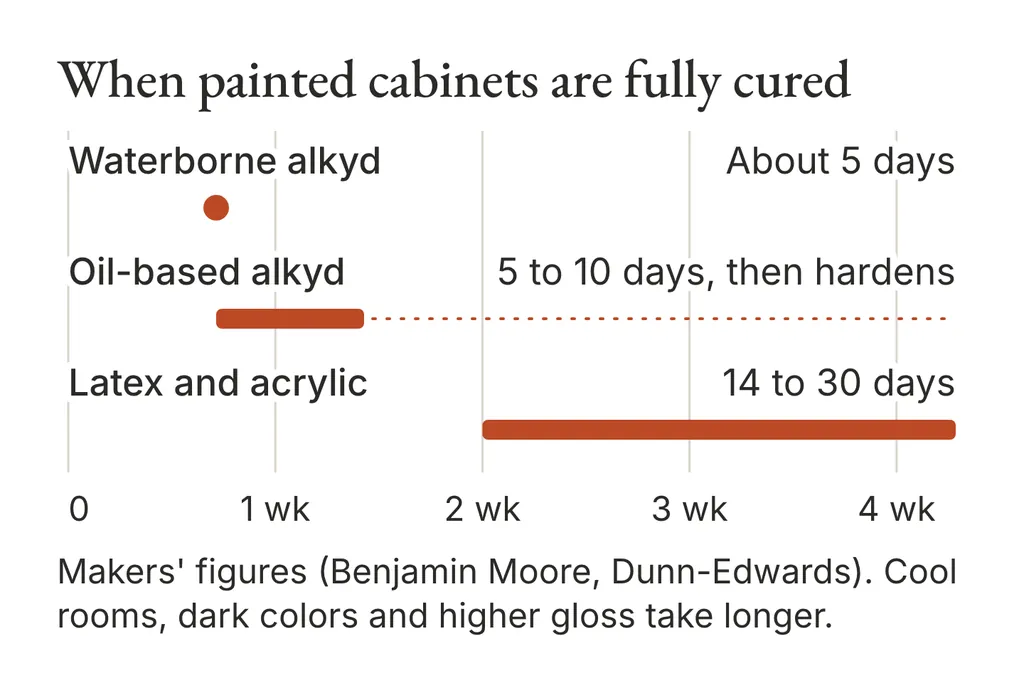
Conditions stretch those numbers. The same bulletin says lower temperatures can thicken a coating and slow evaporation, high humidity slows water-based paint, dark colors and higher gloss take longer to cure, and a room with poor air circulation dries more slowly.
That matters in a Madison winter. If you're painting the doors yourself, check the room against the label's temperature range and keep it there the whole drying time. Through a Wisconsin winter, that usually means a heated room rather than the garage, plus a fan to keep air moving.
Until it cures, open doors by the pulls and wipe spills with a soft damp cloth.
Next-step hurdle: getting the paint to stick to what you have
The paint is half the decision. The other half is the bond, and that depends on what's on your cabinets now:
- Stained wood going light: read the white cabinets post linked above first.
- Already painted: find out if it's oil or latex. Our post on repainting painted cabinets walks through the test.
- Laminate: see our guide to painting laminate cabinets.
Whatever's there, the order on our jobs doesn't change: clean and degrease, sand, then prime, so the coating bonds instead of sitting on top of old grease.
If your home was built before 1978
Sanding old cabinets can mean sanding old paint. EPA says about three quarters of U.S. homes built before 1978 still contain some lead-based paint, and that painting work in one with lead-based paint can easily create dangerous lead dust. Its rule covers anyone paid to disturb painted surfaces in those homes, and Wisconsin is one of the states EPA authorized to run its own program.
EPA says the key is keeping children away from lead. If your home is that old, mention it when you ask for a quote and ask any painter how they handle lead-safe work. See painting older Madison homes for more.
When to stop and call a professional
- Call 911 if anyone has serious trouble breathing after spraying or sanding a finish.
- See a doctor for wheezing, chest tightness or a cough that keeps coming back after working with a coating; NIOSH advises a physician for these symptoms after isocyanate exposure.
- Stop sanding and get advice if your home was built before 1978 and you don't know what's in the old paint.
- Call a pro when you can't tell what the cabinets are made of, old paint is peeling in sheets, or you'd rather not lose your kitchen for weeks.
How we handle cabinet paint at GK Painting
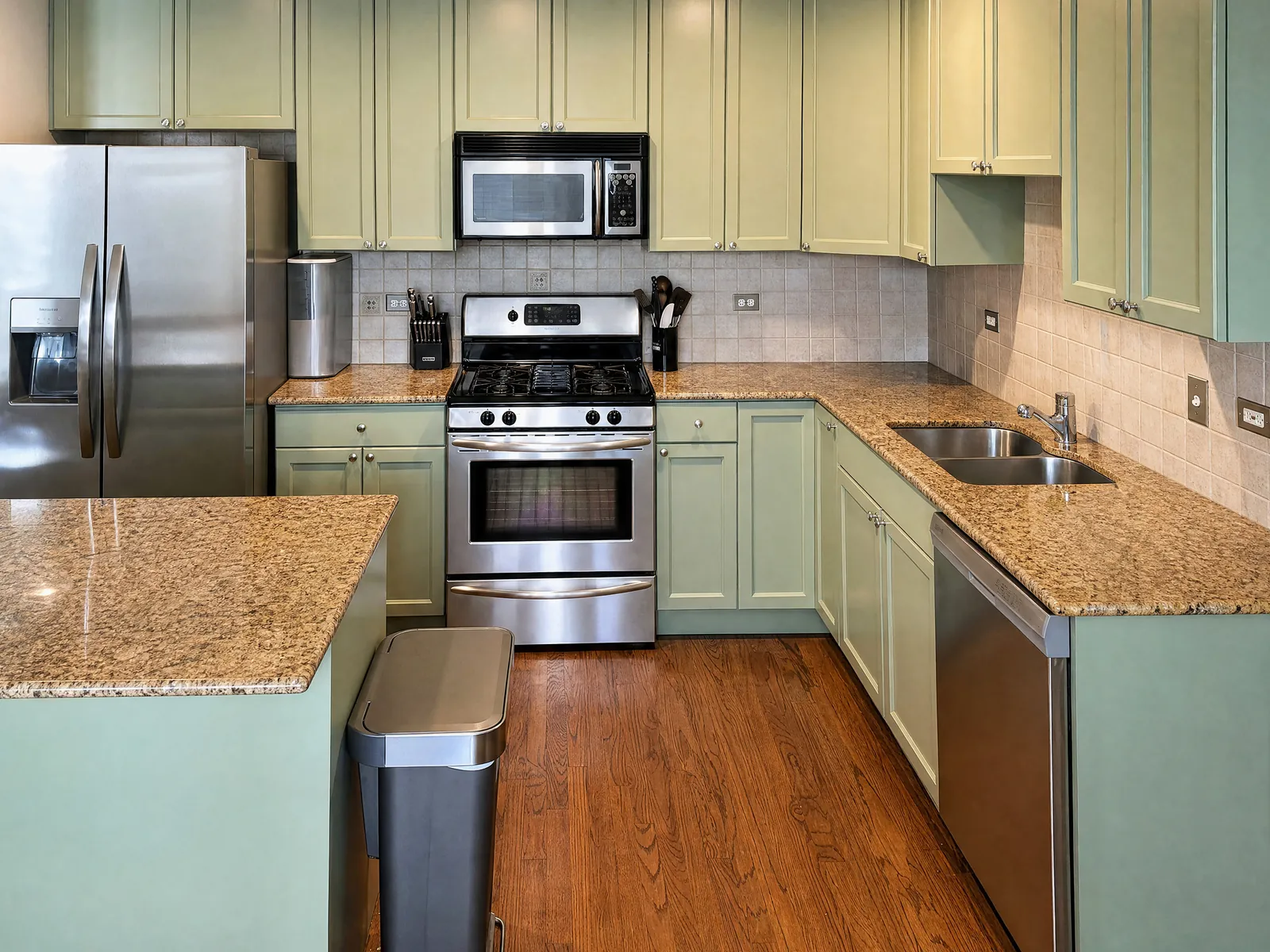
Cabinet refinishing is the work George cares about most, and he's on every job himself. Doors and drawer fronts come off and are labeled, degreased, sanded, primed and sprayed for a smooth, even finish; the frames are finished in your kitchen.
Pricing is per cabinet with paint included. The written quote is the price, no extra charge if the job takes longer than expected. Most kitchens take one to two weeks, and the finish cures before the doors go back on.
We're based in Waunakee and work across Madison and the surrounding Dane County communities. If you're comparing painters, our post on professional cabinet painting shows what each step on a quote prevents. When you're ready, read about our cabinet refinishing service or ask for a free estimate.
Common questions
What type of paint is best for kitchen cabinets?
A cabinet-grade enamel. For most kitchens that's a waterborne alkyd or an acrylic enamel made for cabinets, doors and trim, in satin or semi-gloss. Ordinary wall paint isn't built for doors that close against frames, and traditional oil-based paint brings stronger fumes and paint thinner cleanup.
Can I use regular wall paint on kitchen cabinets?
It's a poor fit. Wall paint isn't made for surfaces that get handled and pressed together all day. A low-quality water-based semi-gloss or gloss without block resistance can make doors stick to their frames and pull paint when they come apart. Choose a paint labeled for cabinets, doors and trim.
Is oil-based paint better for kitchen cabinets?
It cures to a very hard, glossy finish, which is why it's still used on cabinets. The costs are higher VOCs, stronger fumes and paint thinner for cleanup. Waterborne alkyds aim for similar flow and leveling with soap and water cleanup, so most people start there instead.
Can I paint kitchen cabinets without sanding?
You can, but the paint has less to hold on to. On our jobs every surface is cleaned, degreased, sanded and primed so the coating bonds instead of sitting on top of old grease. Skipping the sanding saves an afternoon and leaves new paint relying on a slick old surface for grip.
How long before painted cabinets can be used normally?
They're dry to the touch within hours, but a full cure takes longer: about five days for one maker's waterborne alkyds and 14 to 30 days for latex coatings. Until then, open doors by the pulls, keep dishes off fresh paint and wipe spills gently with a soft damp cloth.
Does the paint brand matter for kitchen cabinets?
Less than the type. A brand can sell several kinds of paint, so the label tells you more than the logo. We use premium paint from Sherwin-Williams and Behr, or a brand you already like, and your written quote is built around the paint you pick.
Sources
- Waterborne Alkyd Paint, Benjamin Moore
- Blocking (paint problem solver), Dunn-Edwards
- Dry Time versus Cure Time of Paint (technical bulletin), Dunn-Edwards
- Lead Renovation, Repair and Painting Program, U.S. Environmental Protection Agency
- Isocyanates (workplace safety topic, archived), NIOSH, Centers for Disease Control and Prevention
More on cabinet refinishing and every cabinets post.