Painting cherry cabinets and maple: prep, bleed and color
· 7 min read · By GK Painting & Remodeling
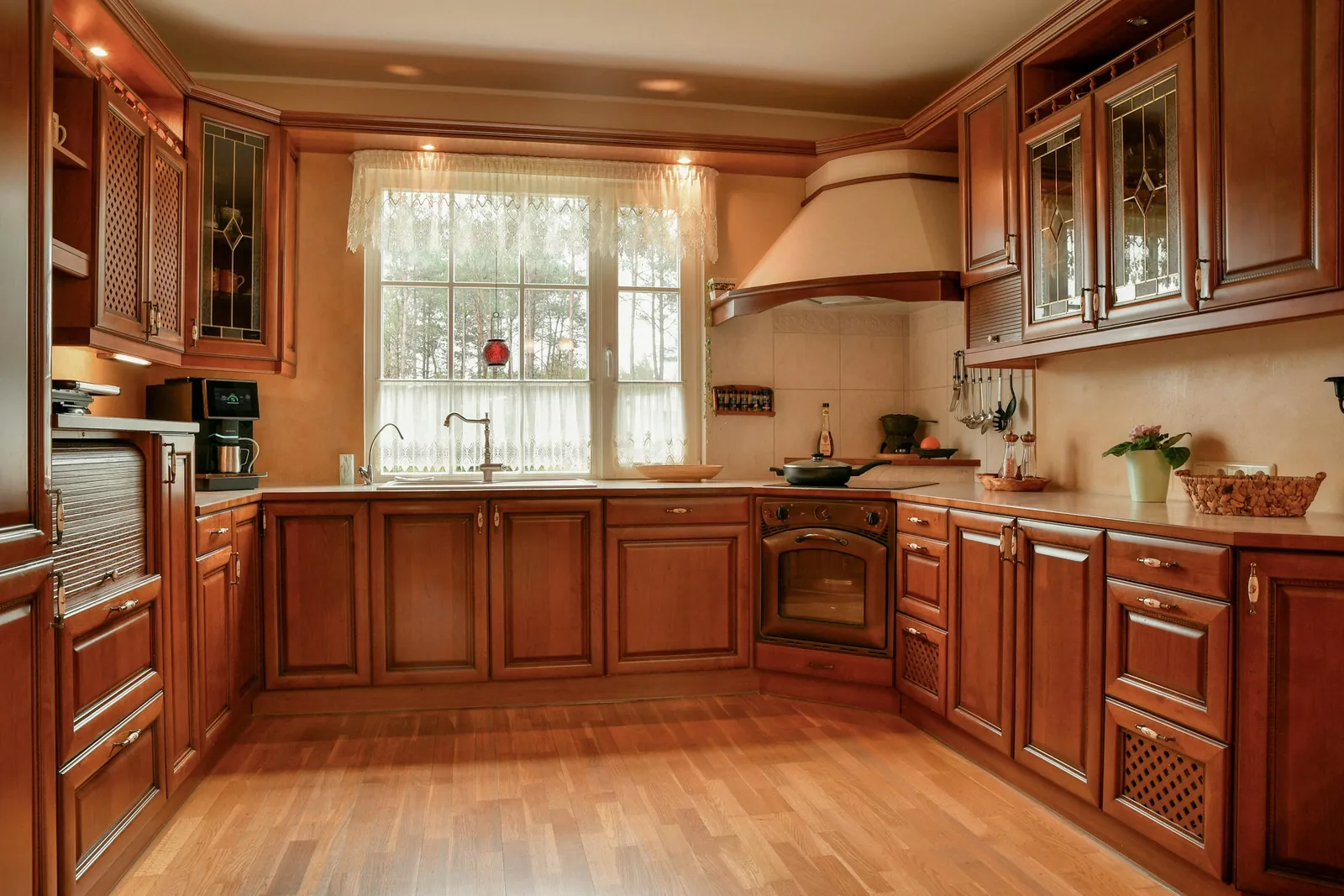
Yes, painting cherry cabinets works, and painting maple cabinets works the same way. Both are closed-grain woods, so paint goes on smooth without the texture you see on painted oak. The real risk is the old reddish stain bleeding into light paint, which is what a stain-blocking primer and a test door are for.
Below: what changes from oak, where pink or yellow bleed comes from, a test-door method, color ideas from kitchens we've refinished, and what Wisconsin seasons do to painted wood.
Can you paint over cherry cabinets?
You can, and the grain is on your side. The Wood Handbook, from the U.S. Forest Service's Forest Products Laboratory in Madison, says hardwoods such as ash, hickory, oak and walnut are known for large vessels, while aspen, cherry and maple have small ones. It adds that large vessels sometimes need filling to get a smooth finished surface.
Cherry and maple skip that problem, so a sprayed coat can come out smooth. Our guide to painting oak cabinets covers the open-grain side of the story.
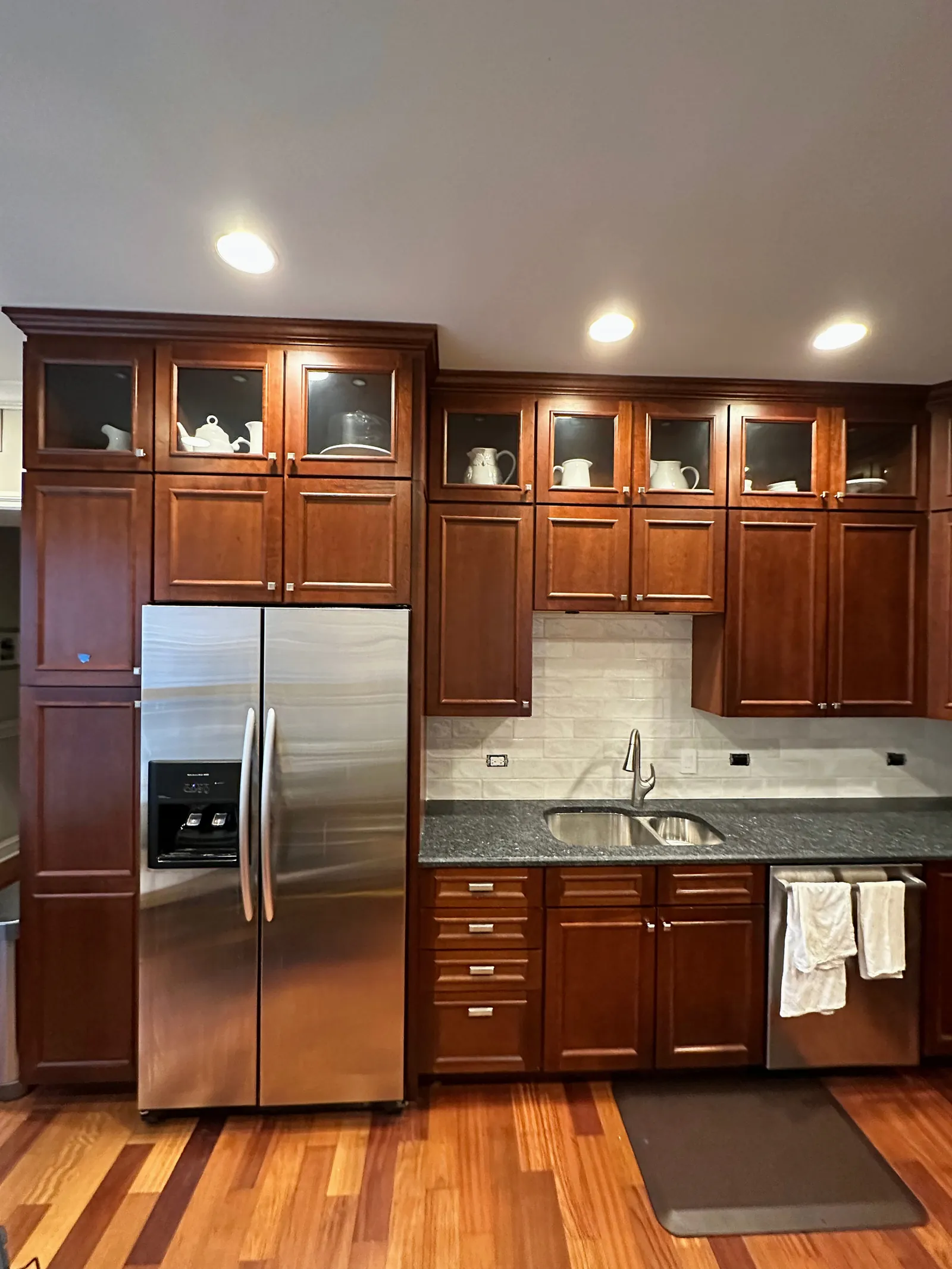
Color is the bigger issue. The Handbook describes black cherry heartwood as light to dark reddish brown, and the two cherry kitchens in our project gallery both had cherry stain on them. That red is what a light paint has to cover, and keep covered.
Painting maple cabinets: smooth grain, lighter start
Maple is, if anything, an easier canvas. The Wood Handbook says hard maple has a fine, uniform texture, with heartwood that's usually light reddish brown. A natural maple kitchen carries less red than dark cherry, but the primer step doesn't change. The next section explains why.
Smooth wood shows everything, too. Brush and roller marks stand out on a flat, tight-grained door, while spraying lays the paint down evenly. On our cabinet jobs, doors and drawer fronts are sprayed.
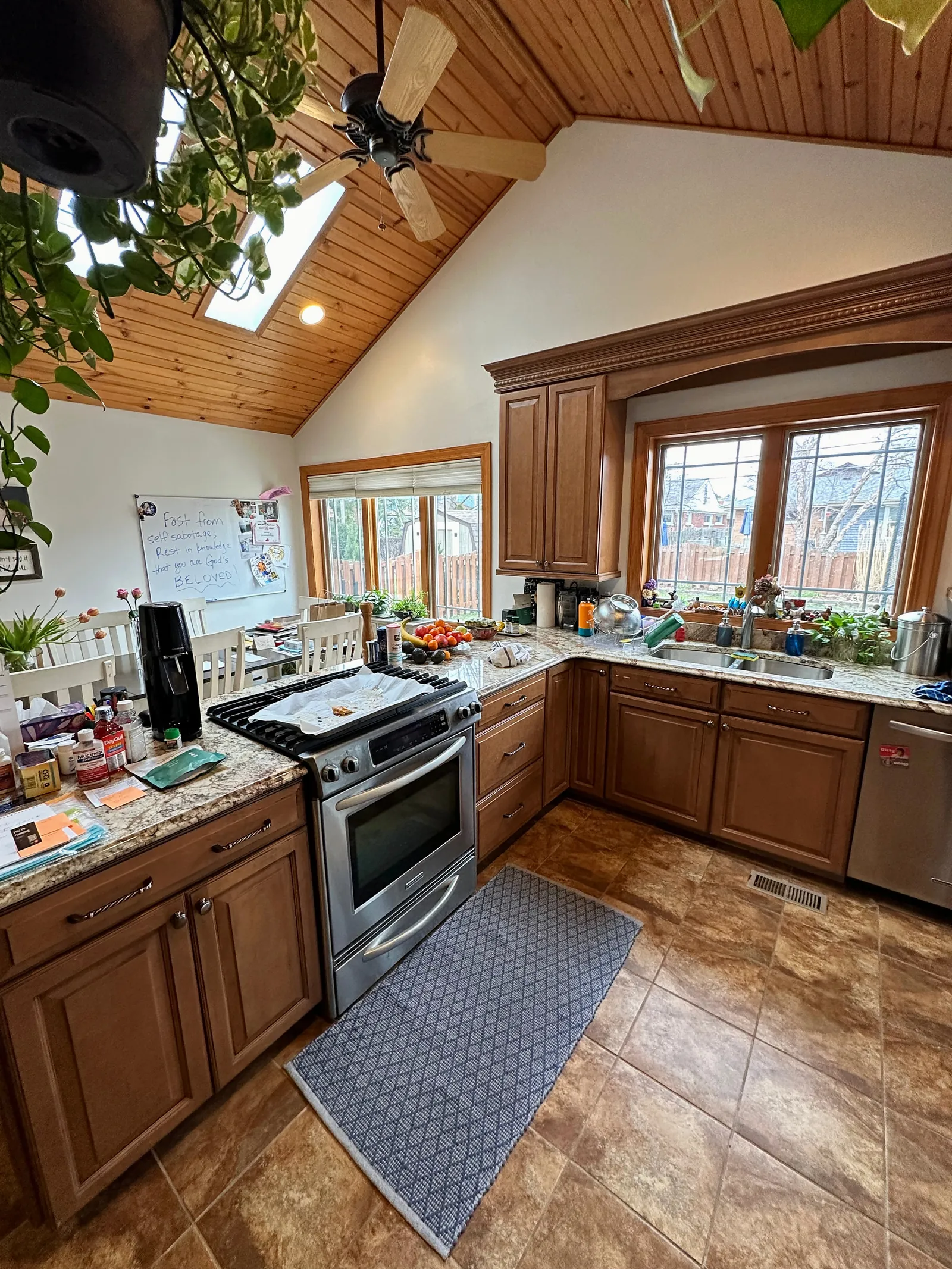
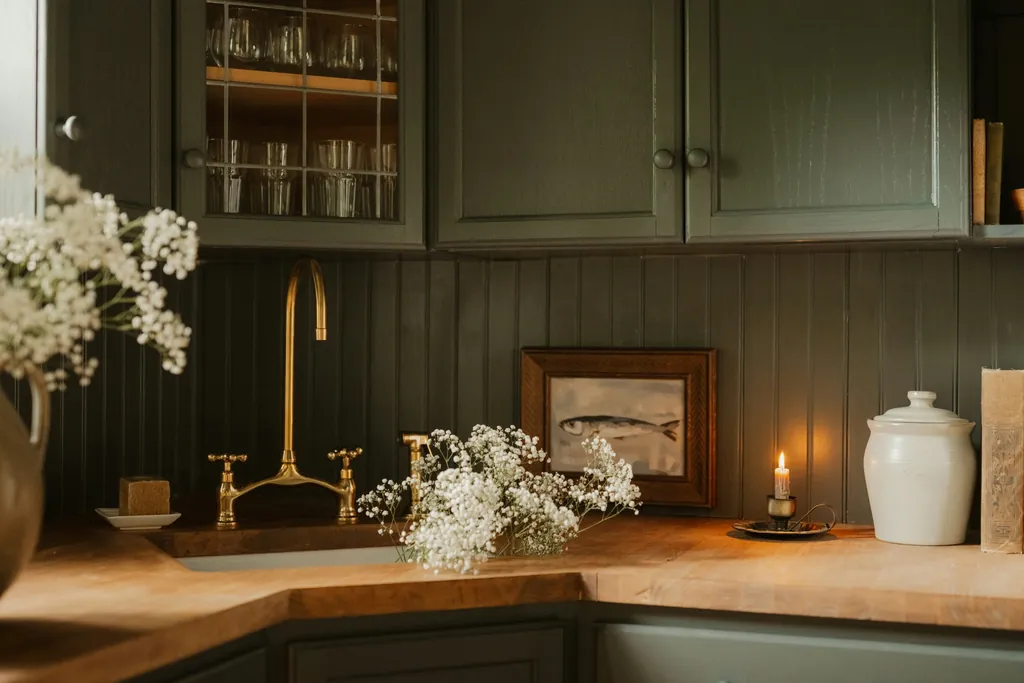
That maple kitchen sat under a pine tongue-and-groove vaulted ceiling, and the cabinets went to a deep forest green against the existing granite counters. You can see how it turned out in our maple cabinets in forest green project.
Where pink or yellow bleed comes from: the wood, or the old finish
When light paint turns pink or yellow over cherry or maple, there are two suspects. In a note on light paint and yellowing, General Finishes, a finish maker, says it can be caused by a topcoat activating the tannins in raw wood, or aniline dyes, stains or contaminants in a pre-existing finish.
The same maker lists oak, pine, mahogany and Douglas fir as particularly prone to bleed-through. Cherry and maple aren't on that list, so on a stained kitchen, don't assume the wood is the only source. The old stain is part of what you're painting over.
The Wood Handbook adds the kitchen angle: extractives can discolor finishes, particularly in humid rooms such as kitchens. Once bleed shows, it says, another coat of the same finish won't stop it; the fix is a stain-blocking primer, then another topcoat. Our primer guide covers which type of stain blocker to use. Going white? Our post on painting kitchen cabinets white covers yellowing and sheen, and the best paint for kitchen cabinets covers what goes over the primer.
Bleed can show up a season later
General Finishes also says wood can bleed tannins right after the topcoat dries or months later, with the temperature change that comes with a change in seasons, and that there's no way to reliably predict yellowing ahead of time. With seasons as different as Wisconsin's, that's a reason to prime properly up front instead of hoping.
The Test-Door Method for cherry and maple
Before color goes on the whole kitchen, prove the system on one door. Finding bleed on one door costs a door's worth of time; finding it on every door means priming and painting them all again. This is our editorial checklist, built from the sources on this page:
- Pick a door that works hard, near the sink or dishwasher, where steam and wiping never let up.
- Clean, degrease and sand it exactly the way the rest of the kitchen will be done.
- Prime it with a stain-blocking primer and let it dry as the label says. Dunn-Edwards' data sheet for one of its stain-blocking primers says to let it dry 4 hours, then test a small area by applying the topcoat.
- Put the real color on, full coats, and look at it in daylight and again at night.
- If pink or yellow shows, don't add more color. Dunn-Edwards says to apply a second coat of primer, let it dry overnight and test again before the topcoat.
- Remember the limit: a test door can't catch bleed that waits for a new season, so the primer is still the real protection.
What color paint looks good on cherry cabinets?
That question has two versions. If you're keeping the cherry, you're choosing walls and accents that suit its red. If you're painting it, you're choosing the cabinet color itself.
For painted cabinets, the industry is leaning calm. In the National Kitchen & Bath Association's 2026 trends survey of industry professionals, 96% of respondents named neutrals as the most popular colors, with greens at 86% and blues at 78%. The cherry and maple kitchens in our project gallery went the same way:
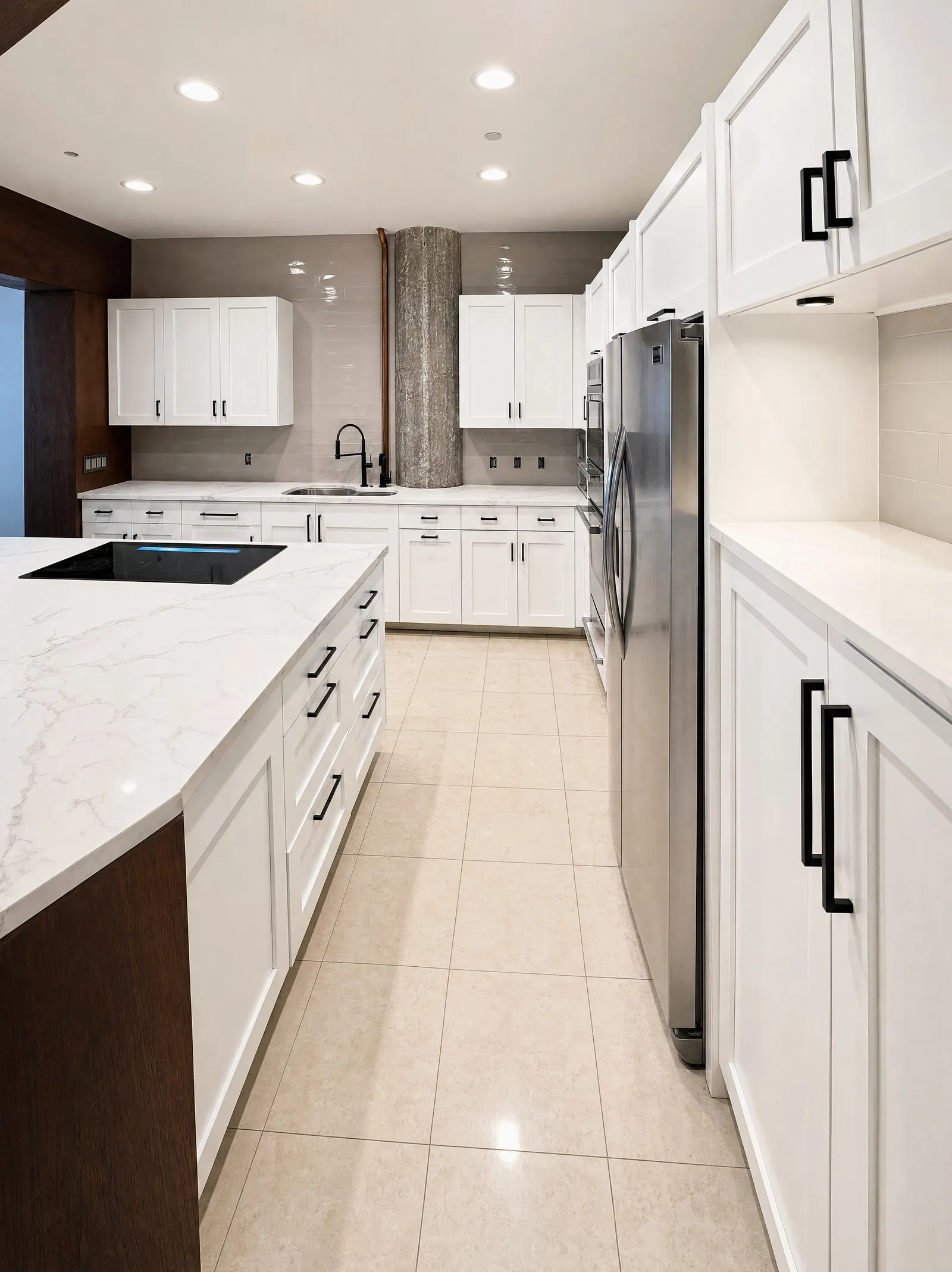
- Dark cherry sprayed white, with new counters, backsplash and black pulls: cherry cabinets in white.
- Cherry with glass-front uppers taken to light gray, with the counters, backsplash and appliances left as they were: cherry cabinets in light gray.
- Natural maple in deep forest green against the existing granite, the project shown above.
Keeping the cherry? Green sits opposite red on the color wheel, so a green on the walls or the island can balance cherry's red instead of competing with it. Our post on green kitchen cabinets has shades to start from. Whatever you choose, test it on a big sample in your own light, in daylight and again at night, before you commit.
How to make cherry cabinets look modern
You don't have to paint every door. Ways to update a cherry kitchen, from the smallest change to the biggest:
- Swap the hardware for a finish and size that suit the room.
- Paint the walls a color that works with the red, not against it.
- Paint only the island; see kitchen island paint colors for pairings.
- Change the counters or backsplash, which other trades handle.
- Paint all the cabinets, which changes the color without new boxes.
One cherry quirk is worth knowing if you change the counters or move an appliance. The Wood Handbook says wood changes color as it ages indoors, mainly from visible light, and that when part of a surface has been shaded, the color usually evens out within several months, though cherry takes exceptionally long. Paint takes that shadow line out of the picture.
Still on the fence between paint and keeping the stain? Our post on painted vs stained cabinets walks through the choice.
Next-step hurdle: hairline lines when the seasons change
Painted cherry and maple doors still move with the seasons, like any wood. The Wood Handbook says changes from seasonal variation, although gradual, tend to be of more concern than daily ones, and that protective coatings can retard dimensional changes in wood but don't prevent them.
It also describes black cherry as having moderately high shrinkage but being very dimensionally stable after drying, and hard maple as having high shrinkage.
On a frame-and-panel door, that movement can show as a thin line where the center panel meets the frame, often in winter when indoor air is driest. It's wood behaving like wood, not the paint failing, and it's worth knowing about before the first winter so it doesn't come as a surprise.
When to stop and call a professional
Sanding a stained cherry or maple door usually means sanding a clear coat, not paint. Older kitchens, though, sometimes carry old paint on the cabinets or the trim around them.
EPA says about three quarters of U.S. homes built before 1978 still contain some lead-based paint, and that renovation or painting work in a home with lead-based paint can easily create dangerous lead dust. Its rule covers anyone paid to disturb painted surfaces in those homes, and Wisconsin runs its own EPA-authorized program.
- Call 911 if anyone has serious trouble breathing while sanding, priming or spraying.
- Today: if primer or paint fumes give anyone a headache or dizziness, stop, air the room out and leave until it clears.
- Stop sanding if your home was built before 1978 and you don't know what's in the old paint. EPA points homeowners doing their own work to lead-safe work practices.
- Call a pro when bleed keeps coming back through primer, the old finish is flaking, or you'd rather not lose the kitchen for weeks.
How we handle cherry and maple cabinets at GK Painting
Cabinet refinishing is the work George cares about most, and he's on every job himself. We refinish stained, painted, laminate or unfinished cabinets in the color you want; we don't stain cabinets.
Doors and drawer fronts come off and are labeled, cleaned, degreased, sanded, primed and sprayed. The frames are finished in your kitchen with a fine-finish roller or spray, depending on the space, and the finish cures before the doors go back on. Most kitchens take one to two weeks, and pricing is per cabinet with paint included. The finish is only as good as what's under it.
We're based in Waunakee and work across Madison and the surrounding Dane County communities. See more of our work, read about our cabinet refinishing service, or ask for a free estimate.
Common questions
Can you paint over cherry cabinets?
Yes. Cherry is a closed-grain wood with small vessels, so it paints smoothly without grain filling. The work is in the prep: clean and degrease, sand to dull the old finish, then use a stain-blocking primer so the reddish stain or wood color doesn't creep into the new paint. Test one door first.
Can you paint maple cabinets?
Yes, and maple is one of the smoother woods to paint. The Wood Handbook says hard maple has a fine, uniform texture, and like cherry it has small vessels. It still needs cleaning, sanding and a stain-blocking primer, especially under white or another light color. Spraying lays paint down evenly on flat maple doors.
Why is pink showing through the paint on my cherry cabinets?
It's usually bleed, color moving up into the paint from below. General Finishes says yellowing can come from tannins in raw wood or from dyes, stains or contaminants in an old finish. Another coat of paint won't stop it. The fix is a stain-blocking primer and then a fresh topcoat, tested on one door first.
What color looks good with cherry cabinets?
If you keep the cherry, pick colors that work with its red, like warm whites or a soft green, which sits opposite red on the color wheel. If you paint the cabinets, neutrals lead: 96% of respondents in a 2026 industry survey named neutrals most popular, with greens and blues next.
Do you have to sand cherry cabinets before painting?
Yes, lightly. The goal is to dull the old clear coat, not remove it, so the primer has something to grip. Dunn-Edwards says glossy surfaces should be dulled to give a roughened surface for good adhesion. On our jobs, doors and drawer fronts are cleaned, degreased, sanded and primed before they're sprayed.
How long does it take to paint cherry kitchen cabinets?
Most kitchens take one to two weeks with us. Doors and drawer fronts come off to be prepped and sprayed, the frames are finished in your kitchen, and the finish cures before the doors go back on. Ask for a free estimate and we'll talk through the timing for your kitchen.
Sources
- Wood Handbook: Wood as an Engineering Material (FPL-GTR-282), USDA Forest Service, Forest Products Laboratory
- How Do I Prevent Water Based Topcoat or Light Colored Paint from Yellowing?, General Finishes
- Interior/exterior stain-blocking primer, product data sheet, Dunn-Edwards
- NKBA | KBIS Releases Annual 2026 Kitchen Trends Report, National Kitchen & Bath Association
- Lead Renovation, Repair and Painting Program, U.S. Environmental Protection Agency
More on cabinet refinishing and every cabinets post.