Painting crown molding: the color, the order and the ladder
· 7 min read · By GK Painting & Remodeling

Painting crown molding comes down to color, order and prep. Pick the color route first, paint the ceiling before the crown and the walls after it, caulk the gaps, prime anything repaired, and brush on two thin coats. At ceiling height, the ladder and any old lead paint matter as much as the brush.
This post covers the decisions around the brush. For brush technique itself, see how to paint trim. One thing up front: we paint crown that's already installed. We don't install molding.
Are you supposed to paint crown molding?
Usually, yes. Benjamin Moore's trim guide says one white for the crown molding, ceiling and trim is by far the most popular choice among homeowners, and it calls intricate crown worth treating as a focal point.
The exception is stain-grade wood. If your crown is solid wood with a stained or clear finish that still looks good, leaving it alone is a real option. Paint is hard to undo once it's in every groove of a profile. That's our editorial view, not a rule.
Painting is also the last step on new crown. If a carpenter is putting up new molding, the nail holes get filled and the joints caulked before the final coat goes on. Our part starts there, with molding that's already on the wall.
The Crown Color Decision: four routes
Pick the route before you buy paint. The first three rows follow Benjamin Moore's trim guide; the last row and the last column are our editorial guide, not a measurement.
| Route | What it does | Best when | Watch for |
|---|---|---|---|
| Match the ceiling and trim | One white frames the room; Benjamin Moore calls it the most popular choice | You want a classic look that suits any wall color | Use the exact white the other trim has |
| Match the walls | A modern, monochromatic look | The crown is plain and the room is simple | Benjamin Moore warns it may hide the crown's details |
| Accent color | Draws attention to the crown's detail | The profile is ornate and worth showing off | Every wobble in the caulk line shows |
| Leave stained wood stained | Keeps the original wood character | Stain-grade crown in good condition | Paint is hard to reverse |
Two questions come up next. Can crown be the same color as the walls? Yes, that's the second route, and it suits plain profiles best. Can crown and baseboards be different colors? They can, but in our view a room reads calmer when crown, casings and baseboards share one trim color, so a different crown color is really the accent route. Our post on painting baseboards covers the other end of the wall.
The order of work for painting crown molding
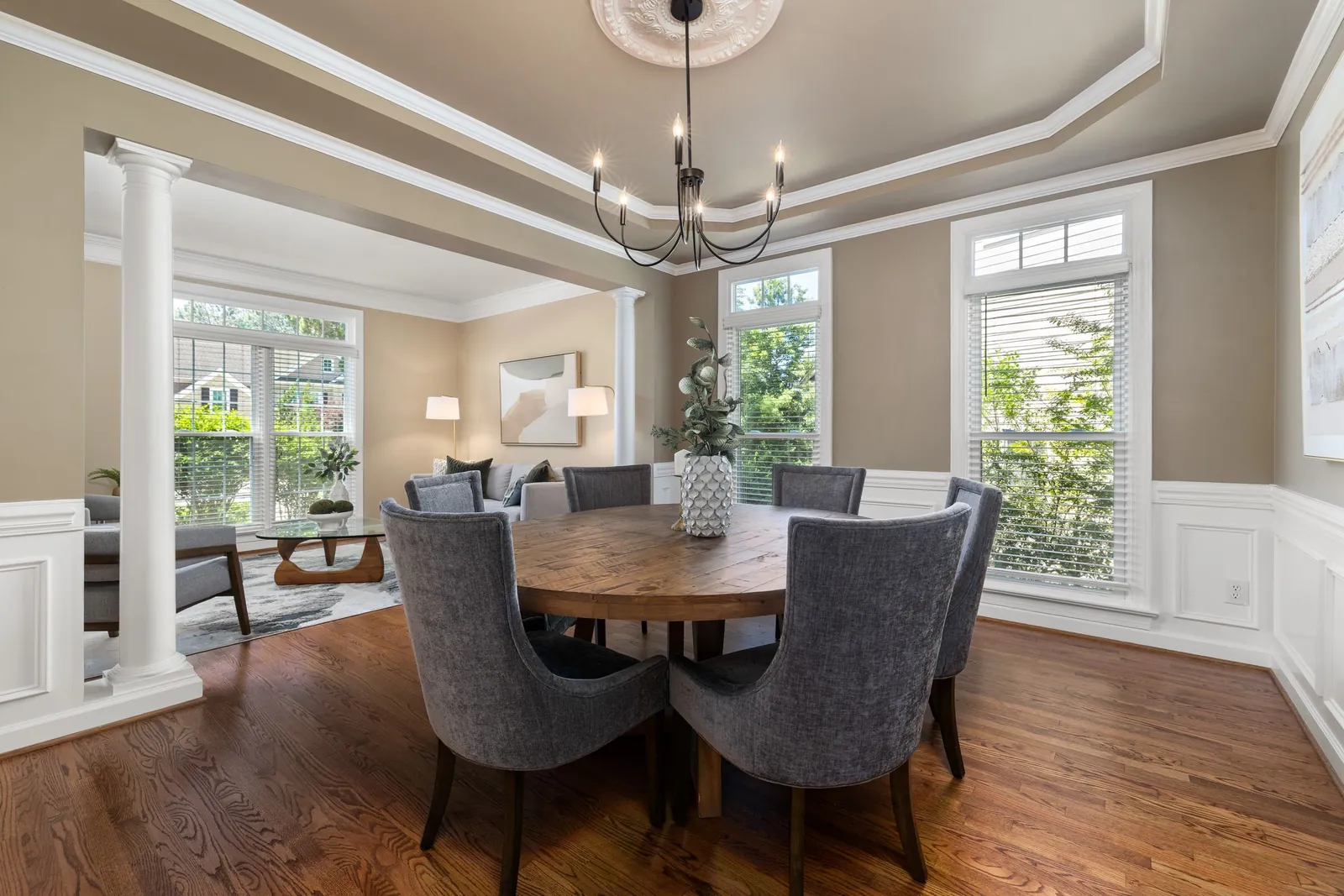
Work top down: ceiling, then crown, then walls. Drips fall, so the ceiling goes first, and a finished crown gives you a clean edge to cut the wall color against.
The makers' guides agree on more than you'd expect. Benjamin Moore's room guide lists the ceiling, then trim, moldings and baseboards, then the walls. Its trim guide says to start at the top, with crown molding before window frames, door frames and baseboards, and to make wall painting the final step. Dunn-Edwards also recommends trim before walls, because it's easier to cut in along the edges with a brush before rolling the wall paint.
Where they part ways is with common practice. Many painters do the walls first and the trim last, as our baseboards post explains. Either order works if each surface dries before you cut the next one against it.
Prep that matters on crown
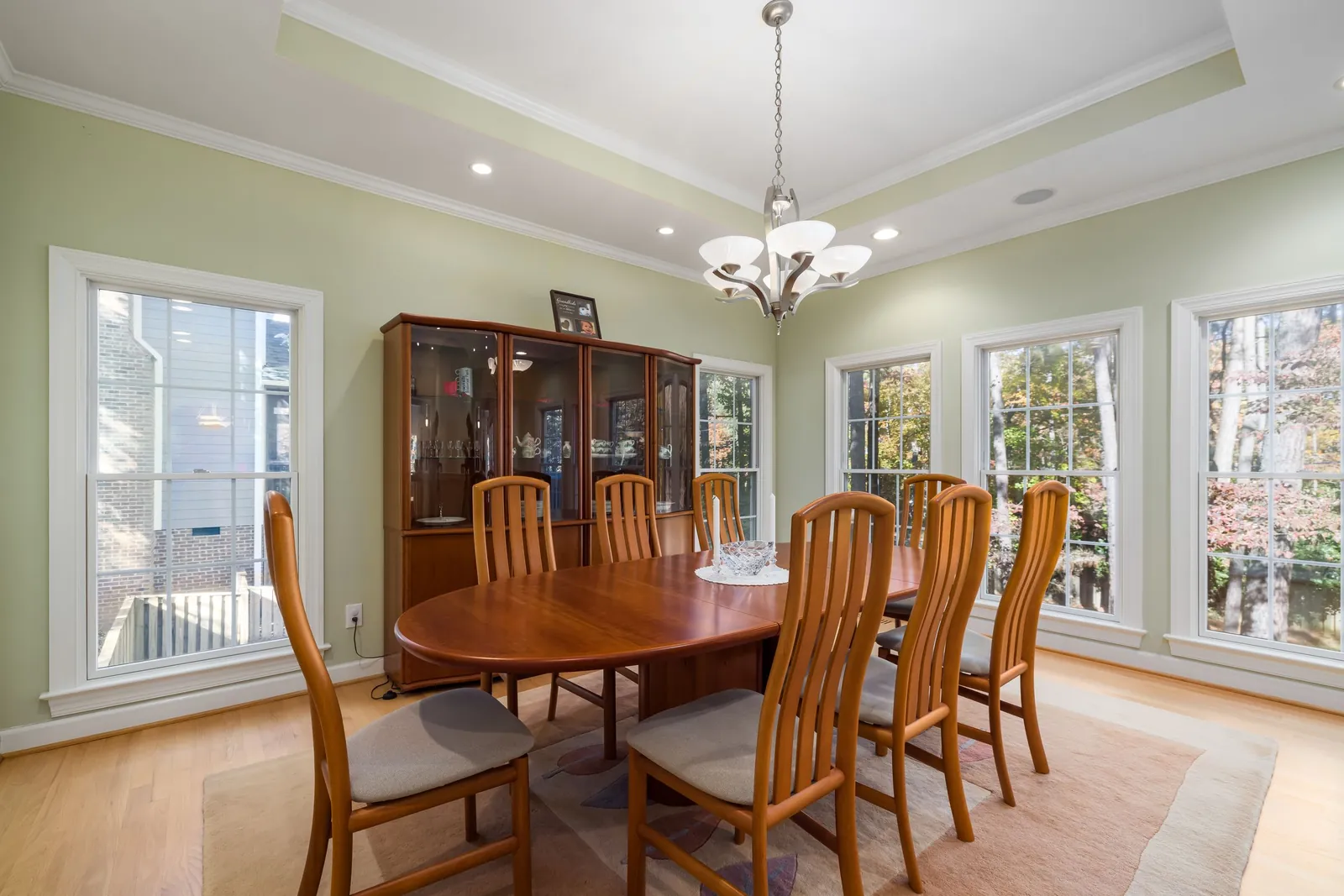
- Dust the top edge. Crown collects dust where it meets the ceiling, and paint won't stick to dust.
- Fill nail holes and dents, then sand them smooth.
- Caulk the gaps. Dunn-Edwards fills gaps between molding and wall with caulk, and Benjamin Moore says to let caulk fully cure before you prep for paint. Keep the bead thin; a fat bead makes a wavy wall line.
- Sand glossy paint. Benjamin Moore says high-gloss trim should be sanded so it accepts new primer or paint, and that all repairs should be primed.
Our caulking guide covers the bead itself, and the same method works along the ceiling.
Brush, two coats and a clean wall line
Crown has curves and several edges, so a brush gives you more control than a roller. Dunn-Edwards advises thin, even coats, each fully dry before the next. For the sheen, Benjamin Moore lists satin, semi-gloss and high gloss as popular trim choices and says higher sheens are more durable and stand up to washing; see paint sheens explained.
Then cut the wall color up to the crown by hand, or tape it, as in how to cut in paint.
Oil or latex? Test old crown first
Older crown may carry oil-based paint, and that changes what will bond to it. Dunn-Edwards says trim previously painted with oil-based paint needs primer to get good adhesion, and if you're not sure what's on it, to play it safe and prime it anyway.
The test takes a minute. Dunn-Edwards' short video shows it: wet a cotton ball with rubbing alcohol and rub it on the paint in a hidden spot. Water-based paint comes off on the cotton; oil-based paint doesn't. Our post on latex vs oil-based paint explains the two families.
Is crown molding outdated in 2026?
No. Benjamin Moore's trim guide treats intricate crown as a focal point, and the newest paint idea puts crown in the middle of the scheme. In 2025, Benjamin Moore's UK arm introduced “colour capping”: the ceiling in the deepest shade, the cornicing (the British word for crown) in a mid-tone and the walls in a lighter tone, all from one color family.
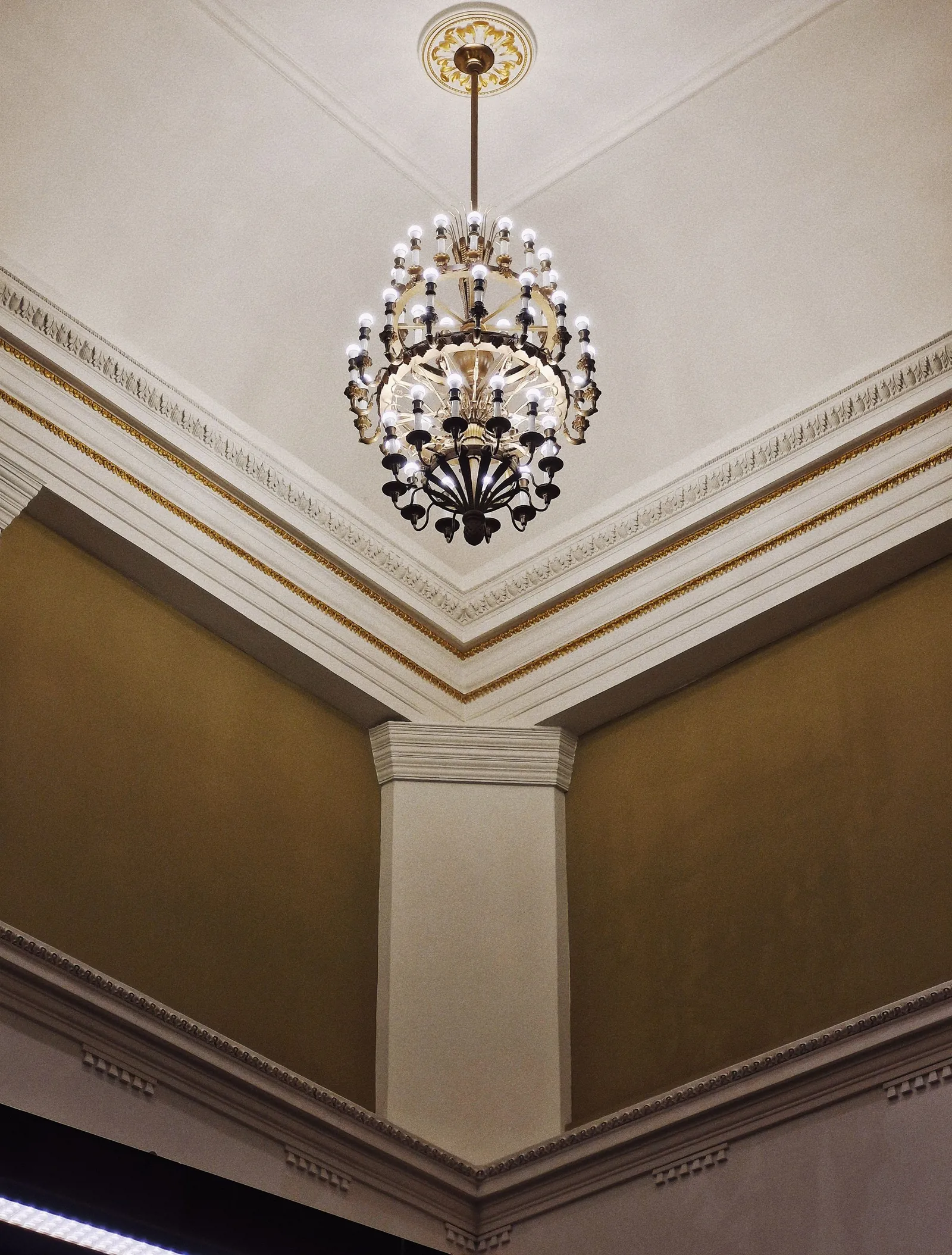
Capping is the opposite of the all-white route, and it only works when the crown gets its own color. Our post on two tone walls covers capping in depth, and painting the ceiling the same color as the walls covers another way to treat the ceiling.
Ladder safety at ceiling height
Crown is the highest trim in the room, and nearly all of the work happens on a ladder. NIOSH says more than 100 people die each year in the U.S. from ladder-related falls, and thousands more are injured.
Older adults carry more of that risk. A CPSC staff report estimates 182,600 emergency department treated fall injuries associated with ladders among adults 65 and older from 2016 to 2020, an annual average of 36,520.
NIOSH's basic rules fit a crown job well:
- Never step above the second highest step on a stepladder, or the fourth highest rung on an extension ladder.
- Keep three points of contact, and don't carry materials up in your hands.
- Set the ladder on a level, supportive surface, out of foot traffic.
- Inspect it first for missing rungs, loose parts or other defects.
- Move the ladder instead of reaching. NIOSH lists overreaching among the frequent causes of ladder falls.
Over a stairwell, the ladder setup is the whole job; our post on painting a stairwell covers it.
Next-step hurdle: old crown, old paint and lead
Once the color and order are settled, older homes bring the next problem: decades of coats, cracks along the ceiling joint, and paint that may contain lead. Our post on painting older Madison homes covers plaster and old trim in depth.
EPA says a home built before 1978 is more likely to have lead-based paint, and that renovation or repair work that disturbs painted surfaces in older homes may create large amounts of lead dust. Scraping and sanding old crown is that kind of work.
Its advice for small fixes is specific: repair small areas of damaged paint, under 6 square feet, as soon as possible without sanding. If you must sand, wet the area first, sand the minimum area needed and clean up thoroughly. EPA also requires anyone paid to disturb paint in a pre-1978 home to be trained in lead-safe work practices, so mention your home's age when you ask for a quote and ask any painter how they handle it.
When to stop and call a professional
- Call 911 after a ladder fall if someone hits their head, can't get up or is badly hurt.
- Today: if a ladder has a damaged rung, foot or lock, tag it “Do Not Use” and put it away; NIOSH says to mark a defective ladder immediately.
- Stop scraping or sanding if your home was built before 1978 and you don't know what's in the paint.
- Call a pro for crown over a stairwell or in a two-story room, ornate plaster that's cracking, or paint peeling in sheets.
How we paint crown molding at GK Painting
Crown is part of our interior work: walls, ceilings, trim and doors for homes and businesses. We paint molding that's already installed; we don't install it. Floors and furniture are covered first, small holes are repaired, and surfaces are sanded and cleaned as needed before paint goes on.
George is on every job himself. Most rooms take one to two days, priced by square footage with paint included. The written quote is the price, no extra charge if the job takes longer than expected.
We use premium paint from Sherwin-Williams and Behr, and Behr is the more economical of the two. If you'd rather use a brand you already like, just tell us and we'll use it.
We're based in Waunakee and work across Madison and the surrounding Dane County communities. Read about our interior painting service, or ask for a free estimate.
Common questions
Should crown molding be the same color as the walls?
It can be, and that suits a plain crown in a simple room. Benjamin Moore calls it a modern, monochromatic look but warns it may hide the molding's details. One white for the crown, ceiling and trim is the most popular choice, and an accent color shows off an ornate profile.
Do you paint crown molding before or after the ceiling?
After. Paint the ceiling first, then the crown, then the walls, so drips land on surfaces you haven't finished yet. Benjamin Moore's room guide uses that order, and its trim guide and Dunn-Edwards both put trim before walls. Let each surface dry before you cut the next one against it.
What sheen is best for crown molding?
Satin or semi-gloss suits most rooms. Benjamin Moore lists satin, semi-gloss and high gloss as popular trim sheens and says higher sheens are more durable and stand up to repeated washing. Crown gets touched far less than baseboards, so matching the sheen on the rest of your trim is usually enough.
Do I need to prime crown molding before painting?
Prime anything repaired, bare or glossy. Benjamin Moore says all repairs should be primed and high-gloss trim sanded first. Dunn-Edwards says trim painted with oil-based paint needs primer for adhesion, and if you're not sure what's on it, to prime anyway. Clean, sound latex paint is the easier case.
Is it safe to sand old crown molding?
Not until you know what's in the paint, if the house was built before 1978. EPA says those homes are more likely to have lead-based paint and advises fixing small areas without sanding. If you must sand, it says to wet the area first, sand the minimum and clean up thoroughly.
Is crown molding outdated in 2026?
No. Benjamin Moore's trim guide treats intricate crown as a focal point, and its UK arm's 2025 colour capping technique gives crown its own mid-tone between lighter walls and a deeper ceiling. One white for crown, ceiling and trim is still the most popular route, so painting it well matters more than fashion.
Sources
- 11 Trim Paint Ideas for Your Home, Benjamin Moore
- How to Paint Moldings and Trim, Dunn-Edwards
- Reduce the Risk of Lead Exposure at Home, U.S. Environmental Protection Agency
- Falls from ladders are preventable: Make ladder safety a priority (archived), NIOSH, Centers for Disease Control and Prevention
- Consumer Product-Related Injuries and Deaths Among Adults 65 Years of Age and Older (2021), U.S. Consumer Product Safety Commission
More on interior painting and every interior painting post.