Choosing ceiling paint: sheen, color and the trouble spots
· 6 min read · By GK Painting & Remodeling
The best ceiling paint for most rooms is a flat white paint made for ceilings. Flat hides roller marks and small flaws better than any other sheen, and white sends the most light back into the room.
Bathrooms, kitchens and older ceilings with stains or texture are the exceptions, and they're where a wrong choice costs you a repaint. Here's how we'd choose in each case, and what to fix before any paint goes on. If you'd like the whole room done, our interior painting covers ceilings along with walls, trim and doors.
Why flat is the usual answer
Look up at a ceiling on a bright afternoon and you'll see the problem. Light from windows and lamps tends to cross a ceiling at a shallow angle, which is the angle that picks out every bump, patch and roller mark. The more reflective the paint, the more those flaws show.
The paint maker Dunn-Edwards calls flat paint a good choice for ceilings because of its low reflectivity, and says higher gloss levels tend to highlight defects and imperfections. The trade-off is that flat paint is easy to touch up but hard to clean once it's stained. That's a fair deal overhead, where nothing rubs against it.
Touch-ups are the other reason to stay flat. Spot-paint a patch with a glossier finish and it tends to catch the light as a visible square, long after the color has matched. Flat paint blends in, which matters on a ceiling you'll need to patch someday after a plumbing repair or a light fixture swap.
White, off-white or tinted
White is the default for good reason: it reflects the most light and makes a room feel taller. But white covers a wide range, from cool bluish whites to warm creamy ones, and the wrong one looks dingy next to your trim.
Whites lean warm or cool depending on their undertone, and the easiest way to see it is to hold two chips side by side. So match the temperature. A warm white over warm walls and trim looks calm; a cool white over gray or blue walls looks clean. If you're still choosing wall colors, our guide to choosing paint colors for your home works through the order to decide things in.
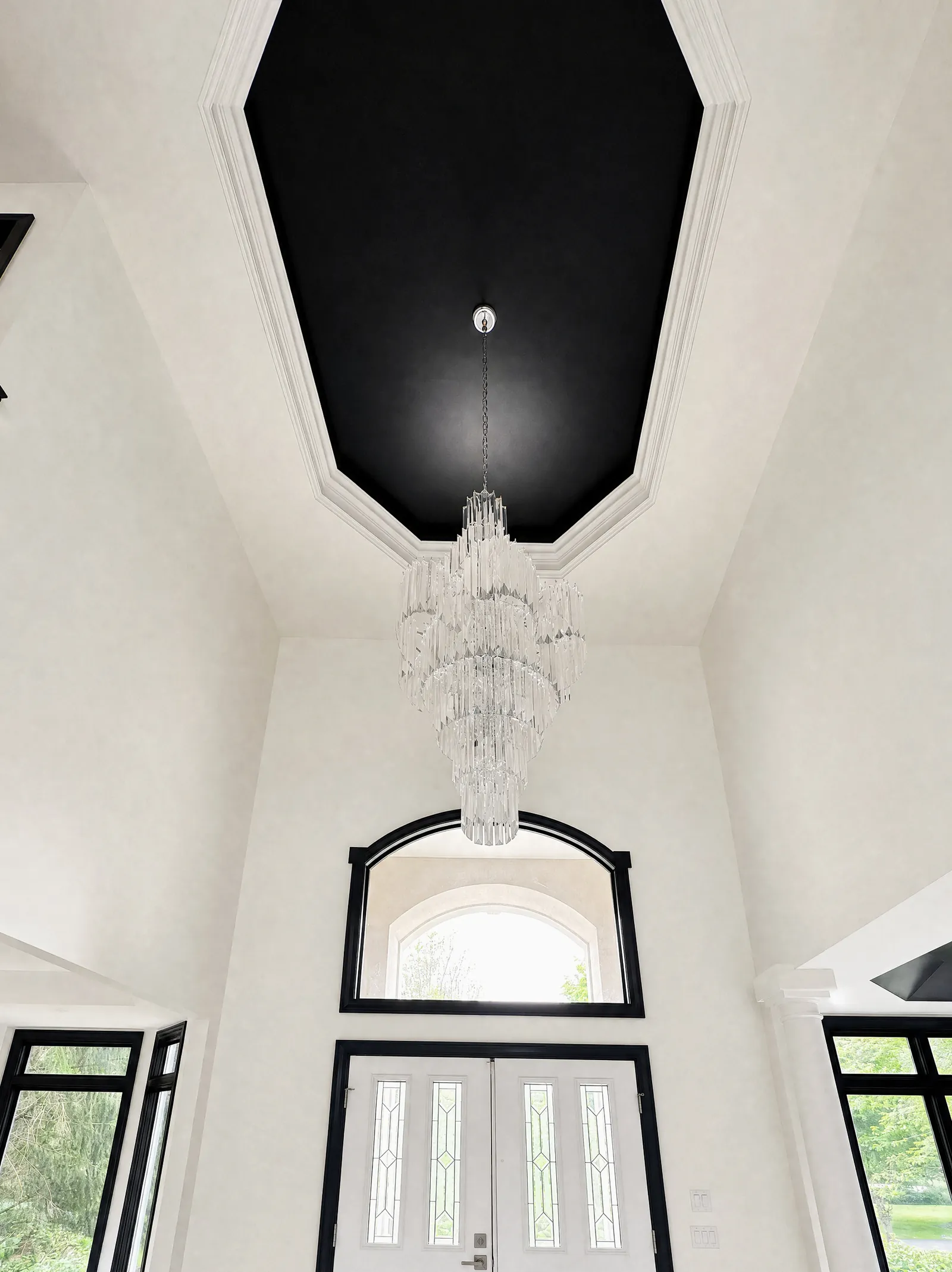
Some people tint the ceiling a pale version of the wall color. A tinted or dark ceiling can look striking in a tall, bright room, and it can make a low or dim one feel smaller. It also usually takes more coats to look even, so decide before the quote rather than after. If you're thinking of matching the ceiling to the walls instead, our guide to painting the ceiling the same color as the walls shows when it works.
Which sheen goes where
| Ceiling | Sheen to ask for | Why |
|---|---|---|
| Living room, bedroom, hallway | Flat | Hides roller marks and small flaws |
| Kitchen | Satin or eggshell | Wipes cleaner near the range |
| Bathroom with a shower | Satin or semi-gloss | Stands up to steam and splashes |
| Laundry room | Satin | Handles humidity and lint |
Dunn-Edwards describes satin as better for cleaning than flat and suited to kitchens, laundry rooms and bathrooms, and semi-gloss as a good fit for rooms that get scrubbed often. Both show imperfections more than flat does, so a bumpy ceiling in a moisture-prone room is a judgment call. Our explainer on paint sheens goes deeper on each one.
Should the ceiling get painted with the walls
Almost always, yes. Fresh wall color makes an old ceiling look gray or yellow by comparison, even when the ceiling was fine before. A bright new wall against a tired ceiling rarely looks its best.
It's also more practical. The room is already covered and the furniture is already out of the way, so adding the ceiling costs far less setup than doing it as a separate visit later. If the ceiling really is in good shape and the same white you want, it may only need a cleaning and a single coat. That's a question for the estimate call, and George will visit if he needs to see the ceiling.
Bathroom and kitchen ceilings
Steam and grease are what set these ceilings apart. In a bathroom, the ceiling over the shower sits in warm, wet air every day, so a low-sheen or semi-gloss finish that sheds moisture holds up better than flat. Look for a paint labeled for bathrooms.
Paint isn't the fix for a damp room, though. The EPA's guide to mold and moisture advises running the bathroom fan or opening a window when you shower, and keeping indoor humidity below 60 percent, ideally between 30 and 50 percent. It also says not to paint over mold: clean it and dry the surface first, because paint applied over a moldy surface is likely to peel. If dark spots keep coming back after cleaning, the room has a moisture problem that better paint won't solve. Our post on painting in high humidity covers the timing side.
Kitchen ceilings collect a thin film of cooking grease, especially over the range. Paint won't hold on grease, so the ceiling gets cleaned before it's painted, and a washable finish makes the next cleaning easier.
Stains, cracks and older ceilings
A brown ring from an old leak will bleed through ordinary ceiling paint, coat after coat. The leak has to be found and fixed first, and the ceiling has to be fully dry. Then the stain needs a stain-blocking primer. Dunn-Edwards notes that primer helps seal in stains and gives a smoother, more even finish, and that there are primers made for specific problems such as stains and tannin bleed.
Hairline cracks and small holes get filled and sanded smooth before priming. Flat paint hides a lot, but it won't hide a patch that was never sanded. Older plaster ceilings are often uneven, which is one more reason to stay with flat. If you live in an older home near Madison, our page on interior painting for older Madison homes covers what that prep looks like.
Textured and popcorn ceilings
If your ceiling has a sprayed-on popcorn or other texture and the house is older, stop before anyone scrapes or sands it. The EPA lists popcorn ceilings, textured paints and some patching and joint compounds among the materials that may contain asbestos. It says homes built before 1975 may contain significant amounts, and that newer ones can too.
The EPA's advice for homeowners is not to saw, sand, scrape or drill into those materials. If you're not sure what your ceiling is made of, have a trained asbestos professional look at it before anything gets disturbed. Mention your home's age when you call, and we'll talk through the next step. Our guide to painting popcorn ceilings covers testing, Wisconsin's rules and the painting method once a ceiling tests negative.
What a ceiling job looks like
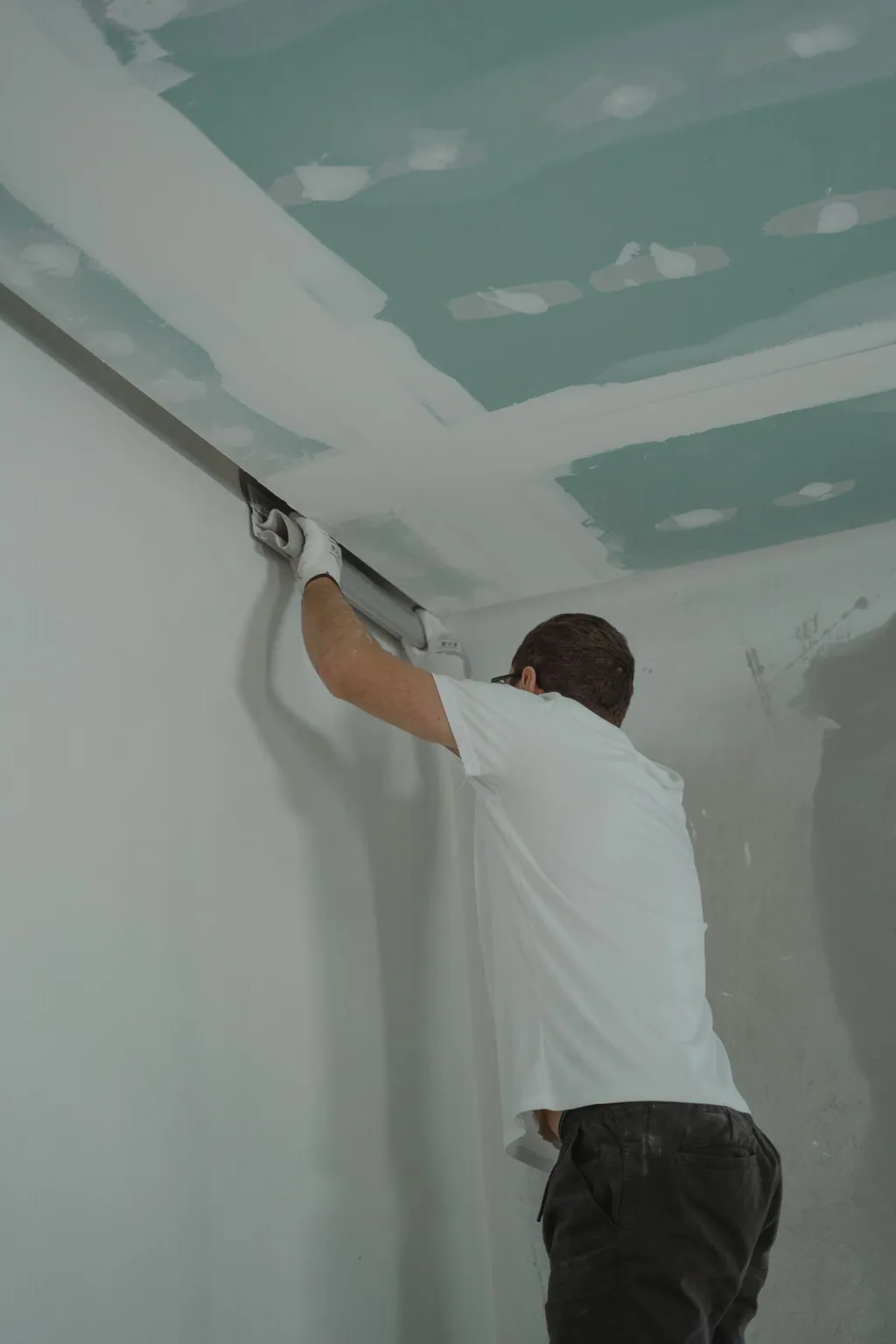
Ceilings are painted before the walls, so any drips or roller spatter end up under the wall paint. Floors and furniture are covered before the first can opens, small holes are repaired, and most rooms take one to two days.
Interior work is priced by the square footage of the space, paint included. We use premium paint from Sherwin-Williams and Behr, and Behr is the more economical of the two. If you'd rather use a brand you already like, tell us on the call and your quote is built around it.
Keep fresh air moving afterward. The EPA's painting safety guide suggests continuing ventilation for two to three days after painting, and cautions against relying on bathroom or kitchen exhaust fans, since they don't always vent outdoors. When you're ready, ask for a free estimate and George will talk through the room with you.
Common questions
Can I use wall paint on a ceiling?
You can, and in a bathroom you may want a wall paint with some sheen. In living areas, most wall paints reflect more light than flat, so roller laps and flaws show overhead. A flat ceiling paint is the safer pick there.
Should ceiling paint be flat or satin?
Flat for most rooms, because it hides imperfections and touches up easily. Satin or semi-gloss makes sense over showers, in laundry rooms and in kitchens, where moisture and grease make washability matter more than a perfect surface.
What color should I paint my ceiling?
White is the usual choice because it reflects the most light. Pick one with the same warm or cool lean as your trim and walls. A tinted ceiling can work in a bright room with tall walls, but it takes more coats to look even.
Do I need primer on a ceiling?
Not always. Bare drywall, patches, stains and big color changes do need it. Dunn-Edwards says new drywall is porous and will soak up paint without primer, and that primer is what seals in stains.
How do I cover a water stain on a ceiling?
Fix the leak and let the ceiling dry completely, then apply a stain-blocking primer before the ceiling paint. Painting over a stain with regular paint usually lets it show through again.
Sources
- Selecting Paint Gloss, Dunn-Edwards
- The Importance of Priming (technical bulletin), Dunn-Edwards
- A Brief Guide to Mold, Moisture and Your Home, U.S. Environmental Protection Agency
- Post-Disaster Renovations and Asbestos for Homeowners and Workers, U.S. Environmental Protection Agency
- Healthy Indoor Painting Practices, U.S. Environmental Protection Agency
More on interior painting and every interior painting post.