
Painting the lower level of a Sun Prairie house
In a city where about half the houses went up after 2000, the rooms below the main floor and behind the garage door are often the last to get real paint.
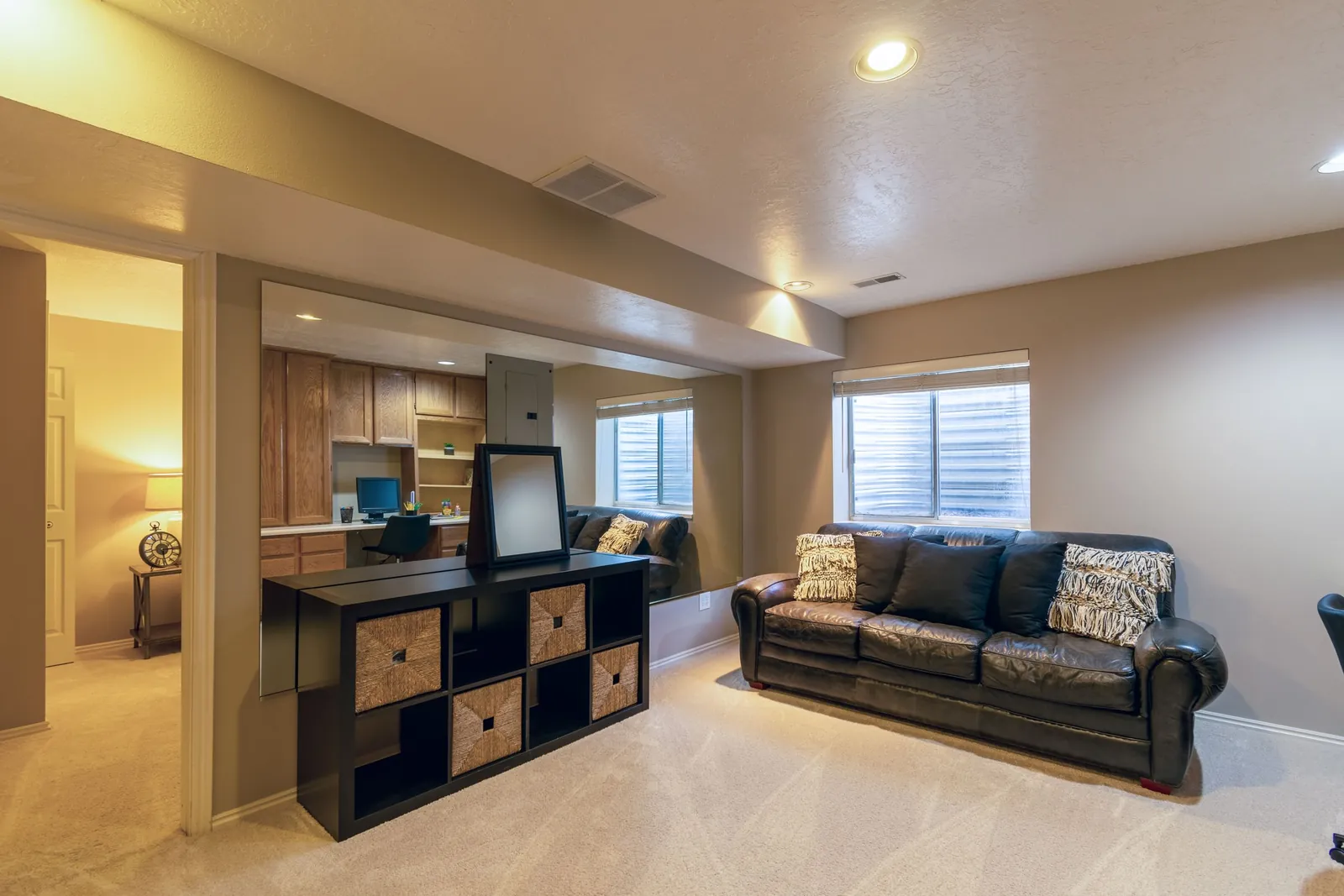
The basement family room, the soffits boxed around the ductwork, the garage walls and the laundry room: in a lot of Sun Prairie houses, those spaces were finished after move-in or never got more than the builder's primer. About 49% of the city's homes were built in 2000 or later, and this page is about painting those lower and working rooms.
They share a few traits a bedroom upstairs doesn't. The light is weaker, the air is cooler and often damper, and the rooms get hard, practical use. Here's how each of those changes the painting. For the city's houses as a whole, see our Sun Prairie overview.
Color for a basement with small windows
A basement window lets in a sliver of daylight at best, so whatever color you choose has to work mostly under bulbs. A gray that looks calm on the main floor can turn flat and chilly downstairs, and a white with a blue undertone can start to feel like an office hallway. Warm whites, soft beiges and light greiges reflect more of what light there is and stay friendly in the evening.
Test samples on the basement walls themselves, under the lights you'll actually use, and look at them after dark as well as at midday. A deeper color still has a place, usually on one wall of a media corner where dim is the point. Our post with basement painting ideas has more combinations that work below grade.
Humidity below grade, and why paint dries slower there
Lower levels run cooler and damper than the rest of the house, and parts of Sun Prairie sit on wet soils where heavy rain has pushed water into basements before. Before any color goes on, look along the bottom of the drywall for stains, swelling or a musty smell.
University of Minnesota Extension points out that summer condensation on cool basement surfaces is often mistaken for a leak, and that a coating by itself won't solve a genuine water problem. So if water is getting in, the source gets fixed first and the walls dry out before they're painted.
Damp, still air also slows the paint itself. Dunn-Edwards explains that latex dries as its water evaporates, and humidity and poor air movement keep that water in the film longer. A fan pushing air toward an open window or door helps, and so does running a dehumidifier in the days before the work if you already have one.
Ceilings, soffits and boxed-in ductwork
Most finished basements have a drywall ceiling broken up by soffits, the boxed runs that hide ducts, pipes and beams. Every soffit adds outside corners, short vertical faces and two more cut lines, so a basement ceiling takes more brushwork than its square footage would suggest.
Decide early whether the soffits belong to the ceiling or to the walls. Painted the ceiling color, they recede and keep a low room feeling taller; painted the wall color, they read as part of the room's shape, which can suit a soffit that runs the full length of a wall.
Under recessed lights, a flat finish overhead hides the small ripples that low, glancing light picks out in drywall. Ceilings get painted before the walls, so any spatter lands where the next coat covers it.
Garage walls and ceilings
Garages count as interior painting for us, and in a newer house the attached garage is often still bare taped drywall or a single coat of builder primer. A light color makes the space brighter and easier to work in, and a washable finish on the lower walls lets you wipe off road spray and bike scuffs instead of living with them.
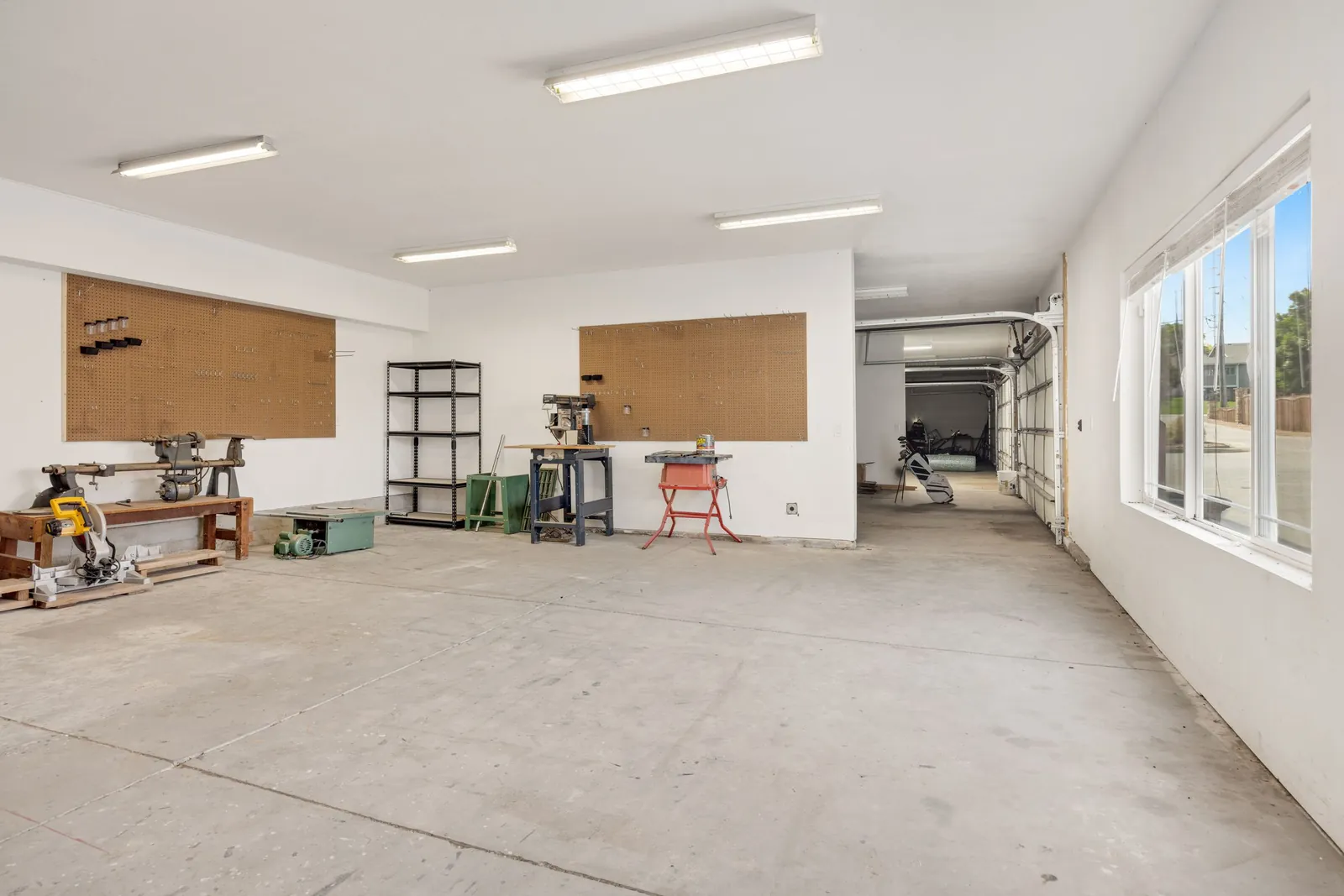
Temperature is the catch. Dunn-Edwards says latex forms its film as resin particles fuse while the water leaves, that cold keeps them from fusing properly, and that the first 48 hours are the critical window. An unheated garage has to stay above the minimum printed on the paint label for those days, not just while the brushes are out.
Move the cars out, and take down shelves and wall hooks before the start date. Our post on painting garage walls covers primer, sheen and the rest of the prep.
Laundry rooms
A laundry room is small, busy and warm. The dryer adds heat and lint, the washer adds humidity, and the walls beside the machines collect detergent drips and scrapes from the basket. A satin finish wipes clean more easily than flat and stands up better to that kind of contact.
Wipe the lint off the walls and the top of the dryer before the start date, and decide whether the wall behind the machines is part of the job, since they have to come away from it first. Like most rooms, a laundry room takes one to two days, and it fits easily into the same week as the basement or the garage.
Dry time and cure time in a cool lower level
Dry and cured run on different clocks. Dunn-Edwards puts latex at dry to the touch in about one to two hours and fully cured in 14 to 30 days, and both stretch out when the air is cool and damp, which describes most basements for much of the year.
In practice, the basement is usable as soon as we pack up, but give the walls time before you slide the sectional tight against them, mount a TV, tape up a poster or wash off a crayon mark. The longer explanation is in our post on dry time versus cure time.
Interior painting is priced by square footage, paint included, and floors and furniture get covered before the first can is opened. The written quote is the price, no extra charge if the job takes longer than expected. Read about our interior painting, or ask George for a free estimate.
Common questions
Can you paint a finished basement?
Yes, the drywall walls, ceilings, soffits, trim and doors of a finished basement are all part of our interior painting. Tell us on the call if the space has ever taken on water, so the walls can be checked before any paint goes on.
What colors brighten a basement with small windows?
Warm whites, soft beiges and pale greiges brighten a dim basement best. They reflect more of the light from your bulbs, while cool grays and blue-tinted whites can look flat after dark.
Do you paint garage walls and ceilings?
Yes, garage walls and ceilings are part of interior painting and are priced by square footage like any room. An unheated garage needs to stay above the paint label's minimum temperature for the first couple of days.
Why does paint take longer to dry in a basement?
Cool temperatures, humidity and still air all slow the water leaving latex paint, and basements usually have all three. Moving air toward an open window or door shortens the wait.
Can a laundry room be painted the same week?
Yes, a laundry room can be scheduled in the same week as the basement or garage, since most rooms take one to two days. Plan on the washer and dryer being pulled out if the wall behind them is included.
More in Sun Prairie
Interior painting nearby
Helpful guides
Sources
- American Community Survey 2020-2024 5-year estimates, U.S. Census Bureau, via Census Reporter
- Moisture in basements: causes and solutions, University of Minnesota Extension
- Dry Time versus Cure Time of Paint (technical bulletin), Dunn-Edwards
- Cold Weather Painting (technical bulletin), Dunn-Edwards
- Sun Prairie, Wisconsin, Wikipedia