
Refinished cabinets that hold up in a busy Sun Prairie kitchen
Most Sun Prairie kitchens feed a whole household every day. Here's how a painted cabinet finish stands up to that, and what helps it last.
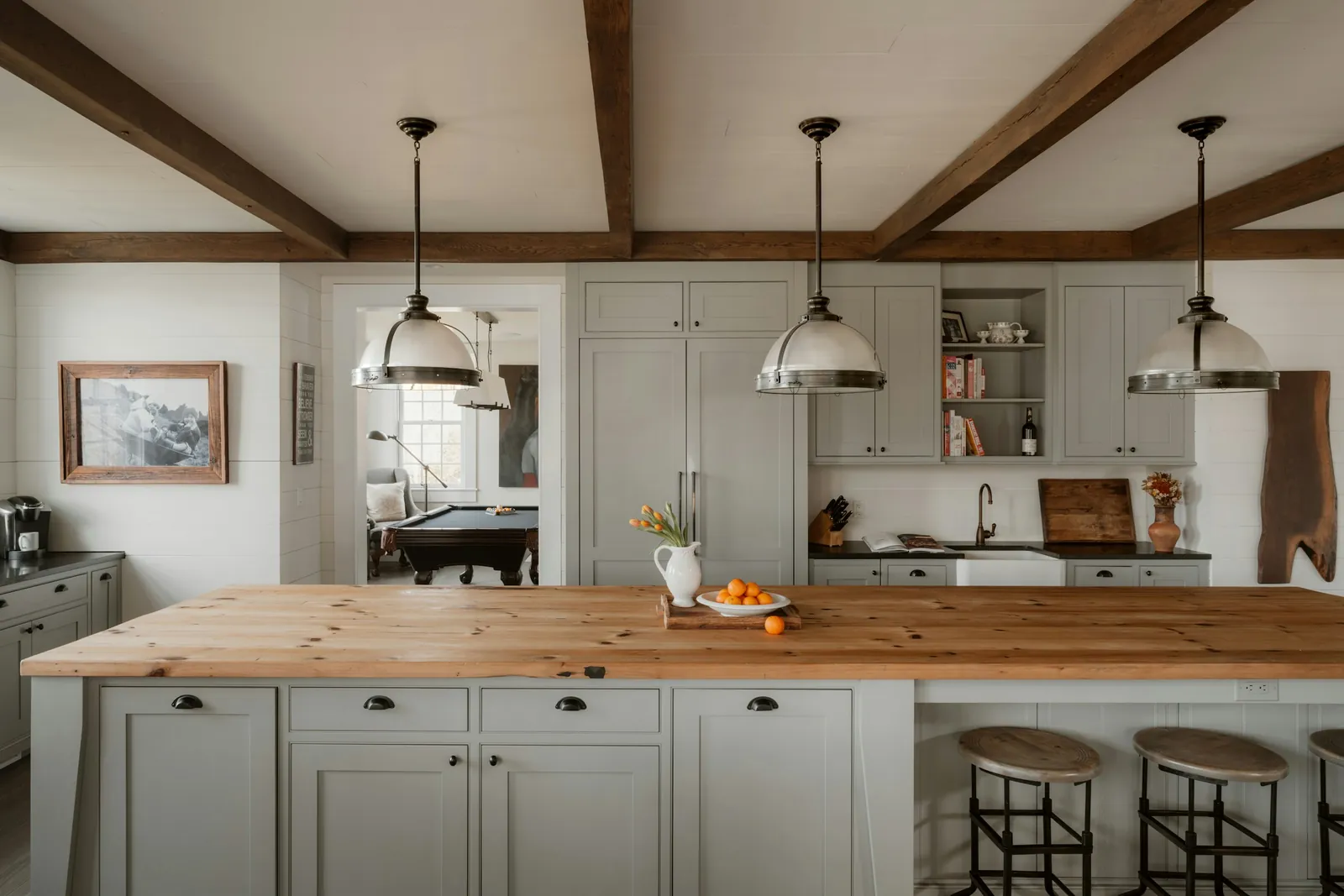
Packing lunches, wiping down counters, cooking every night: when a Sun Prairie household asks about painting its kitchen cabinets, color is rarely the first worry. The real question is whether a painted finish can take that much use. About 61% of homes here are owner occupied and about half are single-family houses, so a kitchen like that is the norm, not the exception.
It can, given careful prep and a little patience in the first weeks. Below is where the wear shows up, how long the paint takes to harden, which sheen cleans easiest, how to wash it, and what happens if a door gets dinged down the road. For more about the city's houses, see painting and refinishing in Sun Prairie.
Where a family kitchen wears first
Wear doesn't spread itself evenly across a kitchen. It piles up at a few stations that get touched, bumped or splashed many times a day, and in most houses they're easy to spot:
- The sink base, where wet hands grab the door, a towel hangs over it, and drips run down to the toe kick.
- The trash or recycling pull-out, nudged shut with a knee or a hip when both hands are full.
- Pantry and tall-cabinet edges, brushed by grocery bags, backpacks and the vacuum cord.
- The face around each pull, where skin oil, fingernails and rings do their slow work.
- The doors beside the range and dishwasher, which catch heat, steam and the first spatter of grease.
Those stations get the closest look during prep. Grease and hand oil sit thickest there, and paint can't grip through either, so every surface is degreased and sanded before primer goes on. Even so, no coating is chip-proof, and a door edge that meets a stroller every afternoon will eventually show it.
Our post on how durable painted cabinets are traces where chips come from, and our cabinet refinishing page lists what every job includes.
Dry isn't cured: the first weeks back in the kitchen
Paint that feels dry can still be soft underneath. Dunn-Edwards, a paint manufacturer, puts latex at dry to the touch in an hour or two but fully hard only after 14 to 30 days, and says cool air, humidity, dark colors and higher gloss all slow it further. Your kitchen is usable as soon as the doors are rehung; it just isn't at full strength yet.
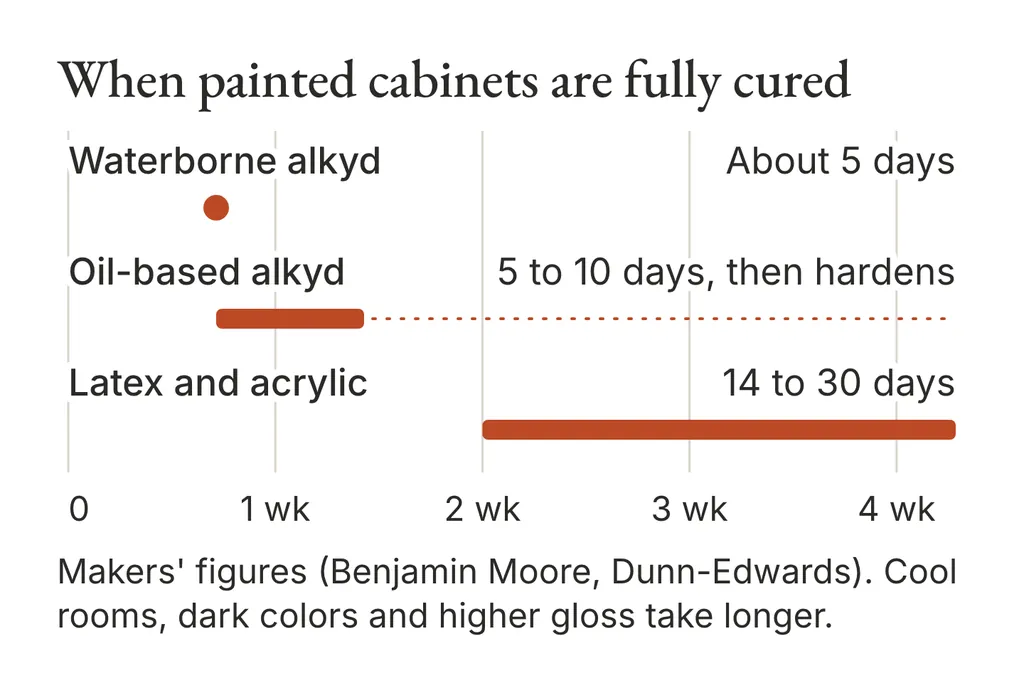
In a house with kids, a few habits carry the finish through that stretch:
- Open doors and drawers by the pulls, and ask the little ones not to swing on the pantry door.
- Keep stick-on hooks, bumper pads and adhesive child locks off the paint until it has hardened.
- Blot spills with a soft cloth dampened in plain water instead of rubbing at them.
- Don't lean heavy pots or a step stool against a painted door or drawer front for the first few weeks.
Sheen and the wipe-down test
Sheen decides how easily a cabinet gives up a fingerprint. Dunn-Edwards describes the trade-off plainly: the higher the gloss, the tougher the coating and the easier it scrubs, but the more clearly it shows every flaw underneath. It also notes that stains are hard to lift from flat finishes.
For a kitchen that sees spaghetti sauce and sticky hands, that usually points to satin or semi-gloss. Semi-gloss wipes cleanest; satin has a softer glow and is kinder to a dent or a sanding mark. A matte cabinet can look beautiful, but it asks for quicker, gentler cleanup after every splash.
Whatever you pick, keep one sheen across the whole kitchen so the color reads the same on every door. Our comparison of cabinet paint finishes goes through each level in turn.
Washing painted cabinets without dulling them
The routine that keeps paint looking new is almost boring: a soft cloth, a bowl of warm water with a squirt of mild dish soap, a second cloth in clean water to rinse, and a towel to dry. Squeeze the cloth out well, because water left sitting in the seams of a door is harder on paint than the grime ever was.
What dulls a painted finish is abrasion, not dirt. Scouring pads, melamine sponges and baking soda pastes clean by sanding the surface a little each time, and strong degreasers or ammonia sprays can soften or cloud it.
For a sticky spot by the stove, rest the soapy cloth on it for a minute and then wipe, rather than pressing harder. A quick weekly pass over the pulls and the sink base keeps buildup from ever needing a scrub. Our post on cleaning painted kitchen cabinets has the fuller routine.
Chips and dents later: what we come back for
Over years of family life, a painted kitchen will pick up a nick or two: a corner caught by a chair, a drawer front hit by a toy truck, a ring scuff by the dishwasher. That's ordinary wear. Paint coming away in sheets, or flaking off where nobody touches it, is a different matter: it points to a finish that didn't bond.
Our promise covers that second kind of problem. When the cause is our workmanship, such as paint that peels or failed to bond, we return and make it right. A door that got kicked or a dent from a hockey stick is daily life rather than a defect, so it isn't covered, but we'll gladly quote the repair.
Fitting one to two weeks around work and school
Most kitchens take one to two weeks from the first morning to the final walkthrough. The doors and drawer fronts are taken down and sprayed, and the cabinet frames are finished right in your kitchen, so part of the room is a work area for that stretch. George works Monday to Friday, 8am to 5pm, which tends to line up with the hours a working household is out of the house anyway.
Carley manages the schedule, so she's the one to tell about a birthday party, a graduation open house or a holiday you're hosting. Count back a few weeks from the date, since the paint keeps hardening after we leave, and choose a start that gives the finish time to settle first.
Pricing is per cabinet with paint included. The written quote is the price, no extra charge if the job takes longer than expected. Request a free estimate and we'll find a stretch of weeks that works for your family.
Common questions
How soon can we use the kitchen normally?
As soon as the doors and drawers are back on, you can cook and load the dishwasher as usual. The paint goes on hardening for a few more weeks, so use the pulls, blot spills gently and save any real scrubbing for later.
What sheen is easiest to wipe clean?
Semi-gloss wipes clean most easily of the common cabinet sheens. Satin is close behind and hides small dents better, while flat and matte finishes hold onto stains and need more care.
What should I clean painted cabinets with?
Use a soft cloth with warm water and a little mild dish soap, then rinse and dry. Skip scouring pads, melamine sponges, baking soda and harsh degreasers, which wear down or cloud the paint.
What if a door gets chipped after the job?
We'll quote the repair if the chip came from a bump or an accident. Paint that peels or failed to bond because of our work is different: we return and make it right.
Which parts of the cabinets wear first?
The sink base, the trash pull-out, pantry edges and the area around each pull show wear first. Hands, knees and wet towels hit those spots most, so they get extra attention when the cabinets are cleaned and sanded.
More in Sun Prairie
Cabinet refinishing nearby
Helpful guides
Sources
- American Community Survey 2020-2024 5-year estimates, U.S. Census Bureau, via Census Reporter
- Dry Time versus Cure Time of Paint (technical bulletin), Dunn-Edwards
- Selecting Paint Gloss, Dunn-Edwards