Painting a finished basement: color, light and the moisture question
· 6 min read · By GK Painting & Remodeling
The best basement painting idea is to settle the moisture question first and then choose light, warm colors that make up for the lack of daylight. A dry wall holds paint for years, and a damp one will undo even the best color choice.
Below are the questions to answer before you paint a finished basement: whether the walls are dry, which colors work in low light, what to do about the ceiling, and which sheen to use. If you'd like it done for you, our interior painting covers basement walls, ceilings and trim along with the rest of the house.
Start with the moisture question
Paint is not a waterproofing system. University of Minnesota Extension lists three sources of basement moisture: liquid water from rain or groundwater, moisture from inside the house such as showers and humidifiers, and humid outdoor air that condenses on cool surfaces. It also says condensation is a common misdiagnosis. In summer, opening basement windows can let warm, humid air condense on cool walls and floors, and homeowners often assume the wall is leaking.
Extension's guidance for coatings is blunt. It says that when a basement has a water problem, it's best to deal with that first, and that a membrane or coating without drainage generally won't solve the problem in the long term. Over time, such systems deteriorate or simply move the water somewhere else. So check these before you buy paint:
- A damp ring along the base of the wall, which Extension ties to capillary suction.
- Water trickling from walls or standing on the floor, which points to a real leak rather than condensation.
- A musty smell, or peeling paint low on the wall.
- White powder on masonry, which is efflorescence, left behind as moisture moves through concrete or block.
The EPA adds a rule of its own: don't paint over mold. Clean it and dry the surface first, because paint over a moldy surface is likely to peel. It also recommends keeping indoor humidity below 60 percent, ideally between 30 and 50 percent. A dehumidifier helps, though Extension cautions that in a basement with a moisture problem, drying the air can pull more moisture through concrete and cause efflorescence.
Light is the real design problem
Basements have small windows or none, so most of their light comes from bulbs. That changes how colors look. Benjamin Moore notes that rooms with little natural light depend more on artificial lighting, and that bulbs rated above 3500 Kelvin tend to cast a cooler light, while lower numbers feel warmer and cozier.
So a gray that looks calm upstairs can look cold and flat downstairs. Test every color under the basement's own bulbs, in the evening as well as the day. Our post on how to test paint colors shows how, and our guide to choosing paint colors for your home explains undertones. Lighter colors reflect more of the light you have, which is why most finished basements do best in a warm white or a soft neutral.
Color ideas that work below grade
- A warm white or soft greige on all the walls, with the ceiling in a lighter white. It's the safest way to make a basement feel open.
- One deeper wall in a living or play area, in a warm color rather than a cold one. See our accent wall ideas for which wall to pick.
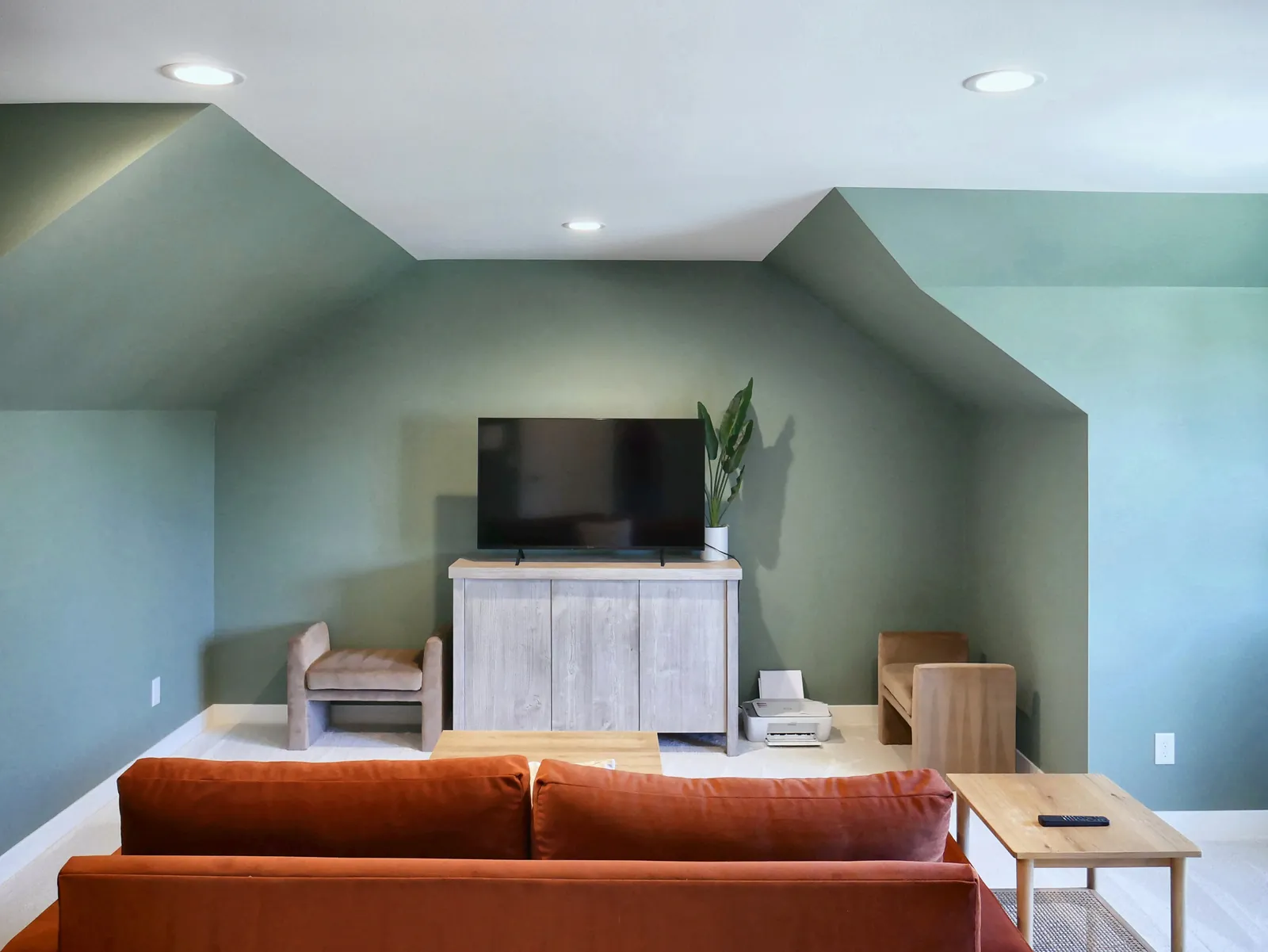
- A deep green, navy or charcoal in a media room, where low light and a dimmer are what you want. Use a flat finish to avoid screen glare.
- A color block in a play zone, with a bright lower band and a pale upper wall, which keeps scuffs hidden and the room bright.
- Walls and trim in the same color for a calm, built-in look, especially in basements with a lot of door and window casings.
If you live with a mix of finished and unfinished areas, paint the finished zone only and leave the mechanical room alone. A basement that tries to be every color feels smaller, not bigger.
What to do about the ceiling
Basement ceilings come in three types. A drywall ceiling is painted like any other, flat and white, and our guide to the best ceiling paint covers the sheen and color decisions. A drop ceiling is mostly left alone, unless the tiles are stained.
An exposed ceiling, with joists, ductwork and pipes, is its own project. Some people paint everything one dark color so the clutter recedes, and others paint everything white to brighten the room. Either way it's a big masking job, with a lot of dust to clean off first. Decide whether you want the ceiling to disappear or to glow, and commit to one color overhead.
Walls: drywall, block and poured concrete
Finished drywall walls take primer and paint like any other room. Bare masonry is another matter. Concrete block and poured concrete must be clean, dry and free of efflorescence and loose paint. Primers are made for particular surfaces, concrete among them, so ask for one made for masonry rather than reusing the drywall primer.
Remember what Extension said about coatings. If the wall is still wet, paint is a cosmetic fix that fails, not a solution. If you see white powder or damp patches coming back, get the water source dealt with first. Our post on painting in high humidity explains how humidity affects timing.
Zones within the basement
Most finished basements are several rooms in one, and each zone has its own needs. A laundry corner sees steam and splashes, so it wants a washable finish. A basement bathroom is a damp room and follows the rules in our post on painting a bathroom. A bar or media area can carry the deepest color in the house.
Don't forget the stairs. They're the one part of the basement everybody sees from upstairs, and they set the first impression of the whole level. Our post on painting a stairwell covers what a stairwell needs. Keep the stairwell color related to the main floor and the basement walls, so the transition feels deliberate.
Choosing a sheen
Basements are used hard: play rooms, workouts, laundry, movie nights. Walls in those rooms do best in a finish that wipes clean, so eggshell or satin is the usual choice, with satin the better pick around a laundry area. Flat is best on ceilings and in media rooms, where you want to hide flaws and avoid glare.
That points to a simple plan: eggshell or satin on the walls, flat on the ceiling, and semi-gloss on the trim. Our explainer on paint sheens goes through each.
Timing and fresh air
Basements are the hardest rooms to ventilate. The EPA suggests scheduling painting for dry periods in fall or spring, when windows are easier to leave open, and keeping windows open for two to three days afterward. It recommends a window box fan to exhaust vapors, and warns that bathroom and kitchen exhaust fans don't always vent outdoors.
Humidity matters for drying, too. Dunn-Edwards says paint dries more slowly when the air is humid or poorly circulated, because the water in the film has nowhere to go. In a Wisconsin summer, a muggy basement can slow every coat, so spring and fall give the best results.
Having a basement painted
We paint interior rooms across Madison and Dane County, from Sun Prairie to Verona. Floors and furniture are covered first, small holes are repaired, and most rooms take one to two days. Interior work is priced by the square footage of the space, paint included.
Tell us on the call if the basement has ever had water, and what you see on the walls. George will visit if he needs to see the space. You can ask for a free estimate any time.
Common questions
What color should I paint a basement?
A warm white or soft neutral is the safest choice, because it reflects the most light in a room that has little daylight. Test every color under the basement's own bulbs, since bulbs rated above 3500 Kelvin cast a cooler light.
Can I paint basement walls without waterproofing them?
You can if the walls are dry. If water is coming through, paint won't stop it, and University of Minnesota Extension says a coating without drainage generally won't solve the problem in the long term. Deal with the water source first.
What is the white powder on my basement wall?
That's efflorescence, salt left behind as moisture moves through concrete or block. It's a sign water is passing through the wall, so the moisture source needs attention before any paint goes on.
Should I paint a basement ceiling?
A drywall ceiling should be painted flat white like any other ceiling. An exposed ceiling can be painted one color so the joists and ducts recede, but it's a bigger masking job, so plan for it.
When is the best time of year to paint a basement?
Spring and fall, when it's easier to leave windows open and humidity is lower. The EPA suggests painting during dry periods in those seasons and keeping windows open for two to three days afterward.
Sources
- Moisture in basements: causes and solutions, University of Minnesota Extension
- A Brief Guide to Mold, Moisture and Your Home, U.S. Environmental Protection Agency
- Healthy Indoor Painting Practices, U.S. Environmental Protection Agency
- Guide to Warm and Cool Paint Colors, Benjamin Moore
- Dry Time versus Cure Time of Paint (technical bulletin), Dunn-Edwards
More on interior painting and every interior painting post.