Garage walls: prep, paint choice and what a Wisconsin winter changes
· 6 min read · By GK Painting & Remodeling
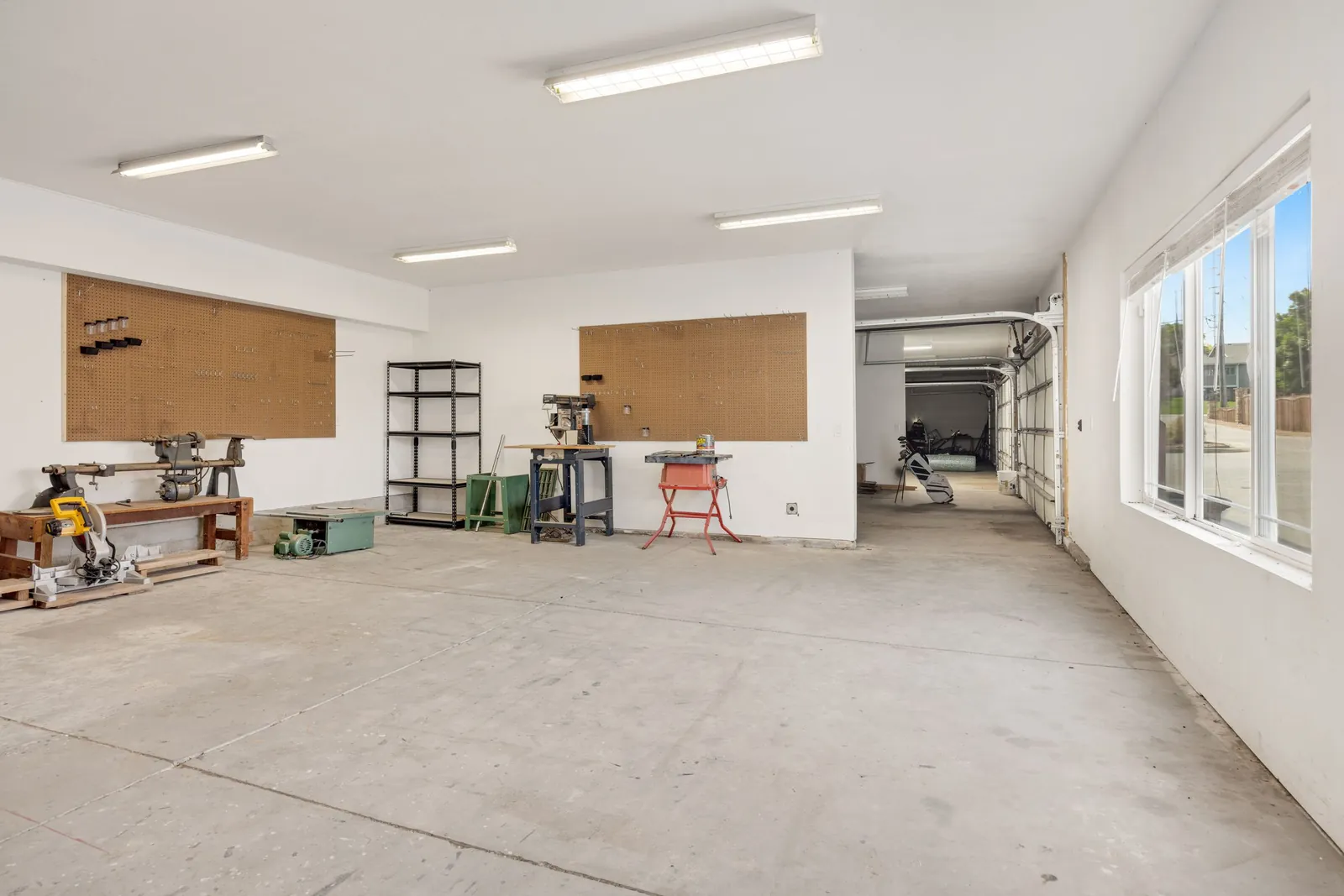
To paint garage walls well, wash off the grease and dust, prime bare drywall, wood or masonry, and use a washable satin or semi-gloss paint on the lower walls. Then pick your weather: a garage that's too cold will keep latex paint from forming a proper film.
A painted garage is brighter, easier to wipe down and more pleasant to work in. Here's how to prep the walls, what paint and sheen to choose, and how temperature changes the plan in Wisconsin. Garages are part of our interior painting, along with rooms, ceilings, trim and doors.
Why paint garage walls at all
Bare garage walls absorb light, collect dust and show every scuff from bikes, ladders and car doors. A coat of light-colored paint reflects the light you already have, so the space looks bigger and you can see what you're doing. It also gives you a wall you can wipe clean instead of a surface that holds on to dirt.
Painted walls are easier to keep tidy, too. Drywall that's sealed with primer and paint resists stains better than bare board, and it makes a garage that doubles as a workshop or gym feel finished rather than temporary.
Know what the walls are made of
| Wall surface | Prep | Primer |
|---|---|---|
| Finished drywall | Dust off, patch dings | Primer, then paint |
| Bare or lightly taped drywall | Dust off, sand rough seams | Primer is a must, since bare drywall soaks up paint |
| Plywood or OSB | Dust off, check for stains | Primer, and expect the texture to show |
| Concrete block or poured concrete | Clean, make sure it's dry, remove powder | Primer made for masonry |
| Previously painted | Wash, scuff glossy areas, patch | Spot-prime patches and bare spots |
Dunn-Edwards says new drywall is very porous and soaks up paint if it isn't primed, and that primers are made for particular surfaces, including drywall and concrete. Skipping primer on bare drywall is how you end up using twice the paint for a patchy finish.
Wash the walls first
A garage wall gets dirtier than a living room wall. Oil and grease from tools and cars, dust, cobwebs and road salt tracked in all winter settle on everything. Paint won't hold on a greasy surface, so the walls have to be degreased, rinsed and fully dry before anything else.
- Take down shelves, hooks and pegboard, and cover or move anything that stays.
- Dust and vacuum the walls, corners and tops of studs.
- Wash with a degreasing cleaner, rinse, and let the walls dry completely.
- Patch holes and dents, and sand them smooth.
- Prime, then paint two coats.
Small holes are repaired on every interior job we do, and floors and the things in the room are covered first. In a garage, that means the floor, the shelves and anything stored there.
Choosing the paint and sheen
Dunn-Edwards describes satin as having better cleanability than flat and semi-gloss as a good fit for frequently scrubbed spaces. Both are good choices on the lower half of a garage wall, where bumps and scuffs happen. Gloss is toughest and easiest to clean, but it highlights every flaw, which isn't what you want on a garage wall that may be uneven.
Flat paint, on the other hand, conceals imperfections better and suits the upper walls and ceiling, where nothing touches it. Some people paint the lower third a darker color to hide scuffs and the rest light. A white or light gray overall is the easiest way to brighten the space. Our guide to paint sheens has more on how each one behaves.
We use premium paint from Sherwin-Williams and Behr, and Behr is the more economical of the two. If you'd rather use a brand you already like, your written quote is built around it.
Cold is the real constraint
Most garages in Wisconsin aren't heated, and that's where garage painting differs from painting a bedroom. In a technical bulletin on cold-weather painting, Dunn-Edwards explains that latex paint forms its film as water leaves and resin particles fuse together, and that lower temperatures harden those particles and prevent proper fusing. In severe cases the film can crack. In milder cases it can show poor touch-up, uneven color or uneven sheen.
The same bulletin says its own latex paints are formulated to form a good film down to 40 degrees Fahrenheit, with some at 35, but that stable conditions matter. The first 48 hours are the most critical, and both the air and the surface must stay above 35 degrees while the paint cures. The bulletin is written about exterior painting, but the chemistry doesn't change in a garage. Condensation can also form on fresh paint when the temperature drops overnight. Every paint sets its own minimum on the label, so read yours.
Heat, fumes and fresh air
Heating a garage to paint it creates a second problem. The EPA says to use flammable products away from ignition sources such as water heaters and furnaces, and many garages have exactly those. Keep solvents, rags and open cans well away from anything with a flame or a spark.
Ventilation pulls the other way. The EPA's painting guide suggests scheduling for dry periods in fall or spring, when windows can stay open, using a box fan in a window to exhaust vapors, and continuing ventilation for two to three days afterward. In a cold garage, that's a tension: the open door that clears the air also cools the walls. Mild days, a window or two and a fan give the best balance.
Store the paint with care, too. Benjamin Moore recommends keeping paint between 60 and 80 degrees Fahrenheit and says to make sure it doesn't freeze if you keep it in a garage. A can left on a garage shelf all winter is a gamble.
Ceilings, doors and trim in the garage
Garage ceilings are usually painted white and flat, like any other ceiling. Our guide to the best ceiling paint covers the choices. The door between the garage and the house is an interior door, and our post on painting interior doors explains the sheen and color decisions.
The overhead garage door itself is an exterior surface, and it's part of our work on decks and exterior, which includes garage doors. If you want both done, mention it when you call.
Getting the garage ready
A garage is full of things that get in the way, so the biggest time saver is clearing it before painters arrive. Move the cars out for the duration. Take shelving, hooks and anything bolted to the walls down, and pull stored items away from the walls so there's room to work along the base of every wall.
Ask on the estimate call what to move yourself and what can stay in place. Whatever stays should be covered: workbenches, tool chests, freezers and anything stored in the middle of the floor. Look the walls over before the job and point out stains, holes and damage, along with anything you want left alone. And think about where the stuff will live for a day or two. Packing a driveway with garage contents works in spring or fall, and it's a real problem in a Wisconsin January.
Having a garage painted
Based in Waunakee, we paint interiors across Madison and Dane County, including Waunakee. Interior work is priced by the square footage of the space, paint included, and a two-car garage is a big room, so ask about timing on the call. George will visit if he needs to see the space.
Tell us whether the garage is heated, what the walls are made of, and what's stored there. A written quote with a start date follows, and you can ask for a free estimate any time.
Common questions
Can you paint garage walls in the winter?
Only if the walls and air stay above the paint's minimum temperature for the first couple of days. Dunn-Edwards says low temperatures can keep latex paint from forming a proper film, and that the first 48 hours are the most critical. An unheated Wisconsin garage in January usually isn't a good bet.
Do garage walls need primer?
Bare drywall, plywood and masonry do. Dunn-Edwards says new drywall is very porous and soaks up paint if it isn't primed. Previously painted walls need a wash and spot priming on patches.
What sheen is best for garage walls?
Satin or semi-gloss on the lower walls, where the surface needs to be washable, and flat on the upper walls and ceiling. Higher gloss highlights flaws, so it isn't ideal on uneven walls.
What color should I paint my garage?
A white or light gray is the easiest way to brighten a garage. A darker lower band can hide scuffs, as long as the upper walls stay light.
Can I leave paint in an unheated garage?
It's risky. Benjamin Moore recommends storing paint between 60 and 80 degrees Fahrenheit and making sure it doesn't freeze, so a can left in an unheated Wisconsin garage over winter is a gamble.
Sources
- Cold Weather Painting (technical bulletin), Dunn-Edwards
- The Importance of Priming (technical bulletin), Dunn-Edwards
- Selecting Paint Gloss, Dunn-Edwards
- 6 Tips for Storing Leftover Paint and Shelf Life, Benjamin Moore
- Healthy Indoor Painting Practices, U.S. Environmental Protection Agency
More on interior painting and every interior painting post.