Black kitchen cabinets: what the color shows, and the prep it needs
· 6 min read · By GK Painting & Remodeling
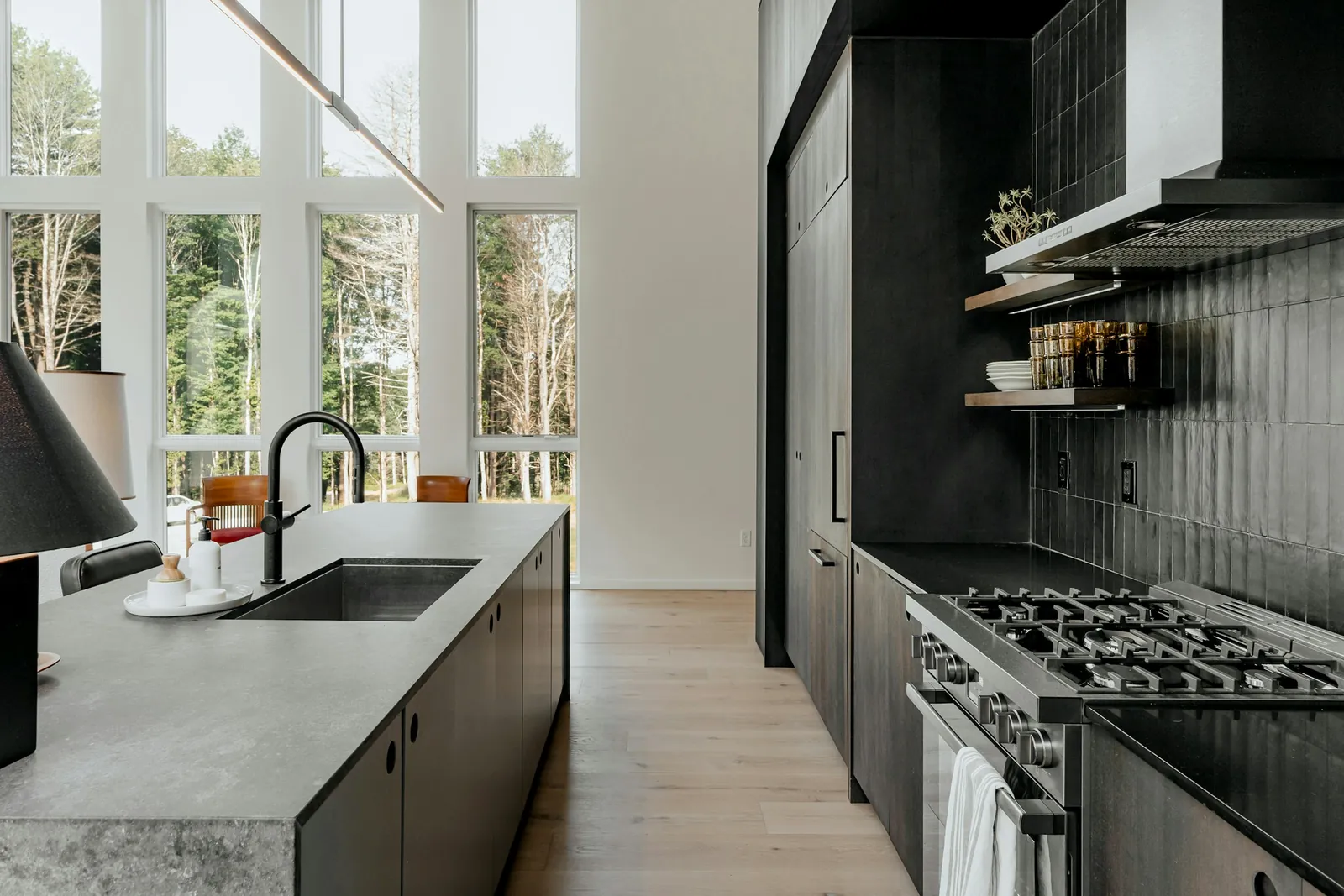
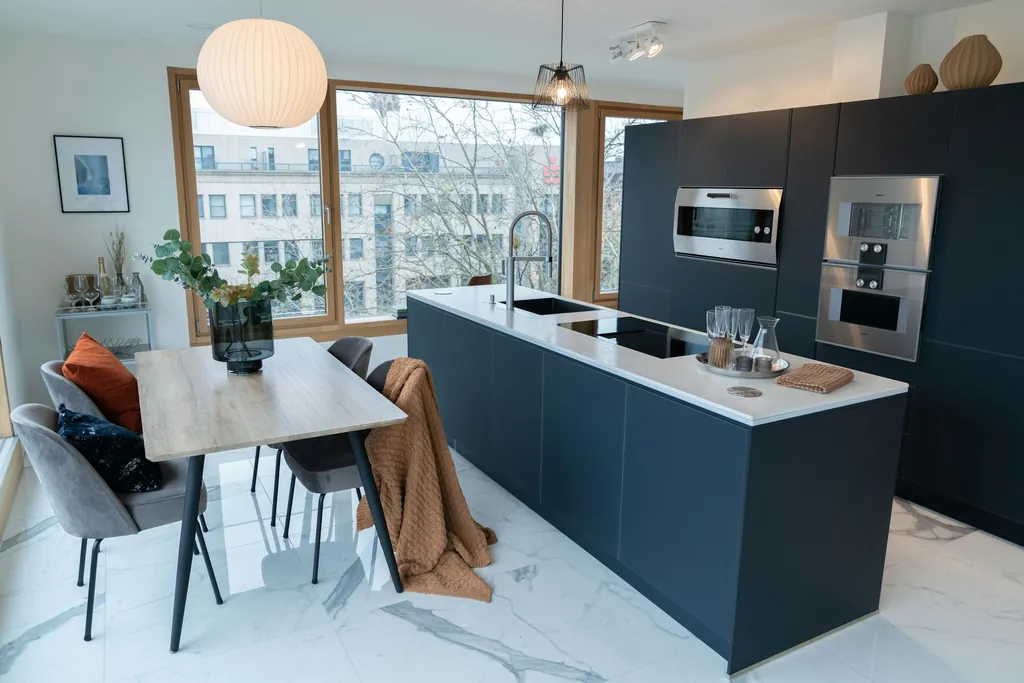
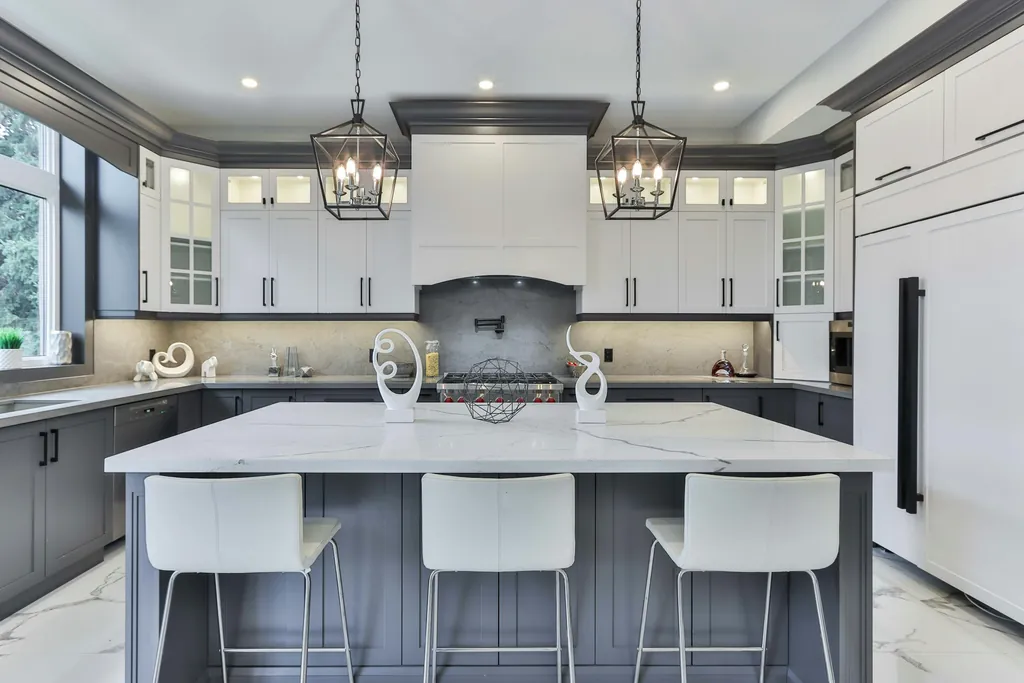
Painting kitchen cabinets black works best in a kitchen with good light, on doors and frames prepped to a smooth, sound surface, in a sheen that stands up to wiping. Black is dramatic and goes with almost any counter, but it shows dust, fingerprints and worn edges more than mid-tones do, and touch-ups on it are harder to hide.
Below: what black does in a kitchen, a three-check test for your room, the sheen and prep it asks for, and how to plan for touch-ups. For other deep colors, see our posts on navy blue kitchen cabinets and green kitchen cabinets.
What black does in a kitchen
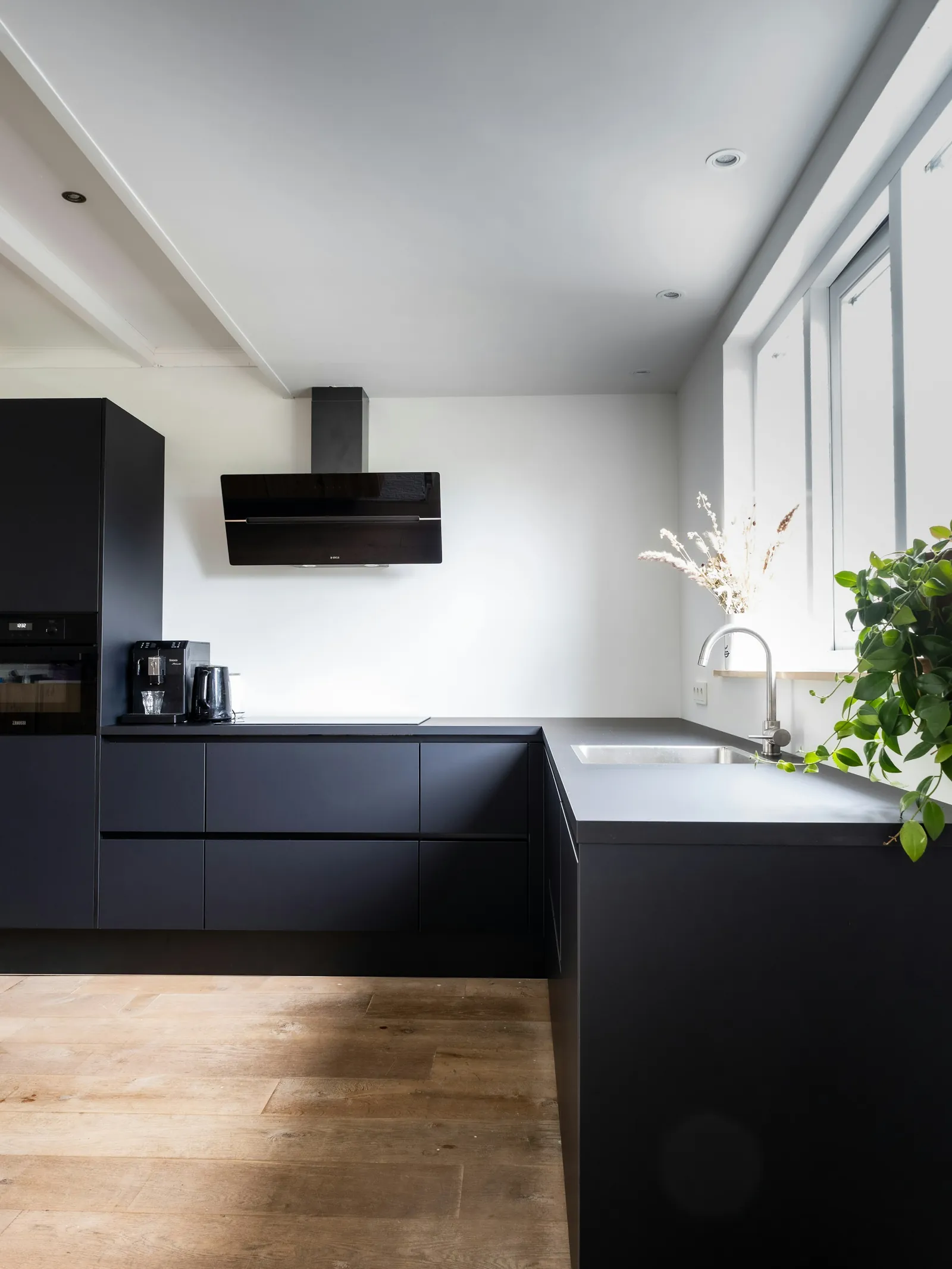
Before painting kitchen cabinets black, know what the color does to light. Black absorbs most of the light that reaches it, so black cabinets send little light back into the room. In a bright kitchen that reads as rich and grounded. In a dim one, a wall of black doors can turn into one dark mass after sunset.
It also changes what you notice. Dust, flour, water spots and fingerprints stand out on black the way crumbs stand out on a white counter. The doors aren't dirtier than white ones; the mess is just easier to see.
And not every black is the same black. Some lean blue, some brown or green, and plenty of the blacks on a color card are really deep charcoal. Paint large samples and look at them against your counter and floor in the morning and at night, the way how to test paint colors describes.
The Light, Touch, Edge check for painting kitchen cabinets black
Before you commit, run your kitchen through three questions. It's our editorial framework, not a measurement.
- Light: does the kitchen get daylight most of the day, and enough fixtures for the evening? Black needs light around it.
- Touch: which doors and drawers get grabbed by wet or greasy hands? Those faces show prints first.
- Edge: where do hips, bags, pets and vacuums bump? Wear shows first at edges and corners, where a lighter layer underneath can peek through.
| Your kitchen | Where black fits | Why |
|---|---|---|
| Bright, with daylight most of the day | All or most of the cabinets | There's light left to bounce off walls and counters |
| One window, lots of evening cooking | Lower cabinets or the island | Lighter uppers keep light at eye level |
| Small and dim | The island or one run, if anywhere | A full black kitchen can close in |
| Busy family kitchen | Black in satin or a higher sheen | Prints and wiping are a daily thing |
The table is our editorial guide, not a measurement. Splitting colors has its own post, two tone kitchen cabinets, and our ideas for kitchen island paint colors cover a black island on its own.
Sheen on black cabinets: shine versus scuffs
When you're painting kitchen cabinets black, sheen changes the result more than most people expect. Dunn-Edwards' guide to selecting gloss says the same color in a different gloss appears as a different color, with higher gloss looking brighter and richer, and that higher gloss levels tend to highlight defects and imperfections on a surface.
Low sheen has its own problem on dark colors. The maker's bulletin on burnishing describes shiny patches that appear where a painted surface is washed or rubbed, says they're usually more noticeable on flat and lower sheen paints, and adds that burnishing shows up more in darker or more heavily pigmented colors. A flat black drawer front that gets wiped every day is the textbook case.
So most black cabinets land in the middle: enough sheen to wipe clean without polishing into patches, not so much that every ripple shows. Our post on the best paint finish for kitchen cabinets compares satin, semi-gloss and gloss in depth.
Hardware and counters with black cabinets
Hardware decides how loud black gets. Brass and warm gold stand out and warm it up. Matte black pulls nearly disappear, which suits slab doors and a quiet look. Dark bronze sits between the two. Choose pulls before painting so any old holes can be dealt with first; cabinet hardware ideas covers sizes and finishes.
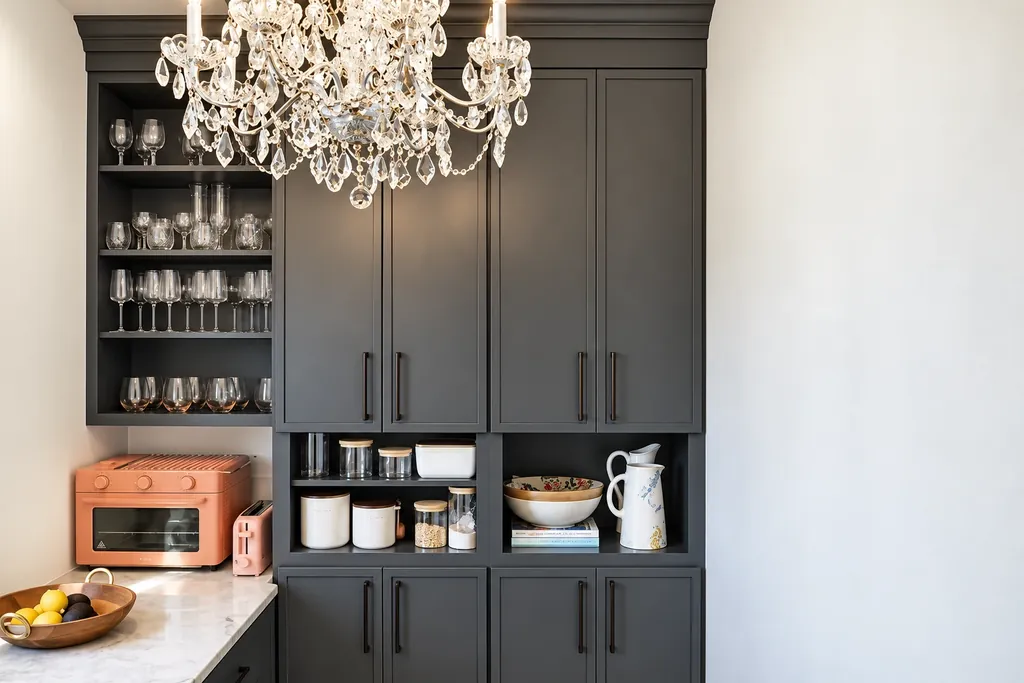
Black goes with almost any counter, but contrast sets the mood. White or pale stone gives the crisp, classic look. Butcher block warms black up. A black or dark counter on black cabinets makes a dramatic block that needs a light backsplash and good lighting to keep from feeling heavy.
Prep matters more when you paint cabinets black
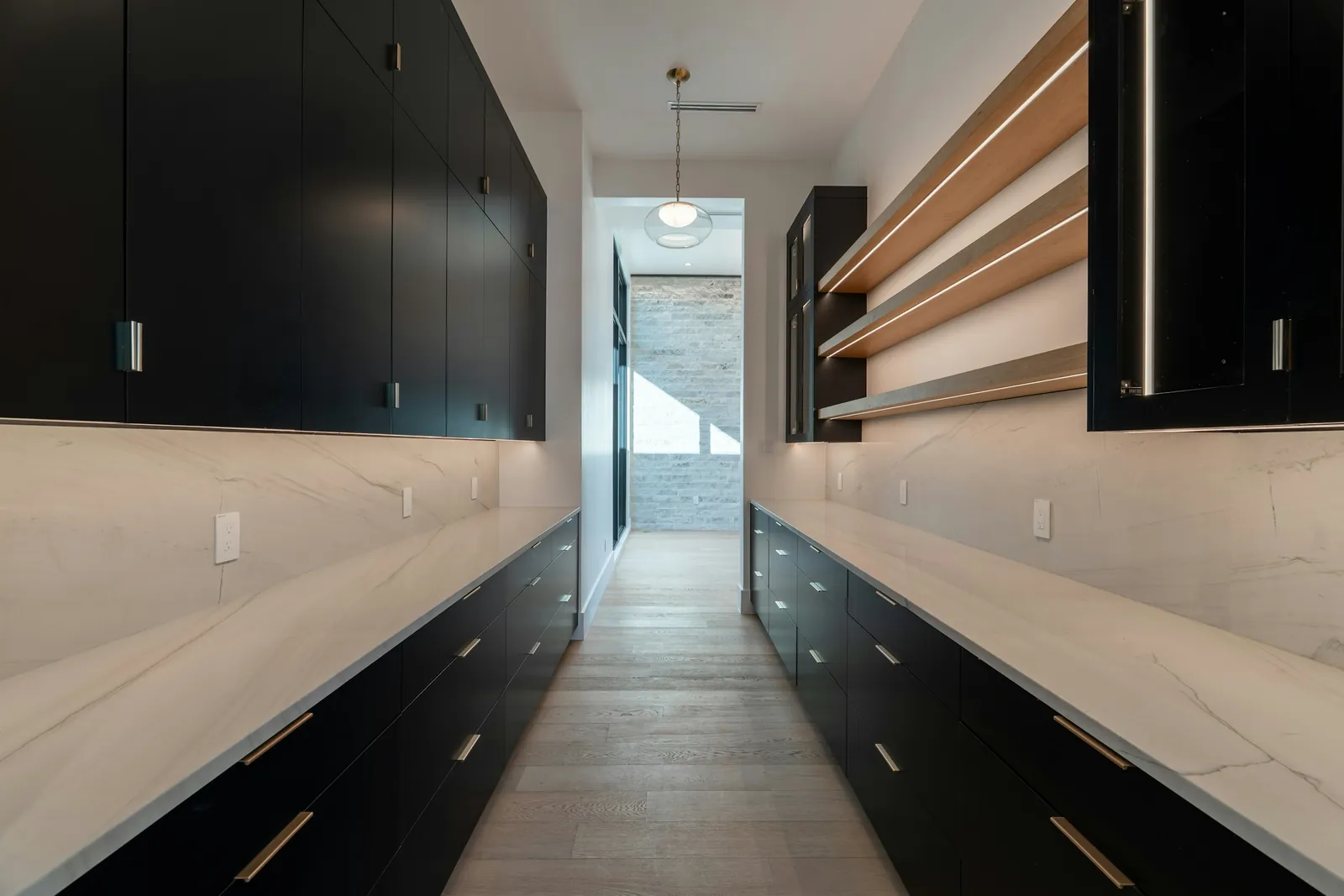
A smooth dark finish hides less. In a satin or semi-gloss, black shows sanding scratches, dust specks, drips and brush marks that a white door might forgive, so the prep before the color is where a black kitchen is won or lost.
- Degrease every door, drawer front and frame. Paint over cooking film or fingerprints can fail to bond.
- Sand to an even, dull surface, then remove every bit of dust. A speck trapped in the coat shows on black.
- Prime for the surface you have; the best primer for cabinets matches primer types to finishes.
- Lay the color coats on evenly, by spray or a fine-finish roller. Black shows uneven coats in raking light.
- Give it time. Dark colors cure more slowly, as the next paragraph explains.

Dunn-Edwards' bulletin on dry time and cure time says dark colors with a high loading of pigment typically take longer to dry and cure than light ones, that additives in colorants can slow the cure further, and that higher gloss coatings take longer too. Its burnishing bulletin calls for at least two weeks of curing before a painted surface is washed. Treat new black doors gently for the first few weeks; dry time and cure time are separate numbers.
Touch-ups on black painted cabinets
Plan for touch-ups before the first chip. Dunn-Edwards' touch-up bulletin lists darker colors and paints with a sheen among the things that make a touch-up harder to blend, and black cabinets are usually both.
The same bulletin says that when the original coat was sprayed, touching up the same way usually isn't practical, but a small amount of the original material can be set aside for touch-ups. Keep a labeled jar of the exact paint and sheen, with the color formula written on the lid.
- Clean the spot first. Grease or dust under a touch-up shows.
- Use the least paint that covers. A thick dab builds up and catches the light.
- If one door needs touch-up after touch-up, recoating the whole face blends better than spots.
Our post on how to touch up paint goes deeper on flashing, and how to clean painted kitchen cabinets covers cleaning that won't polish a low-sheen black into shiny patches.
When to stop and call a professional
- Stop sanding if your home was built before 1978 and you don't know what's in the old finish.
- Stop if the old finish is peeling or flaking. New paint can't hold onto a coat that's letting go.
- Air out the room, and stop if fumes bring on a headache or dizziness.
- Call a pro if you want a sprayed black with no brush marks, or you'd rather not lose your kitchen for weeks.
The first one matters in older Madison houses. EPA says about three quarters of U.S. homes built before 1978 still contain some lead-based paint, and that renovation, repair or painting work in a pre-1978 home with lead-based paint can easily create dangerous lead dust. Tell any painter the age of the house and ask how they handle lead-safe work. See painting older Madison homes.
How we handle black cabinets at GK Painting
Every cabinet we refinish is cleaned and degreased, then sanded and primed, before any color goes on. Doors and drawer fronts come off, get labeled and are sprayed; the frames are finished in your kitchen. That's the smooth, even base a dark color needs.
We use premium paint from Sherwin-Williams and Behr, and Behr is the more economical of the two. If you'd rather use a brand you already like, we'll use it. Cabinet work is priced per cabinet with paint included, and most kitchens take one to two weeks. The written quote is the price, no extra charge if the job takes longer than expected.
If a problem comes from the quality of our work, like a finish that peels or didn't bond, we'll come back and make it right; damage from everyday use or accidents isn't covered. We're based in Waunakee and work across Madison and Dane County. See our cabinet refinishing service or ask for a free estimate, and ask George about keeping touch-up paint for your color.
Common questions
Is it a good idea to paint kitchen cabinets black?
Yes, in a kitchen with good daylight and enough evening light, on cabinets with solid boxes. Black is dramatic and pairs with almost any counter or metal. It shows dust, fingerprints and worn edges more than mid-tones, so it suits a household that doesn't mind wiping doors and wants a bold look.
What sheen is best for black kitchen cabinets?
Satin or semi-gloss for most kitchens. Flat and low sheens can burnish into shiny patches where they're wiped, and one maker says burnishing shows more on darker colors. High gloss cleans easily and looks richer but highlights every flaw in the surface. The middle sheens balance easy cleaning with a forgiving look.
Do black cabinets show fingerprints?
Yes, more than white or mid-tone cabinets. Smudges, flour and water spots stand out on black, especially on doors near the sink and range. Pulls on every door help, and so does a sheen that wipes clean. Use a soft cloth with mild soap and water, and skip abrasive pads and cleaners.
How long does black cabinet paint take to cure?
Longer than a light color. Dunn-Edwards says dark colors with heavy pigment loading typically take longer to dry and cure, that colorant additives can slow the cure further, and that latex coatings take 14 to 30 days to cure in general. Treat new black doors gently, with no scrubbing, for the first few weeks.
Can you touch up black painted cabinets?
Yes, but it's harder than on light colors. One maker's bulletin says darker colors and paints with a sheen are both harder to touch up. Keep some of the original paint, clean the spot, and apply as little as covers. A door with many chips blends better recoated than spotted.
Should I paint my kitchen cabinets black or charcoal?
Go charcoal if you love the look but worry about dust, prints or a dark room. A deep charcoal reads nearly black in most light and may show a little less of what sits on it. Pure black gives the strongest contrast. Paint large samples of both and look at them morning and night.
Sources
- Burnishing (technical bulletin), Dunn-Edwards
- Touch-Up (technical bulletin), Dunn-Edwards
- Dry Time Versus Cure Time of Paint (technical bulletin), Dunn-Edwards
- Selecting Paint Gloss, Dunn-Edwards
- Lead Renovation, Repair and Painting Program, U.S. Environmental Protection Agency
More on cabinet refinishing and every cabinets post.