Repairing plaster walls: fill it, fasten it or rebuild it
· 7 min read · By GK Painting & Remodeling
Knowing how to repair plaster walls starts with one question: is the plaster still holding on? Hairline cracks in firm plaster just need filling, cracks that keep reopening need mesh tape, loose plaster has to be fastened back to the lath, and holes are rebuilt in thin layers. Prime every repair before you paint.
The National Park Service says plaster was the wall finish for nearly all buildings until the 1930s or 40s, so an older house probably has it. Below: how to sort the damage, fix each kind, paint afterward and handle the lead and asbestos questions. Drywall has its own guide: how to patch holes in drywall.
Why plaster walls crack
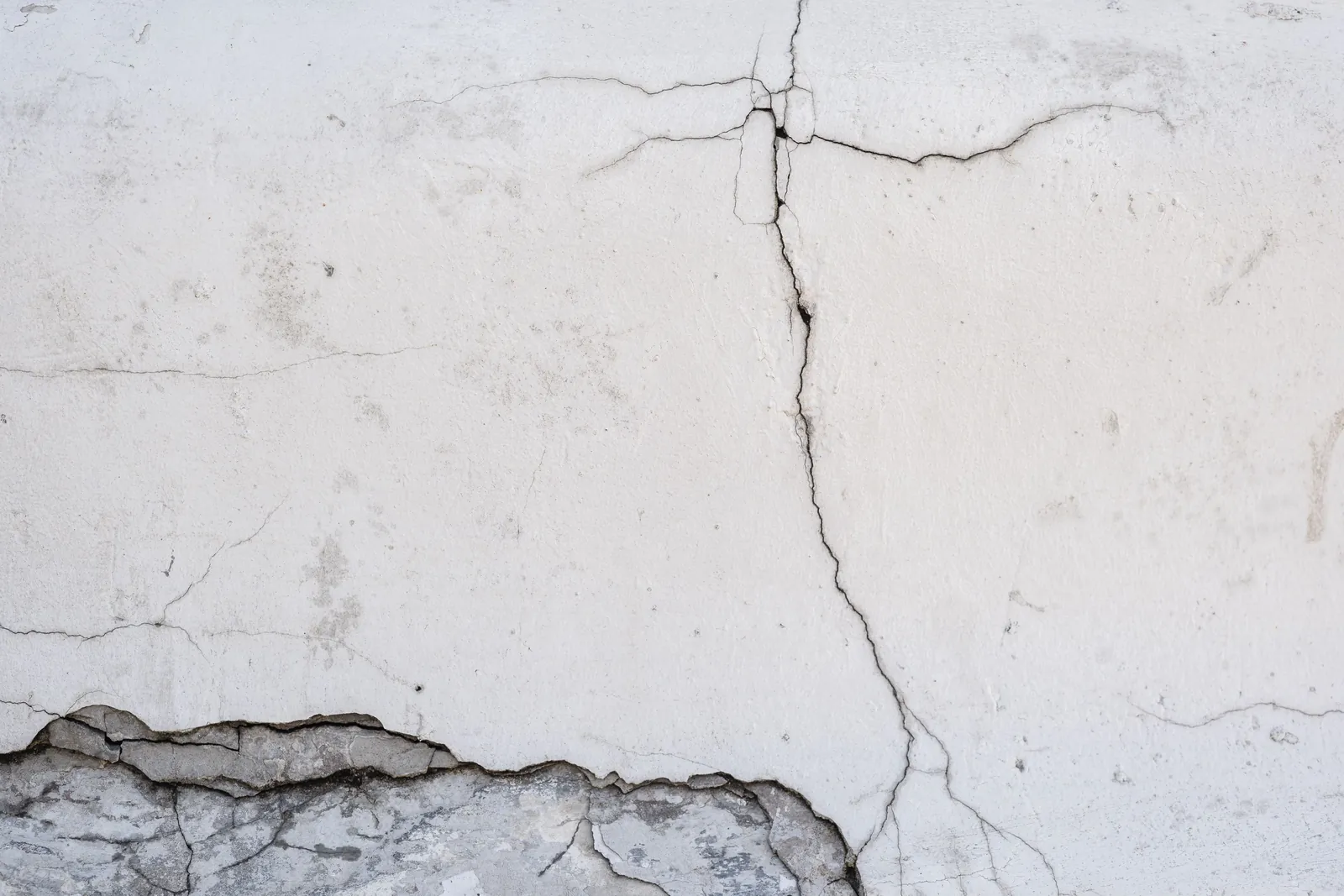
Plaster cracks when something behind it moves or fails: the framing, the lath, the original mix or a leak. Plaster wall repair starts with knowing which, because the Park Service's Preservation Brief 21 treats each one differently.
Old plaster is two or three troweled coats over wood lath, metal lath or gypsum rock lath. On wood lath, the brief explains, plaster pushed through the gaps forms keys that hold the wall on. Break the keys and the plaster comes loose.
| What you see | What the brief links it to | First move |
|---|---|---|
| Diagonal crack from a door or window corner | Stress in the framing | Fill and tape, then watch it |
| Diagonal cracks running opposite ways | The house settling | Fill and tape, then watch it |
| Horizontal crack that returns each year | Wood lath swelling and shrinking | Widen, fill and tape |
| A web of fine, shallow cracks | Map cracking in the finish coat | Fill, then skim if rough |
| Bubbles, powder or crumbling | Moisture | Stop the water first |
| A crack that keeps getting wider | Ongoing structural movement | Call a structural engineer |
The last column is our editorial summary of the brief, not a diagnosis.
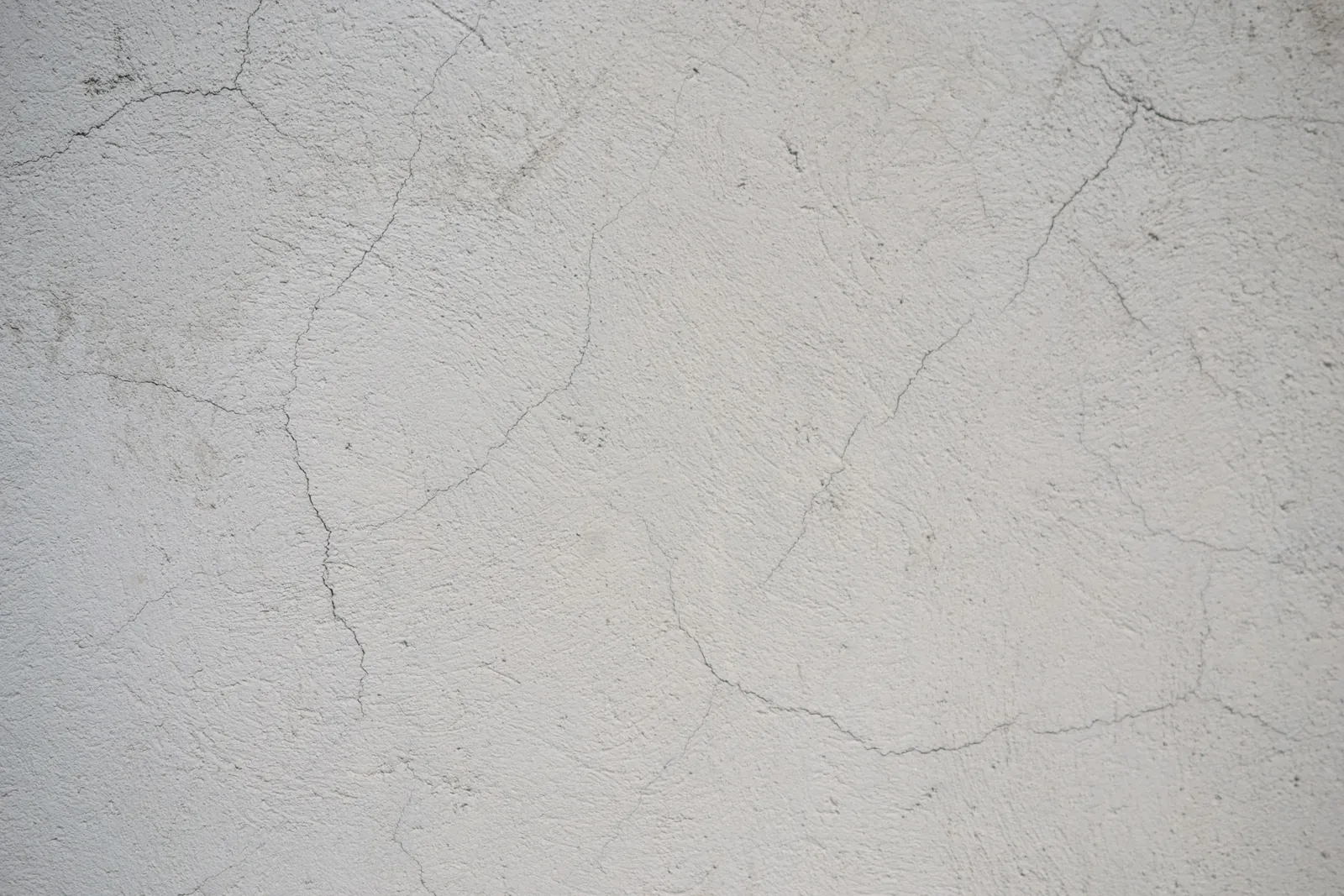
The crack that returns every year is often the lath: wood lath expands and contracts as humidity rises and falls, the brief says. Our post on painting older Madison homes covers the seasonal side.
The Sound, Loose or Lost check: repair, skim or replace
Before you repair plaster walls, press gently with a flat hand on both sides of each crack and sort the spot into one of three piles. It's our editorial framework, built on the Park Service brief, not a lab test.
- Sound: firm and flat, with only surface cracks. Fill or tape them, and skim or line the wall if it's rough.
- Loose: it moves or bulges when pressed. The keys have broken, so fasten it to the lath before any filling.
- Lost: crumbling, missing to the lath, wet or sagging. Rebuild it in layers, cover it with new plaster or replace it.
| What you find | Pile | Usual route | Who usually does it |
|---|---|---|---|
| Hairline cracks in firm plaster | Sound | Fill | You |
| A crack that reopens every season | Sound | Widen, fill and tape | You, with patience |
| Bulge that moves when pressed | Loose | Screws and plaster washers, then tape | You or a plasterer |
| Hole under 4 inches | Lost | Two-coat patch | You or a plasterer |
| Large hole down to the lath | Lost | Metal lath and three coats | A plasterer |
| Ceiling cracked all over or sagging | Lost | Replaster over it, or replace | A plasterer |
The last two columns are our editorial guide, not a measurement. The brief says owners can handle minor repairs but most need a plasterer, and that plaster is often not as badly damaged as it first appears.
How to repair plaster walls with cracks
Hairline cracks in sound plaster aren't a serious concern, the brief says; fill them with all-purpose drywall joint compound. Cracks that reopen with the seasons take more steps:
- Widen the crack slightly with a pointed tool, such as a crack widener or a triangular can opener.
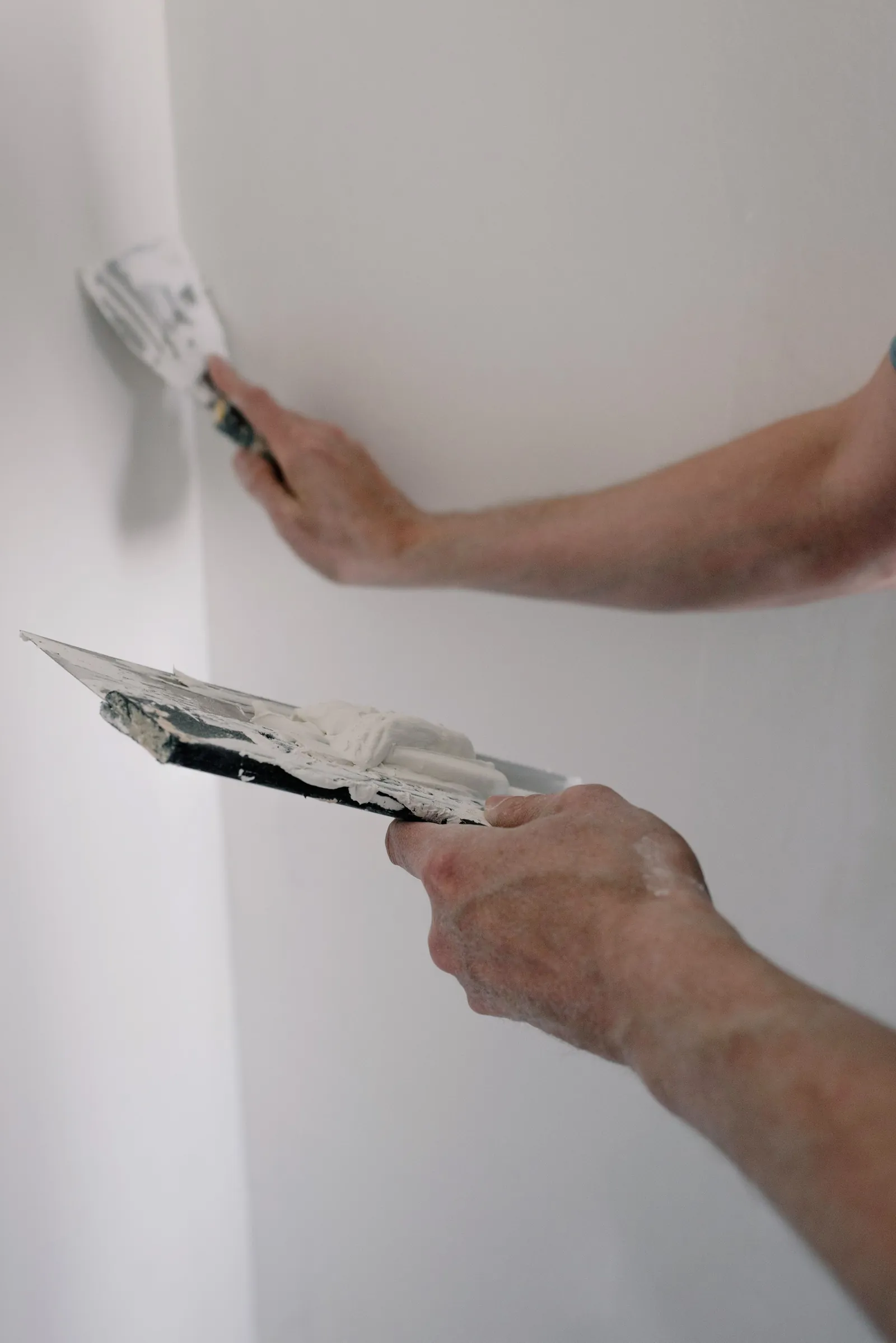
- Fill it with a quick-setting joint compound.
- Press fiberglass mesh tape into the compound across the crack.
- Once that coat has set, cover the tape with a second coat and feather the edges wide.
- Add a thin third coat of all-purpose compound to even the surface.
- Sand lightly, wipe the area with a damp sponge and let it dry.
Pick the right compound
Quick-setting compound hardens by chemical reaction in 60, 90 or 120 minutes and shrinks less, the brief says, but it's hard to sand, so use it to bed tape and fill depth. All-purpose compound is the final coat before sanding. Patching plaster or plaster of Paris won't work alone; it has to be mixed with lime. Sanding and priming follow the usual wall prep.
When the house is moving
Cracks from structural movement need the structure fixed first, the brief says, then the plaster cut back about 6 inches on each side, metal lath added and three new layers.
Loose plaster, holes and sagging ceilings
Fasten loose plaster before you fill it
Plaster that loses its keys turns loose or bowed, and the brief warns that, especially on ceilings, gravity will eventually bring chunks down. If the plaster around it is in reasonably good condition, it can be drawn back to the wood lath with flat-head wood screws and plaster washers. Then the crack is taped and the tape and washers are skim-coated. Fill without fastening and the new compound sits on plaster that still moves.
Patching a hole in plaster
For holes under 4 inches, the brief describes a base coat scraped back below the surface, then a finish layer once the base has set but not dried. One-coat patches tend to dry concave and show through paint. Larger holes get the lath re-nailed, expanded metal lath over it and three layers of plaster, each stepped over the old edge. On a wavy wall, shape the patch to follow the waves; a flat patch stands out.
Ceilings, lining and replacement
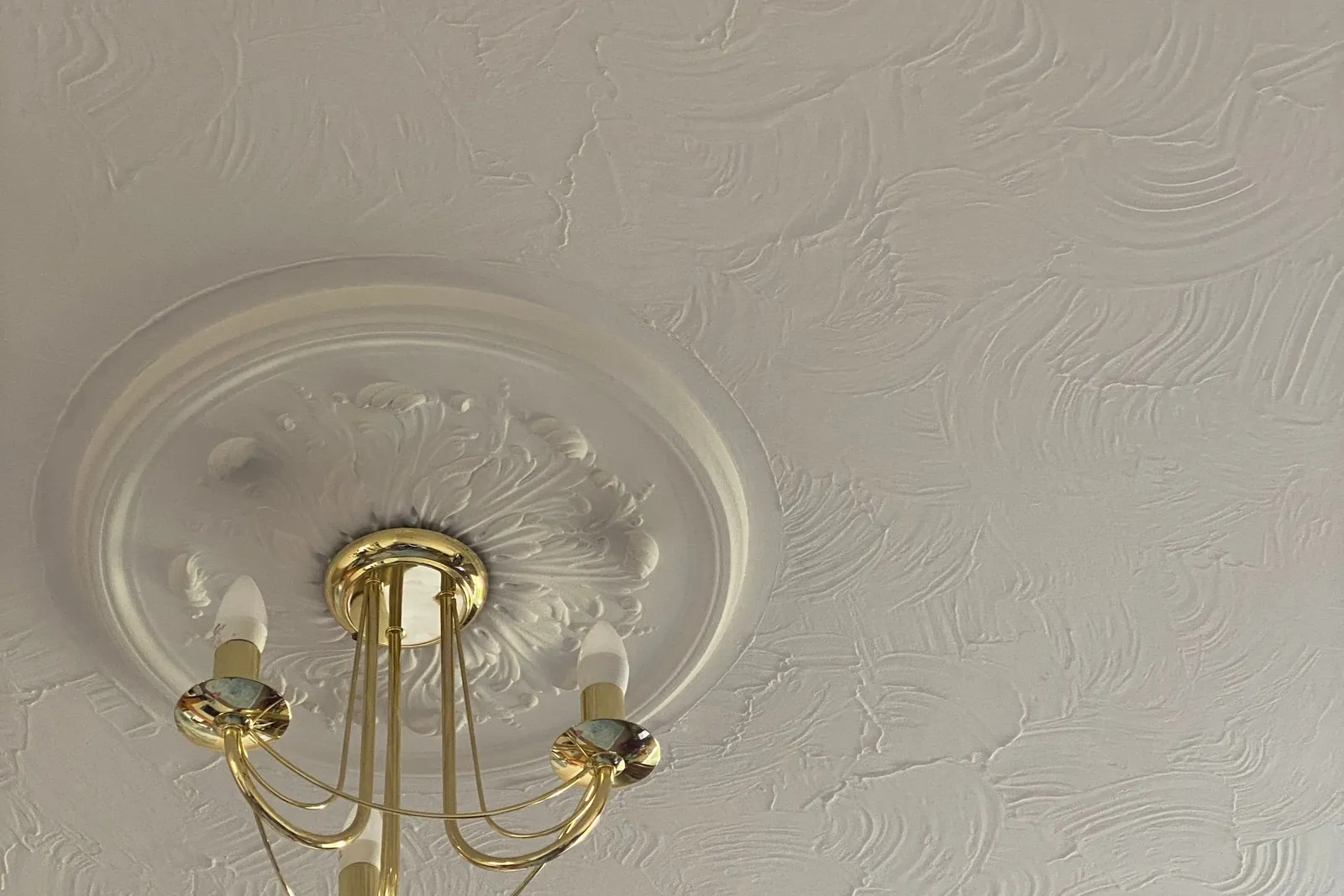
When a ceiling is too cracked to patch or is sagging, but not water damaged, the brief says plasterers routinely leave it in place, screw furring strips through it to the joists, and add new lath and plaster. That saves time and makes much less dust than demolition. Textured ceilings need testing first; see painting a popcorn ceiling.
Sound but rough walls can be lined with strips of canvas, the old way to hide flaws under paint. Where plaster is past saving, the brief calls veneer plaster, a thin coat over special gypsum panels, better suited than drywall.
Painting plaster walls after the repair
Painting plaster walls after a repair comes down to dry, sealed, then painted. USG, which makes plaster, says plaster must be completely dry first, because the paint's bond is greatly reduced on damp plaster.
- Let new plaster dry: two to three weeks, the Park Service says, and longer for a lime finish coat. Dunn-Edwards says a light, even color is the sign it's dry.
- Not sure? Tape a square foot of clear plastic to the wall for 24 hours. Droplets underneath mean it's too wet, USG says.
- Use an alkali-resistant primer on new plaster. USG says gypsum plaster runs from pH 7 to above 13.
- Skip PVA primer, which USG says shouldn't go over plaster of any kind because it swells when wetted.
- Finish with two topcoats over the primer, as USG recommends.
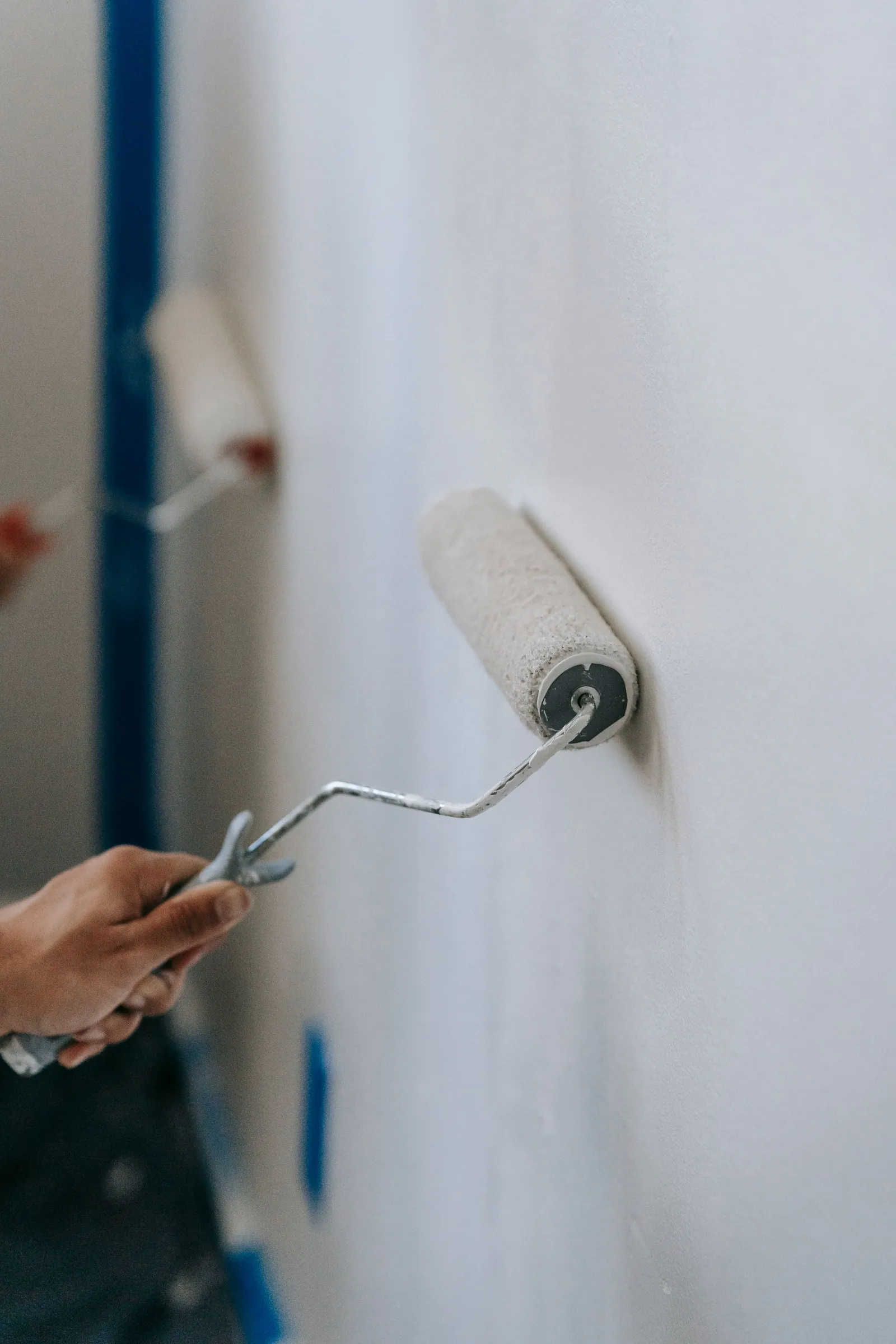
Keep tape off fresh plaster: Dunn-Edwards warns that tape's adhesive can be stronger than the plaster, so pulling it can fracture the surface. More in using painter's tape.
Painting cracked plaster without repairing it doesn't fix much: paint is a thin film and can't hold a moving crack closed. For wavy walls, our guide to paint finishes room by room explains why a flatter sheen hides more.
When to stop and call a professional
- Call a plasterer right away if ceiling plaster sags, bulges or drops pieces.
- Call a structural engineer if a crack keeps getting wider, as the Park Service advises.
- Find the water first if plaster is damp, stained or bubbling; the brief says repairs on a wet base fail again.
- Stop before sanding, scraping or demolition in a home built before 1978 until you know what's in the paint and old patches.
- Call a pro for large areas or ornamental plaster.
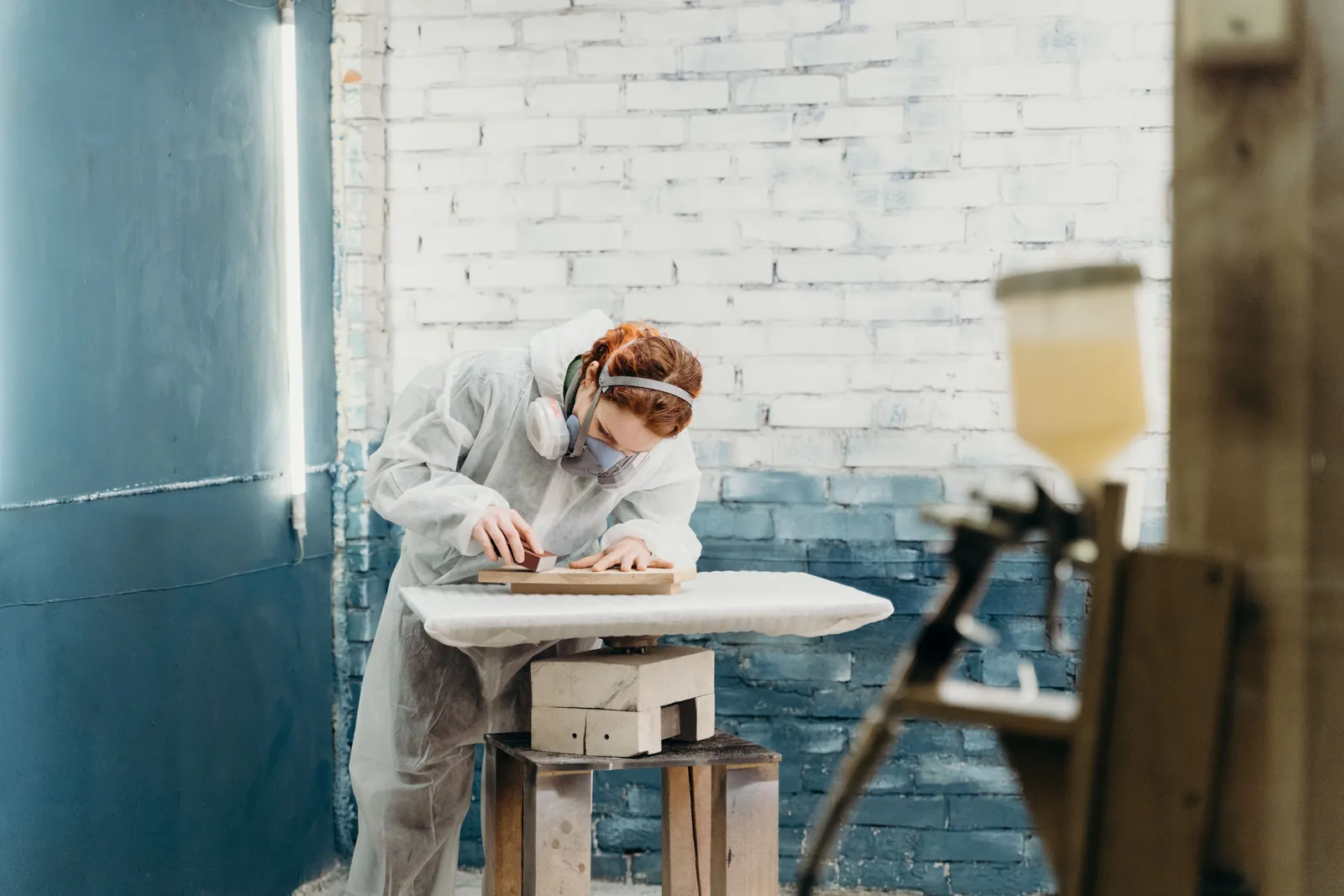
The fourth one matters in older Madison houses. EPA says about three quarters of U.S. homes built before 1978 still contain some lead-based paint, and that repair or painting work in one that has it can easily create dangerous lead dust. EPA also lists textured paint and patching compounds used on walls and ceilings among the places asbestos may be found. Our post on painting older Madison homes covers what to ask before work starts.
How we handle plaster at GK Painting
If you'd rather not learn how to repair plaster walls yourself, George repairs plaster as well as painting it. He quotes every job himself, does the work and walks it with you at the end. Show him the cracks, bulges and old patches, tell him the age of the house, and ask how each repair fits into your interior painting project.
Floors and furniture are covered before work starts. The written quote is the price, no extra charge if the job takes longer than expected. If a problem comes from the quality of our work, like a finish that peels or didn't bond, tell us and we'll come back and make it right.
We're based in Waunakee and work across Madison and Dane County. Read our promises, or ask for a free estimate.
Common questions
Can you use drywall compound on plaster walls?
Yes, for cracks and small repairs. The National Park Service suggests all-purpose joint compound for fine cracks, quick-setting compound to bed fiberglass tape or fill depth, and all-purpose again as the last coat before sanding. Larger holes down to the lath are usually rebuilt with plaster over metal lath instead.
How do you fix cracks in plaster walls that keep coming back?
Tape them. Widen the crack slightly, fill it with quick-setting joint compound, press fiberglass mesh tape into it, then cover the tape with two thinner coats feathered wide. If the plaster around the crack moves when pressed, fasten it to the lath first. A crack that keeps widening needs a structural engineer.
Can you paint over cracked plaster?
You can, but the crack will show again. Paint is a thin film, and it can't hold a moving crack closed or a loose area on. Fill hairline cracks, tape cracks that reopen and fasten loose plaster first, then prime the repairs and paint the whole wall so the finish looks even.
Is it better to repair plaster or replace it with drywall?
Repair it when most of the plaster is sound. The National Park Service says three-coat plaster is unmatched in strength and durability, resists fire, reduces sound and is often less damaged than it looks. Where plaster is past saving, it prefers veneer plaster to drywall, because the finish looks closer to the original.
How do you reattach loose plaster?
With flat-head wood screws and plaster washers driven into the wood lath, as long as the plaster around the loose area is in reasonably good condition. The cracks are then taped and the washers skim-coated. Plaster that crumbles, or a ceiling that sags or drops pieces, needs a plasterer instead.
How long should plaster dry before painting?
Until it's completely dry. The National Park Service suggests two to three weeks for new plaster, and longer for a lime finish coat. USG's check is a square foot of clear plastic taped to the wall for 24 hours: droplets underneath mean it's too wet. Then prime with an alkali-resistant primer.
Sources
- Preservation Brief 21: Repairing Historic Flat Plaster Walls and Ceilings, National Park Service, Technical Preservation Services
- Plastering Technical Guide: Preparation for Painting (PM15), USG (United States Gypsum Company)
- How to Prepare and Paint New Plaster Walls (technical bulletin), Dunn-Edwards
- Lead Renovation, Repair and Painting Program, U.S. Environmental Protection Agency
- Learn About Asbestos, U.S. Environmental Protection Agency
More on interior painting and every how-to post.