Does painting add value to a home? An honest answer
· 5 min read · By GK Painting & Remodeling
Fresh paint helps a home sell, but no source we could verify puts a trustworthy dollar figure on it, so we're not going to either. What paint reliably does is remove reasons for a buyer to mark a house down: worn walls, strong colors, stains and peeling.
Here's what Realtors recommend, what appraisers actually look at, and how to think about painting before you sell. If you're getting a house ready, ask for a free estimate.
What we can and can't say
You'll find articles that say a paint job returns a precise percentage of its cost. We read the two sources we could check, the National Association of Realtors' 2025 Remodeling Impact Report and the condition guidelines that Fannie Mae and Freddie Mac issue to appraisers. Neither one assigns paint a resale value.
So here's the honest version. Painting is widely recommended before a sale, and it can make a house look better cared for. What it does to the price of any one house depends on that house's condition, its market and the buyer who walks through it, and no one can promise you a number in advance.
Be careful with any percentage you do see online. Some come from surveys of Realtors' opinions and some from estimated project costs. Neither is the same as comparing the sale price of a house with fresh paint against the same house without it. We'd rather give you a plain answer than a figure that sounds more precise than the evidence is.
What Realtors recommend

In the 2025 Remodeling Impact Report, Realtors were asked which remodeling projects they recommend sellers do before selling. Painting took the top two spots. These were the five most common answers:
- Painting the entire home: 50 percent
- Painting one room: 41 percent
- New roofing: 37 percent
- A kitchen upgrade: 30 percent
- A bathroom renovation: 24 percent
Two cautions come with that list. A recommendation isn't a price. The report's separate cost-recovery chart, where Realtors estimate how much of a project's cost comes back at resale, shows twelve projects, and painting isn't one of them. And the survey collects Realtors' estimates and opinions, not sale records.
The same report says Realtors told NAR that 46 percent of home buyers are less willing to compromise on a home's condition when they buy. That's a good reason to deal with obvious wear before you list.
What appraisers look at
Appraisers describe a home's condition on a scale from C1 to C6, under guidelines issued jointly by Fannie Mae and Freddie Mac. The scale is about the physical condition of the property, not a dollar adjustment, and paint isn't a line on it. The descriptions are still worth reading, because they show where worn paint fits:
- C3: well maintained, with only minimal wear and tear.
- C4: adequately maintained, with moderate wear and deferred maintenance that's generally minor or cosmetic. The examples include minor damage to walls or trim, and kitchens or bathrooms that are dated but fully functional.
- C5: significant wear and tear from inadequate maintenance.
Whether paint moves a particular house up a category is the appraiser's call, and the guidelines don't say that it does. What they do show is that visible wear on walls and trim is exactly what the middle categories describe.
What paint does for a first impression
Buyers can't see behind the walls, so they read the surfaces. Scuffs, stains, peeling and dated colors are the easiest things to spot, and they suggest what else might have been put off. That's reasoning, not a statistic, but it's the reasoning behind the Realtor recommendations above.
Paint is also one of the faster repairs. Most rooms take one to two days, which makes it an easy fit for the stretch between deciding to sell and listing. If you're selling, a calm, neutral color is the safer choice, because it asks less of a buyer's imagination. Our guide to choosing paint colors for your home covers neutrals that don't feel cold.
Which rooms to paint
The NAR chart separates painting the whole home from painting a single room, and that matches how most sellers end up deciding. If the whole house looks tired, painting it all is the cleaner answer. If only a few rooms are worn, paint those and leave the rest. Your listing agent knows your market and has seen the house, so ask which rooms they'd do first.
Rooms that get the most use tend to show wear first: entries, hallways, stairwells and kitchens. Our post on painting a stairwell shows why those are worth the extra care, and painting interior doors covers one more place wear shows up.
Questions worth putting to your listing agent before you pick colors:
- Which rooms would you paint first, and which can wait?
- Do strong colors in this house need to go?
- Is anything, like peeling paint or stains, likely to come up when buyers or inspectors look?
Painting for yourself versus painting to sell
The two goals pull in different directions. If you're staying for years, paint what bothers you and choose colors you like, because you're the one who lives with them. If you're selling in a few months, you're painting for a stranger, and the useful questions are about wear and distraction rather than taste.
Plenty of homeowners are somewhere in between. You might plan to stay three or four more years and still want the house to look cared for the day a buyer walks in. In that case, the choice that works both ways is a clean, calm color in the rooms that get the most use, and a repair list that's finished before the paint goes on. Our guide to why paint your home covers the other reasons to paint besides selling.
Fix the cause before you paint
Painting over a problem doesn't solve it. Peeling paint and stains are often signs of moisture, and the National Park Service's advice is blunt: there's no sense in repainting before dealing with the moisture problem, because the new paint will simply fail. A listing with fresh paint that peels again in a month is worse than no new paint at all.
For smaller flaws, repair first, then paint. Our guides to patching holes in drywall and fixing peeling paint cover the repairs that need to happen before the color goes on. On our own jobs, small holes are repaired as part of the prep.
Kitchens and cabinets
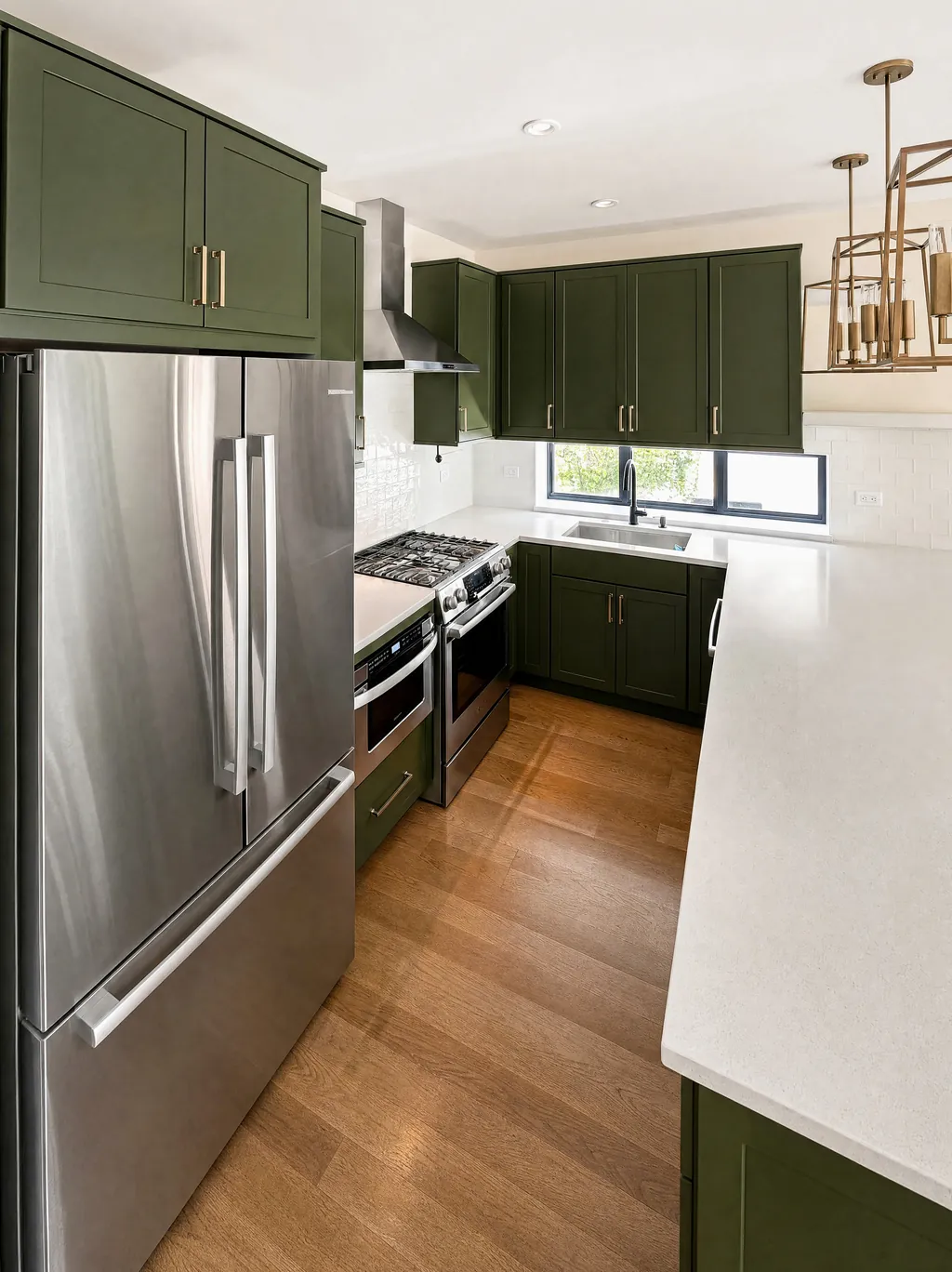
Cabinets are the largest surface in most kitchens, and worn or dated ones set the tone for the whole room. Whether refinishing them adds a particular amount to a sale price is, again, something no one can promise. What it does is refresh a kitchen without tearing out the cabinet boxes, counters, backsplash or plumbing.
Our guide to painting or replacing kitchen cabinets lays out when each one makes sense, and our cabinet refinishing page explains how the work is done.
How a pre-sale paint job runs with us
A phone call comes first, and George visits if he needs to see the space. You get a written quote with a start date. Floors and furniture are covered before any paint comes out, small holes are repaired, and interior painting is priced by the square footage of the space, with paint included. We work in Madison and the towns around it, and when the job's done, George walks the space with you before calling it finished.
Common questions
Does painting your house increase its value?
It can help a home sell and show better, but no reliable source we found gives a dollar return for painting, and we won't invent one. Realtors rank it among the most recommended projects before a sale.
Is it worth painting before you sell?
Often, yes, especially if the walls are scuffed, stained or a strong color. In NAR's 2025 survey, painting the entire home and painting one room were the two projects Realtors recommended most that sellers do before selling.
Which rooms should I paint before selling?
Ask your listing agent, who knows your market and has seen the house. If the whole house looks worn, painting all of it is cleaner. If only a few rooms are tired, start with the ones people pass through most.
Do appraisers consider paint?
Appraisers rate a home's overall condition from C1 to C6, and paint isn't a line item. Worn walls and trim are the kind of minor, cosmetic deferred maintenance the C4 description mentions.
Can fresh paint cover up a moisture problem?
No. If moisture is behind the paint, it will come back through the new coat. Find and fix the source first, let the surface dry, and then paint.
Sources
- 2025 Remodeling Impact Report, National Association of Realtors
- Uniform Appraisal Dataset: Condition and Quality Rating Definitions, Fannie Mae and Freddie Mac
- Preservation Brief 10: Exterior Paint Problems on Historic Woodwork, National Park Service
More on interior painting and every paint basics post.