How to paint shiplap so the gaps, knots and seams look right
· 7 min read · By GK Painting & Remodeling
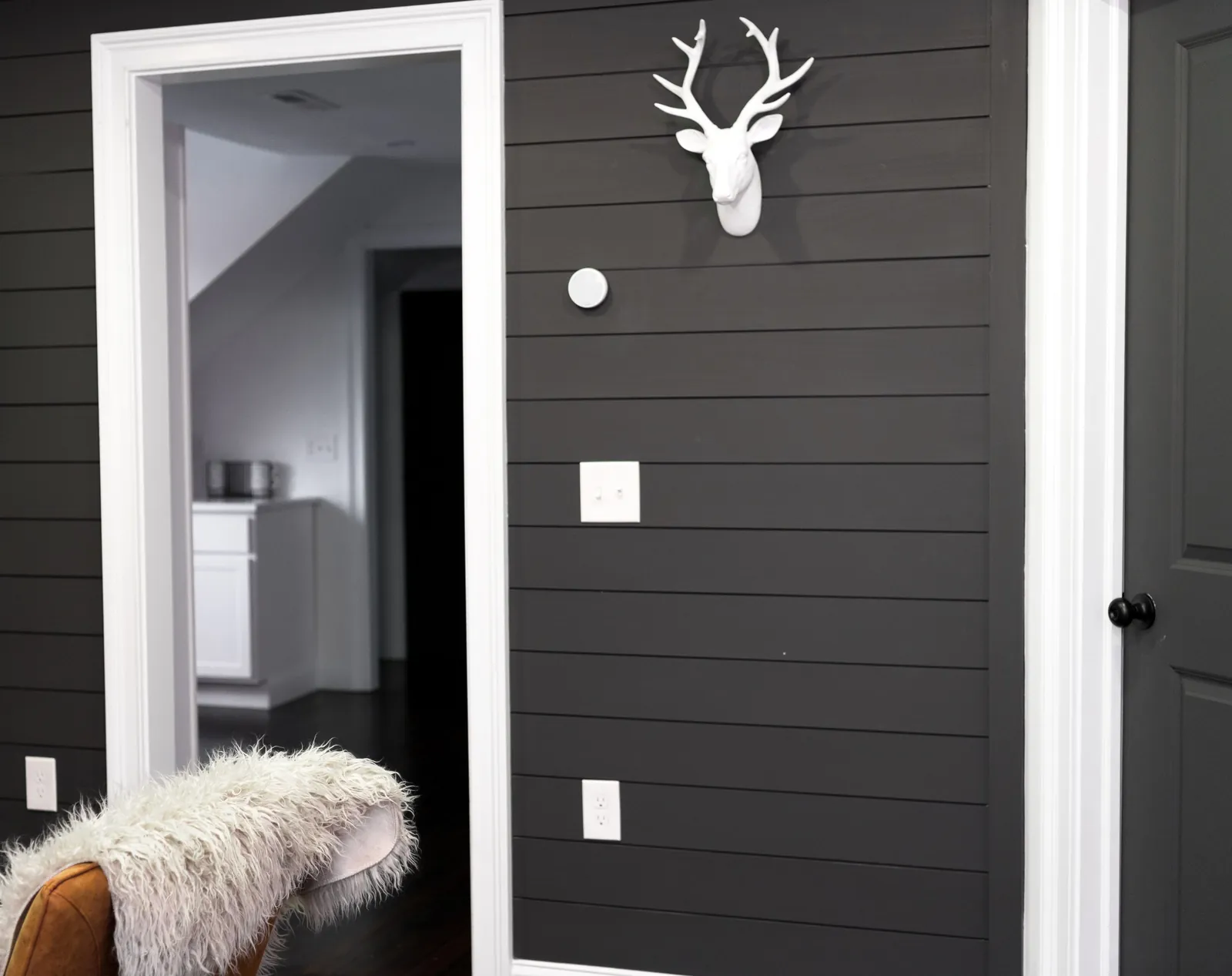
Painting shiplap goes best in a set order: clean the boards, paint the gaps first, seal knots in real pine with a stain-blocking primer, then roll or spray the faces in satin or a lower sheen. Leave the gaps between boards open. Caulk belongs where shiplap meets trim, not in the reveal.
Below: real boards versus MDF, a four-part check, the gap technique for brush, roller and sprayer, knots, caulk, sheen, and boards that are already stained or painted. For sheet paneling with routed grooves, see painting wood paneling instead.
Real shiplap boards or MDF panels?
Shiplap is a wall of boards whose edges overlap, leaving a small, even gap between the faces. Real shiplap is solid wood, often pine. It's also sold as MDF, a panel of wood fibers glued together and milled to look like boards.
Check a cut end, a leftover piece or the edge beside an outlet. Wood shows grain and growth rings; MDF is the same brown fiber all the way through.
| Question | Real wood boards | MDF shiplap |
|---|---|---|
| Knots and bleed? | Likely, especially in pine | None: no knots or grain |
| How it arrives | Bare or prefinished | Usually factory primed |
| Main primer job | Block knots and wood color | Cover spots sanded or cut through |
| Watch for | Sap, and gaps that open in winter | Fibers that raise where it gets wet |
The table is our editorial summary of the sources below, not a measurement. The Composite Panel Association's bulletin on MDF trim, the same material as MDF shiplap, says the surface is flat, smooth and free of knots and grain, that most of it comes pre-primed, and that water-based primers can raise its fibers with any significant contact with water. Our post on painting MDF cabinets covers the same material on doors.
The Board, Gap, Bleed, Move check for painting shiplap
Most painting shiplap guides start with the roller. We start with four questions, because each one changes the order of work. It's our editorial framework, not a lab standard.
- Board: real wood or MDF? It decides the primer and how hard you can sand.
- Gap: how will paint reach the back of the reveal without pooling in it?
- Bleed: are there knots, sap or old stain that could come through a light color?
- Move: will the boards shrink in winter and show a stripe of bare wood at the overlap?
Move is the one nobody plans for. The USDA's Wood Handbook says indoor heating in northern winters can drop the moisture in interior wood to around 4 percent, against roughly 8 to 10 percent in air-conditioned rooms. Wood shrinks as it dries, so an overlap that looked painted in July can show a pale line in January. MDF moves too: the panel association says it changes size with humidity, like solid wood.
How to paint shiplap gaps by brush, roller or sprayer
Paint the gaps first, then the faces. A roller bridges the reveal, so rolling first leaves bare edges and ridges of paint that you end up chasing with a brush.
| Method | Good for | Watch for |
|---|---|---|
| Brush | Gaps, corners, short runs | Slow across a whole wall |
| Roller | The flat faces of the boards | Can't reach into the gaps |
| Sprayer | Whole walls with many gaps | Masking time and overspray |
What a nickel gap is
A nickel gap is shiplap hung with an even reveal about as wide as a nickel is thick. It's the look, not a flaw, so paint has to coat the back of the gap without filling it.
With a brush and roller
- Work paint into one gap at a time with a lightly loaded angled brush, along the full length of the board.
- Brush out any paint gathering on the lower lip of the gap before it can run.
- Roll the faces of the next two or three boards while those gaps are still wet, so the marks blend.
- Finish each board end to end with light strokes in one direction.
For the faces, see what nap roller to use.
With a sprayer
Wagner SprayTech, a sprayer maker, does the gaps first on a narrow spray setting with two passes, one angled up and one angled down, so nothing is left bare. It sprays lengthwise to avoid pooling and drips in the gaps, then switches to a wide pattern for the faces. Its first step is masking and covering the floor, windows, fixtures and furniture, because overspray travels.
Putting up new boards? Paint the edges and the overlap before they go on the wall. That's the Move question answered in advance.
Knots and tannin bleed on pine shiplap
Real pine shiplap has knots, and knots bleed. The Wood Handbook says knots of almost all species contain enough oils and resins to discolor light-colored paint, and that extractives in wood discolor finishes most in humid rooms such as bathrooms and kitchens.
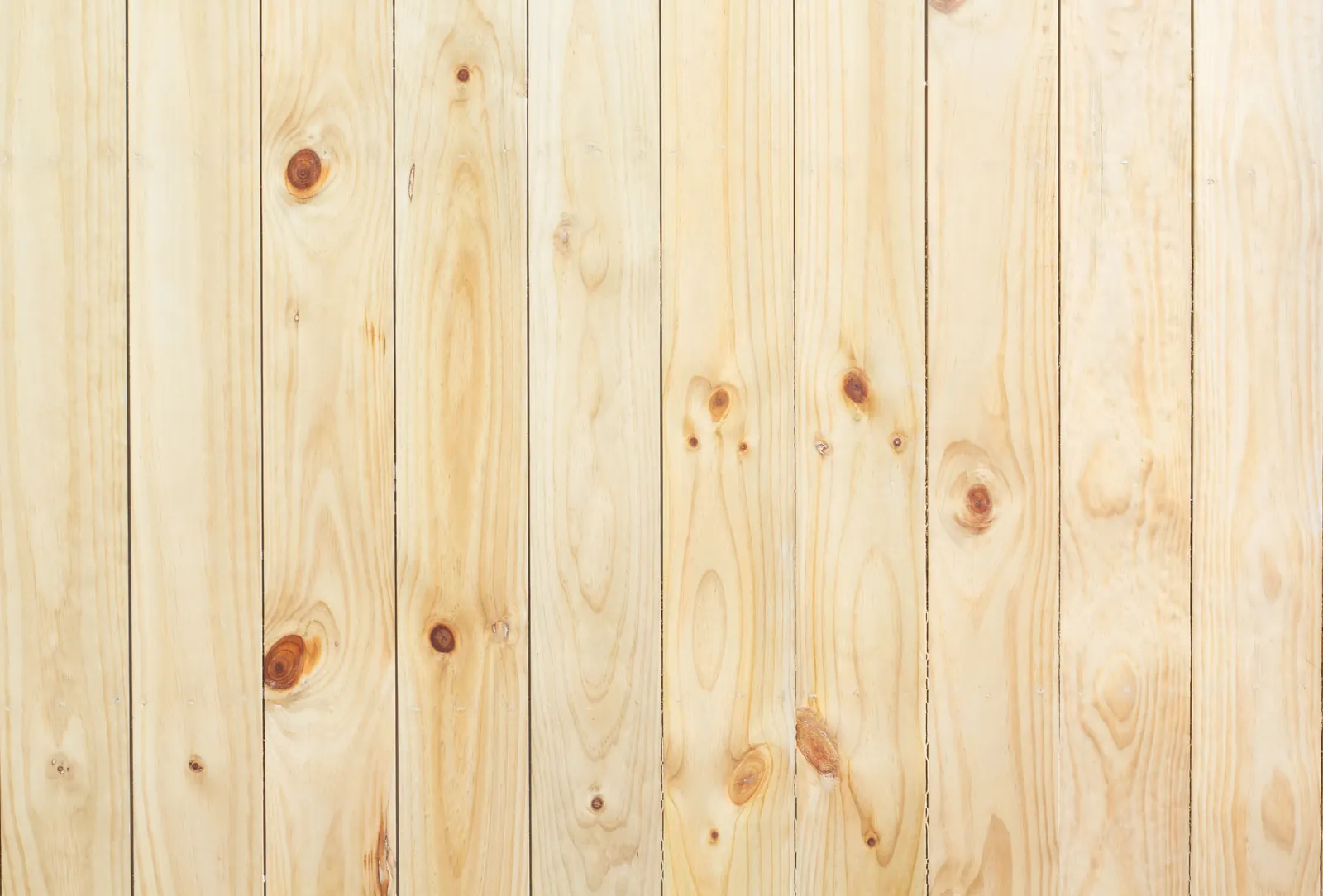
The handbook's answer is a stain-blocking primer. Knots can be sealed with shellac or a knot sealer and then the whole board primed, it says, and modern high-quality stain-blocking primers usually work without any special knot treatment. Our post on the best primer for cabinets compares the primer types side by side, and the same types apply to boards.
Sap is a different problem
Sticky amber beads are pitch, and primer won't hold them back. The handbook is blunt: coatings will not stop pitch bleed. Once the pitch has hardened, scrape off what you can and sand to bare wood before priming.
If color comes through after the paint is on, another coat of the same paint won't stop it, the handbook says. Apply a stain-blocking primer, then the topcoat again.
Should you caulk shiplap?
Not the gaps between boards. The reveal is the look, and the boards move with the seasons, so a bead of caulk in every gap is asking to crack. Caulk where shiplap meets something else: inside corners, door and window casings, the baseboard and the ceiling line.
The Wood Handbook says fillers should be flexible when cured, to move with the wood as its moisture changes. Fill nail holes before the topcoat, as the panel association's bulletin advises, and see our guide to caulking baseboards for technique.
Best sheen for painting shiplap
Satin is a good default for shiplap walls, with semi-gloss where a wall gets wet or wiped often. Dunn-Edwards says higher gloss improves scrub, stain and moisture resistance but tends to highlight defects, and the Wood Handbook adds that gloss accentuates planer marks, raised grain and joints in the wood. Shiplap is all joints. For MDF, the panel association's bulletin recommends satin or semi-gloss.
Dunn-Edwards also notes that a color looks brighter and richer in a higher gloss, which flatters a deep charcoal wall and every dent in it. See paint sheens explained for the full range.
Painting shiplap that's already stained or painted
Stained or clear-finished boards need what any glossy wood needs: clean, scuff sand and prime. Over stain or knotty wood, use a stain-blocking primer, since the old stain and the wood under it can both come through a light color.
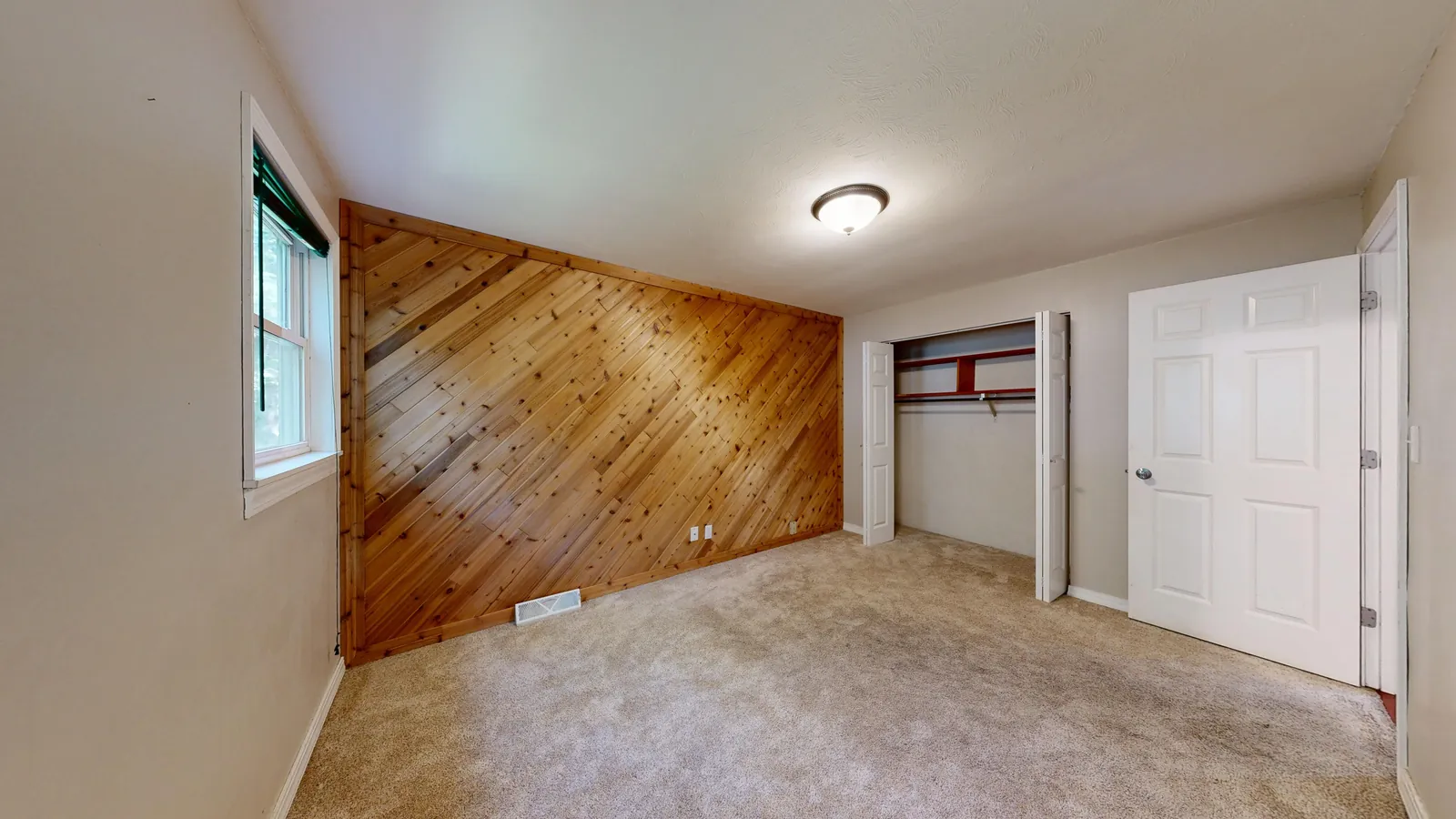
Boards that are already painted need less, if the paint is sound. Test before you commit. The Wood Handbook's check is to paint a small, out-of-the-way spot, let it dry at least overnight, then firmly press an adhesive bandage on and snap it off. If the new paint comes off, the old surface needs more cleaning or priming. If both coats come off, the old paint isn't holding to the wood and has to be removed.
Going from dark to light takes more coats; see painting over dark paint.
When to stop and call a professional
- Stop before sanding or scraping old painted boards if your home was built before 1978 and you don't know what's in the paint.
- Call a pro when the tape test pulls both coats off, since that old paint has to be removed first.
- Fix the moisture first when boards are damp, swollen or musty, especially on an outside wall or in a basement.
- Wear real dust protection to cut or sand MDF. The panel association calls for at least a NIOSH-approved half-mask respirator with a HEPA filter, side-shielded safety glasses, long sleeves and gloves.

The first one matters in older houses. EPA says about three quarters of U.S. homes built before 1978 still contain some lead-based paint, and that any renovation, repair or painting work in a pre-1978 home that has it can easily create dangerous lead dust. Tell any painter the age of the house. Our post on painting older Madison homes covers the rest.
How we paint shiplap at GK Painting
Shiplap walls are part of our interior painting for homes and businesses. Small holes are fixed and primed first, and the furniture stays covered the whole time. George quotes every job himself, so ask him how he'd handle the gaps and knots on your boards.
Interior painting is priced by the square footage of the space, with paint included. We use premium paint from Sherwin-Williams and Behr, or a brand you already like, and the written quote is built around the paint you pick. The written quote is the price, no extra charge if the job takes longer than expected.
If a problem comes from the quality of our work, like a finish that peels or didn't bond, we come back and make it right. We're based in Waunakee and work across Madison and Dane County. Read about our interior painting, see what clients say, or ask for a free estimate.
Common questions
Do you paint the gaps in shiplap first?
Yes. Brush or spray paint into the gaps first, then roll or spray the faces while the gaps are still wet so the marks blend. A roller can't reach into the reveal, so rolling first leaves bare edges and ridges of paint that you then have to chase with a brush.
Do you need to prime shiplap before painting?
Yes for bare or knotty wood, and usually no for factory-primed MDF in good shape. The Wood Handbook says knots in almost all species can discolor light paint, so pine needs a stain-blocking primer. Primed MDF usually needs only the spots that were sanded or cut through primed again.
Should you caulk the gaps between shiplap boards?
No. The gaps are the look, and wood boards shrink and swell with the seasons, so caulk in every reveal tends to crack. Caulk the joints where shiplap meets trim, corners and the ceiling, with a flexible paintable caulk, and fill the nail holes before the last coat.
What sheen is best for shiplap?
Satin for most walls, semi-gloss for bathrooms and walls that get wiped often. Higher gloss resists scrubbing and moisture better but highlights dents and joints, and shiplap has a joint every few inches. The panel association recommends satin or semi-gloss over MDF shiplap.
Is it better to spray or roll shiplap?
Spraying is faster on a full wall with many gaps, and rolling with a brush for the gaps is simpler for one accent wall. Spraying needs the room masked against overspray. Either way, do the gaps first, and keep coats thin so paint doesn't pool in the reveal.
Why do lines show between my painted shiplap boards in winter?
The boards shrank. The Wood Handbook says winter heating in northern homes can drop the moisture in interior wood to around 4 percent, so boards narrow and expose unpainted wood at the overlap. Painting the edges before installing helps prevent it; afterward, brush paint into the gaps while they're open.
Sources
- Wood Handbook: Wood as an Engineering Material (Chapters 10 and 16), USDA Forest Service, Forest Products Laboratory
- Medium Density Fiberboard (MDF) Mouldings, Technical Bulletin, Composite Panel Association
- How to Paint a Shiplap Accent Wall, Wagner SprayTech
- Paint Sheen Chart and Gloss Paint Guide, Dunn-Edwards
- Lead Renovation, Repair and Painting Program, U.S. Environmental Protection Agency
More on interior painting and every interior painting post.